Especial Madrid
Ávila's Walls and Segovia's Aqueduct in a Day from Madrid
A wall you can walk right round and an aqueduct you stand under, plus the door prices, free hours and closed days that shape the rest of the day.

Por Lieke DoornWalking routes, quiet hours and the barrios worth slowing down in
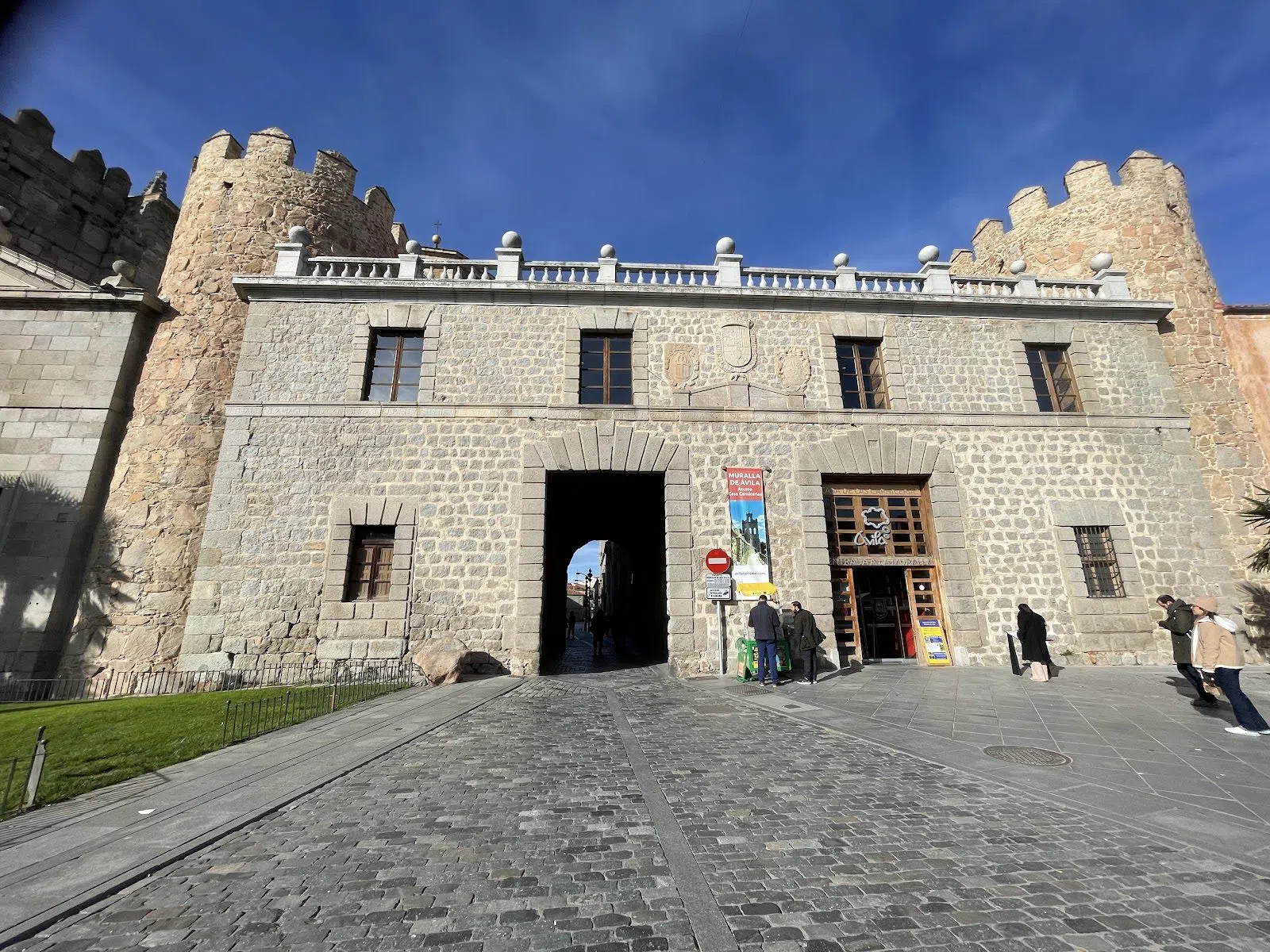
Ávila's wall runs 2,516 m around the hill town in one unbroken granite curtain, with 87 semicircular towers along it and a battlemented walkway wide enough to walk two abreast. In Segovia, 167 unmortared granite arches carry the Roman aqueduct 28 m above a public square, with traffic and café tables directly beneath. Day trips out of Madrid take in both, seven days a week.
What the day covers
Both towns are small enough to walk once a coach has parked. In Ávila the main ticket is the circuit itself: you enter at a gate and walk the adarve, with red-tiled roofs below and the cathedral apse built into the rampart. In Segovia the aqueduct needs no ticket, and the paid sights sit on the ridge above it: a cathedral, a castle on a rock spur, and one small museum in the old Jewish quarter.
Planeje sua viagem para Madrid
Preços em tempo real dos nossos parceiros de reserva.
Cancelamento grátis em muitos quartos. Podemos receber uma comissão quando você reserva.
Walking the wall in Ávila
Muralla de Ávila (Casa de las Carnicerías) is the most complete medieval circuit in Europe, and the reason the town is on the itinerary at all. Entry is €8, or €5 reduced, with audioguides in seven languages and a group rate on request.

Three entry points take the strain: Casa de las Carnicerías, Puerta del Alcázar and Puerta del Puente. Coach parties come daily and spread across them. From the walkway you look along the granite curtain and down over the roofs, with the cathedral apse embedded in the rampart beside you.
Ávila's cathedral and the churches by the gates

Catedral de Ávila (Catedral de San Salvador) is the only cathedral in Spain built into a defensive wall. Its granite apse, the cimorro, is itself a tower of the circuit. Entry is €10, €9 for over-65s and unemployed visitors, €7 reduced, with €3 more for the tower. Doors open 10:00 to 20:00 Monday to Saturday and from 12:30 on Sunday. Inside, the piers are blood-coloured sandstone, mottled red and white. The retable is alabaster and the cloister Gothic. Tower capacity is limited and groups are staged up it. If a stop in Ávila leaves time for one paid interior, pay for this one.

Basílica de San Vicente stands 2 minutes from the wall at the Puerta de San Vicente, and costs €3, or €2.20 reduced. The Romanesque portico is warm sandstone. Under a wooden baldachin sits the carved cenotaph of the three martyrs, with painted polychrome scenes. On Tuesday it opens 10:00 to 14:00 only, and on Sunday 16:00 to 18:00 only.
Convento de Santa Teresa and Museo Teresiano (Plaza de la Santa) is a baroque Carmelite church raised over Teresa's birthplace, free to enter. The crypt museum below is €2, free for under-10s, and holds relics, manuscripts and a gilded chapel on the site of her bedroom. It admits fewer than 10 people at a time for safety, and coach parties rotate through in shifts. It closes on Monday, and shuts for lunch between 13:30 or 14:00 and 15:30 or 16:00, which is when day trips tend to arrive.

Outside the Ávila gates
Los Cuatro Postes is free, open 24 hours, and has a coach-accessible layby and parking. Four 5 m Doric granite columns stand with a stone cross between them on a bare rise across the Adaja river. Behind them the entire walled city lines up, floodlit after dark.


Real Monasterio de Santo Tomás is a 10-minute walk or a short drive beyond the walls, €6 with the audioguide, €5 reduced, free for under-12s. Three Gothic cloisters stack up in pale granite. Fancelli's white marble tomb of Prince Juan sits alone in the centre of the transept, and the raised choir keeps the Catholic Monarchs' seats. Most day trips skip it. Keep an hour for it if you come independently.
La Flor de Castilla (Plaza José Tomé) has made yemas de Santa Teresa since 1860. The window stacks pleated paper cases of glossy yellow yemas and tins printed with Santa Teresa. They are egg yolk and sugar only, so intensely sweet. Boxes run €6 to €15. The shop is tiny and groups end up queuing on the pavement. Buy boxed and take it away.

Segovia at aqueduct level
Acueducto de Segovia and Plaza del Azoguejo is where coaches drop off and parties meet, and it is the one sight with no ticket and no capacity limit. The double tier of arches strides across the square 28 m up, the stone darkened in bands. Partway up the hill, the Mirador del Postigo has reopened after restoration, a limestone terrace that puts you level with the arches. Under a 2026 conservation protocol, periodic restoration work can leave scaffolding on individual piers.

Cathedral, castle and the Judería Vieja
Catedral de Segovia is 5 minutes from the Plaza Mayor and €4 including the Episcopal Palace, €3 reduced. The honey-gold late-Gothic church stands on the highest point of the ridge, a cluster of pinnacles around a domed lantern. Its cloister was carried from the old cathedral and reassembled stone by stone. The tower is €7, €6 reduced, and goes only on fixed guided departures at 10:30, 12:00, 13:30, 15:00 and 16:30, with small capacity. The climb gives a panorama over the whole town and sells out.


Alcázar de Segovia sits like a ship's prow on a rock spur where two rivers meet. Outside it has slate witch-hat turrets and diamond-pointed esgrafiado render; inside are the Sala de Reyes frieze and a gilded mudéjar ceiling in the Hall of the Pineapples. Entry is €7 for the palace and artillery museum, €10 including the Torre de Juan II, with €5 and €8 reduced. Capacity is timed and the door queue builds from mid-morning, which makes this the one Segovia interior to book. The narrow spiral stair of the tower is the bottleneck. Hold that slot, or leave the tower out with a big party.
Centro Didáctico de la Judería (Casa de Abraham Seneor, Judería Vieja) costs €3, free for under-12s, and stands on the walk between the cathedral and the Alcázar. The restored medieval house has a timber-galleried courtyard, display panels and an audiovisual reconstruction of a Sephardic Shabbat table. Municipal guided tours run Wednesday to Sunday at 13:00 and need two people to go ahead. The rooms are small, so large parties split. It closes at 14:00 on Monday and Tuesday, and 13:00 on Sunday.

Cochinillo and ponche
Mesón de Cándido (Plaza del Azoguejo) is a leaning timber-framed 19th-century house wedged against the aqueduct arches, its dining rooms hung with copper and signed photographs. Whole roast suckling pig is carved at the table with the rim of a plate, the ritual this house is known for. It is €€€, cochinillo from €30 a person and set menus higher. Lunch runs 13:00 to 16:30 daily and dinner 20:00 to 23:00. Book instead of walking in at peak. Groups and events go through 921 425 911.

Restaurante José María (Calle Cronista Lecea) is a minute off the Plaza Mayor, with a tiled tapas bar at the front and white-clothed rooms behind. Cochinillo is portioned at the pass with the skin crackling, and the Segovian wine comes from the restaurant's own vineyard. It is €€€, and the bar tapas are far cheaper. The kitchen runs 12:00 to 22:30 Sunday to Thursday and to 23:00 on Friday and Saturday. That covers a coach landing at 16:00.

Pastelería Limón y Menta (Calle Isabel la Católica) keeps a glass counter of ponche segoviano, pale marzipan-sheeted squares scored in a lattice and dusted white with icing sugar. A whole ponche is €15 to €25. It opens 09:00 to 20:30 or later every day, counter service, no reservations. Take boxed slices if the cochinillo has already defeated you.

Two walks the coach day leaves out
Mirador de la Pradera de San Marcos is free open ground, a 15-minute downhill walk from the Alcázar through the Puerta de Santiago, or a drive with ample parking. The grass meadow runs beside the Eresma river and the small San Marcos church, and the Alcázar's prow rises unobstructed off a sheer rock cliff above the treeline. This is the spot for the photograph of the castle from below. The meadow stays quiet because coach itineraries do not allow for the walk.

Iglesia de la Vera Cruz (Zamarramala road) is €2, or €1.25 for groups of 20 or more. The squat twelve-sided Romanesque chapel stands alone on open ground with a two-storey chamber at its centre, and the bell tower looks across the valley at the Alcázar. The interior is small, so entry is staggered. Getting there needs a car or a 25-minute uphill walk.

Queues, tickets and booking ahead
Day trips from Madrid run every day of the week. Some departures are already sold out on 25 December 2026 and 1 January 2027; other dates are still bookable. Inside the monuments, only two things are genuinely rationed, the Alcázar tower stair and the cathedral tower departures, and both reward holding a slot. Everything else absorbs arrivals: the wall across its three gates, the aqueduct square with no ticket at all.
Best time to go
In winter the wall closes on Monday and at 18:00, so a late-starting day can miss the ramparts entirely. An afternoon in Ávila also reaches Los Cuatro Postes in late light, which a morning visit does not.
The Alcázar closes at 18:00 from November to March and 19:30 from April to October, and shuts on 1 and 6 January. Monday closes the Santa Teresa crypt museum and the Vera Cruz chapel, and Vera Cruz stays shut on Tuesday morning.
Tuesday between 14:00 and 16:00 the wall is free, and the Alcázar is free for EU citizens in the same two hours. Vera Cruz is free all Tuesday. The Judería centre is free on Wednesdays that are not holidays.
Is it worth it
It suits a full day free in Madrid and an appetite for medieval building rather than another gallery. Expect stone underfoot all day: a rampart circuit, the ridge climb between cathedral and castle, and a spiral stair if you book the tower. Coming independently adds the three things a coach day leaves out: the monastery beyond the Ávila walls, the river meadow below the Alcázar and the chapel on the Zamarramala road.
Before you go
Book the Alcázar with its tower slot and a cochinillo table before you leave Madrid, and check the Monday and January closures against your date. See the Madrid guide and the Madrid hotel search.
Antes de ir
What do the monuments cost if I pay at the door?
The wall in Ávila is €8, or €5 reduced, and the cathedral there €10, plus €3 for the tower. In Segovia the cathedral is €4 including the Episcopal Palace, and the Alcázar €7 for the palace and artillery museum, or €10 with the Torre de Juan II. The aqueduct square and Los Cuatro Postes cost nothing.
Do I need to book the Alcázar in advance?
Yes. Entry runs on timed slots, and the queue at the door builds from mid-morning. The tighter booking is the Torre de Juan II, whose spiral stair is narrow. Hold that slot, or leave the tower out if you are travelling with a big party.
Can I get in anywhere free?
The wall in Ávila is free on Tuesdays from 14:00 to 16:00, and the Alcázar admits EU citizens free in those same two hours. The Iglesia de la Vera Cruz charges nothing on Tuesdays, and the Centro Didáctico de la Judería nothing on Wednesdays that are not holidays. The Santa Teresa church, Los Cuatro Postes and the aqueduct square are free at any time.
Which days should I avoid?
The Santa Teresa crypt museum and the Vera Cruz chapel close on Mondays, as does the Ávila wall in winter. The Basílica de San Vicente opens 10:00 to 14:00 on Tuesday and 16:00 to 18:00 on Sunday only. The Alcázar is shut on 1 and 6 January.
Does the day trip run every day of the week?
It runs every day, Monday to Sunday. Some departures on 25 December 2026 and 1 January 2027 are already sold out, though other dates are still bookable. The Alcázar itself is closed on 1 January.