Madrid neighbourhood guide
Centro (Sol & Gran Vía), Madrid: where the city begins
From Kilómetro Cero to the Schweppes sign, Madrid’s most central barrio is loud, walkable and full of old institutions that still work for a living.
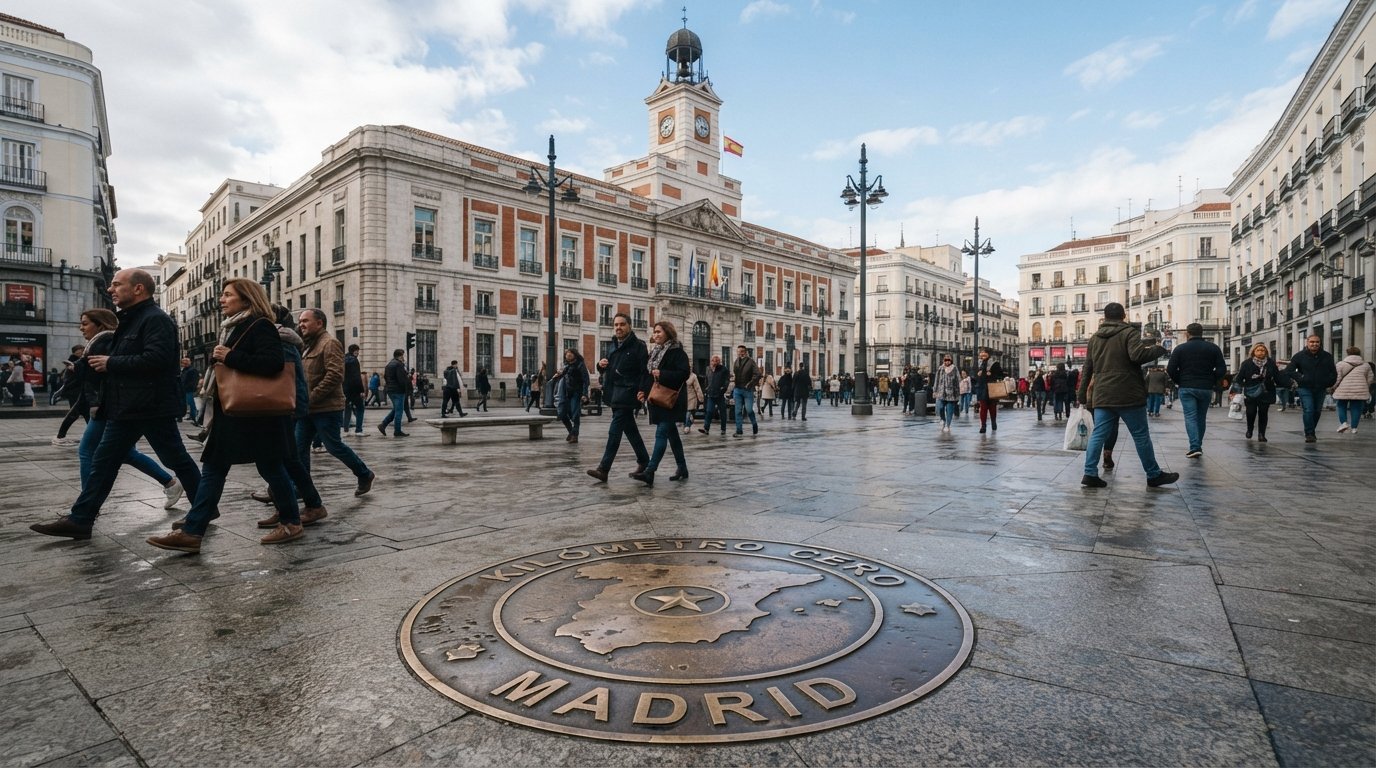
Stand on the brass plaque outside the Real Casa de Correos and Madrid feels measured under your feet. Kilómetro Cero is not a metaphor here; it is a marker in the pavement, a point from which the country is reckoned, and the square around it behaves like the city’s pulse. Puerta del Sol keeps the whole centre in motion: buses of people crossing, friends waiting under the bear and strawberry tree, the clock face above the Real Casa de Correos preparing, as it has for generations, to send the New Year out in twelve measured chimes. A few streets north, Gran Vía cuts through the old fabric with a different kind of authority — less square, more spectacle, a canyon of theatres, domes and neon that still knows how to announce itself.
This is Centro at its most honest. It is not a neighbourhood that whispers. It is a place of movement, of errands, of first meetings and late returns, of queues and shortcuts, of old taverns surviving under the pressure of chain retail and theatre traffic. And yet the old city keeps showing through: in the arcades of Plaza Mayor, in the wood-fired ovens and vermouth counters, in the grand façades that have watched the avenue change around them without yielding their place.
What Centro is known for
The easiest way to understand Centro is to start with its two poles. Puerta del Sol is the literal centre of Spain, and the square makes no apology for the fact. The Kilómetro Cero plaque sits outside the Real Casa de Correos, and the El Oso y el Madroño statue on the square’s east side has become the city’s simplest arrangement for a meeting: bear, tree, and a crowd that never quite stops flowing around them.
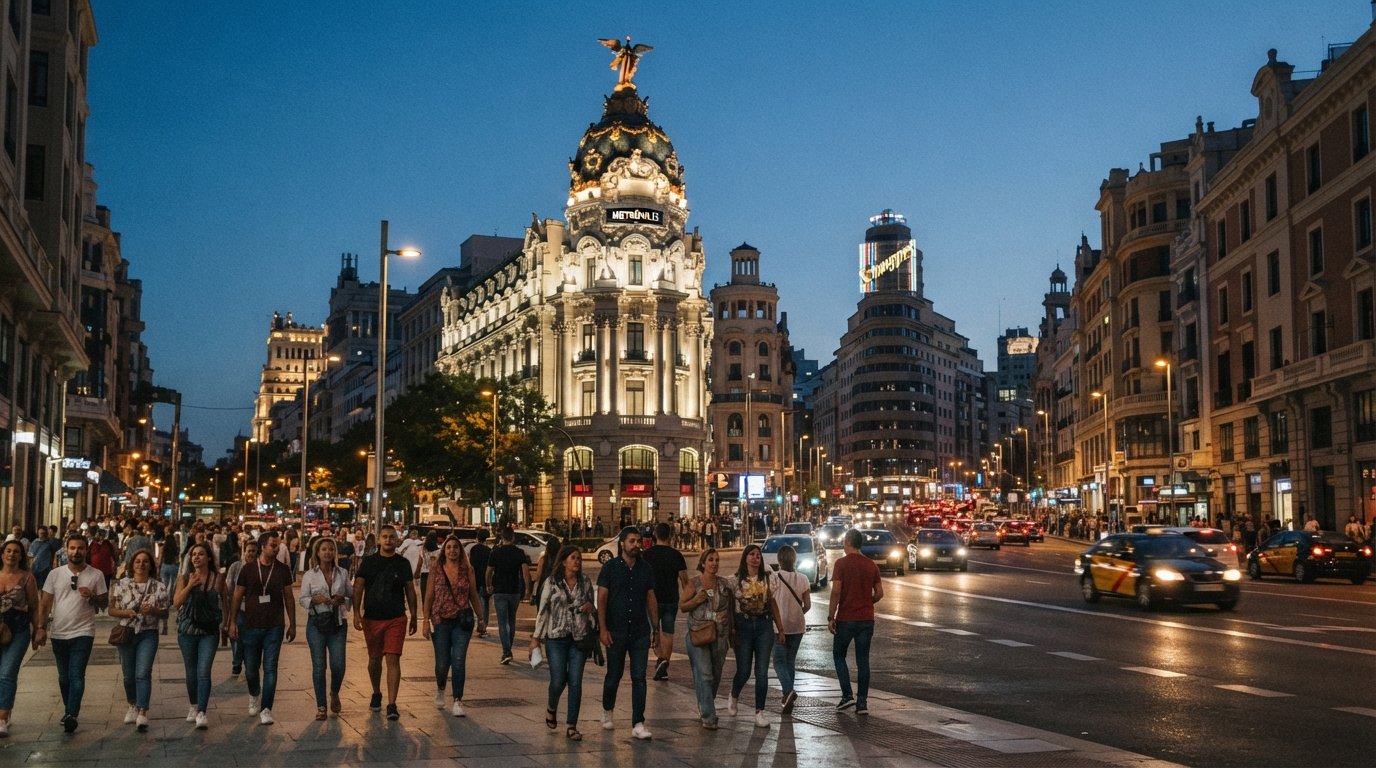
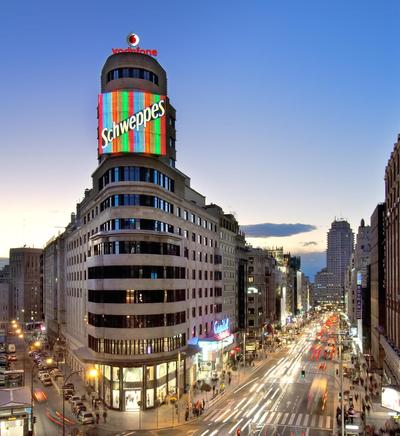
Then there is Gran Vía, opened in stages from 1910, which still feels like Madrid deciding to modernise in full view of everyone. The Edificio Metrópolis with its winged figure and dome, the curved Telefónica tower, and the Edificio Carrión crowned by the Schweppes sign are not just landmarks; they are the avenue’s punctuation marks. Even after the street was narrowed for cars and widened for walkers, it remains dramatic in the old sense of the word: a place built for looking up.
South of it all, Plaza Mayor closes off its 17th-century rectangle with ochre façades and arcades, and the Arco de Cuchilleros drops you down toward the old taverns like a reminder that Madrid has always had layers. The square is polished by traffic and tourism now, but it still carries the geometry of a civic stage: market, ceremony, commerce, and the long memory of what happened here before the cafés arrived.
Where to eat & drink
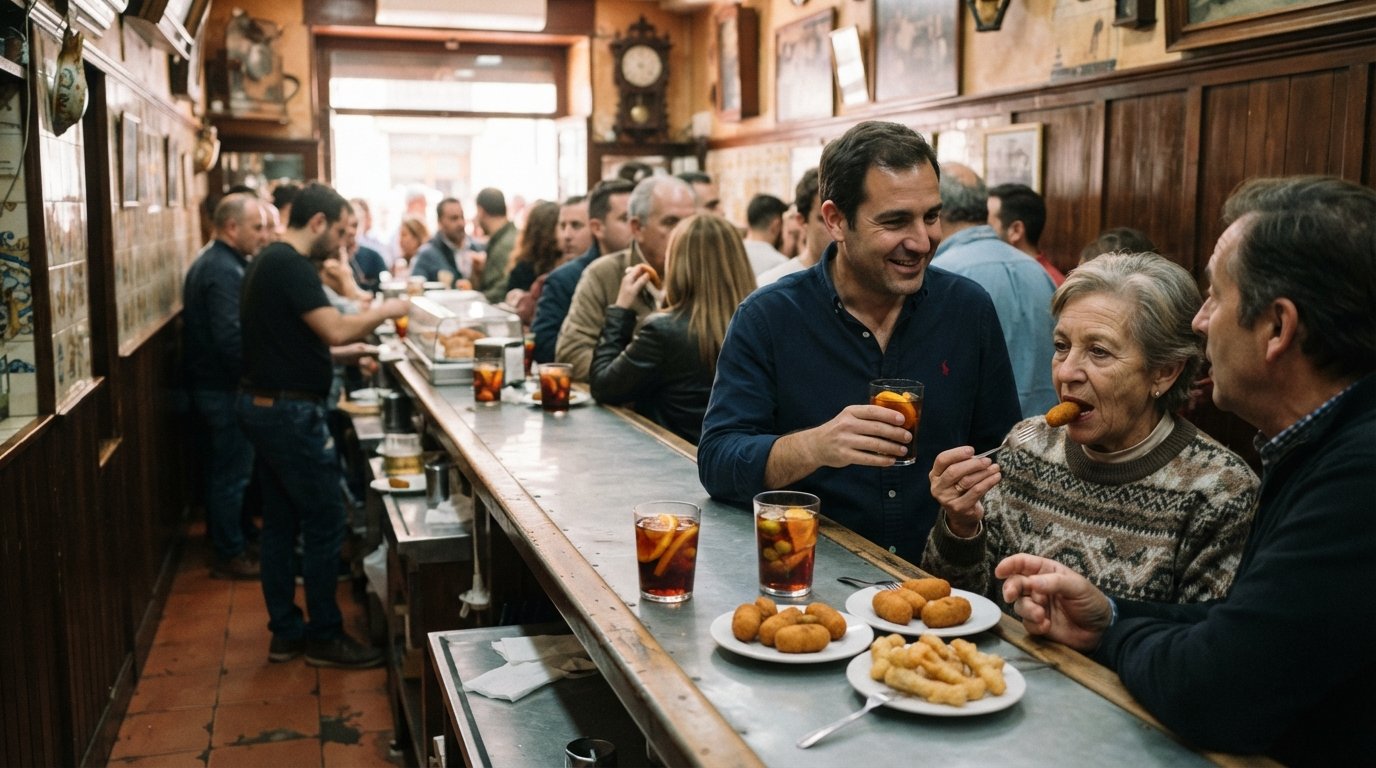
Centro eats on history as much as appetite. Some addresses are famous because they are old, but the better ones are old and still useful. Casa Labra on Calle de Tetuán has poured vermouth since 1860 and does exactly what a Madrid tavern should do: it serves soldaditos de Pavía and cod croquettes from a tiny kitchen turning out more than a thousand a day. There is a plaque outside noting that the PSOE was founded here in 1879, but the real point is simpler. It is a place where a glass of vermouth still feels like a civic habit rather than an affectation.
Round toward Plaza Mayor, Sobrino de Botín keeps the long story going. It has been in business since 1725 and still roasts cochinillo in a wood oven that reportedly has never gone out. The claim is famous, but the useful fact is the atmosphere: this is not a museum pretending to be a restaurant, but a restaurant that has become part of the city’s mythology by continuing to work.
For a more formal meal, Lhardy on Carrera de San Jerónimo is the grand old house for a proper cocido madrileño. Restored in 2021, it keeps the ceremonial tone that makes this dish feel right in its setting: broth, chickpeas, and the kind of lunch that asks you to slow down even if the streets outside do not.
If you want something less staged, Casa Revuelta on Latoneros is the no-frills answer, serving fried bacalao and callos without any attempt to soften the edges. And then there is La Casa del Abuelo, open since 1906 and still associated with gambas al ajillo said to have been invented there. In a district where the old names are often there for decoration, this one still sounds like a place where a table can disappear under the right number of plates.
For grazing rather than sitting down, Mercado de San Miguel beside Plaza Mayor remains one of those spaces that can be both touristy and genuinely useful. It is a beautiful early-1900s iron market turned gourmet food hall, with oysters, jamón, vermouth on tap and Iberian ham croquettes. Come mid-afternoon if you want to avoid the 1-3pm crush; the produce is good, and the market still rewards a slow circuit even if you never sit.
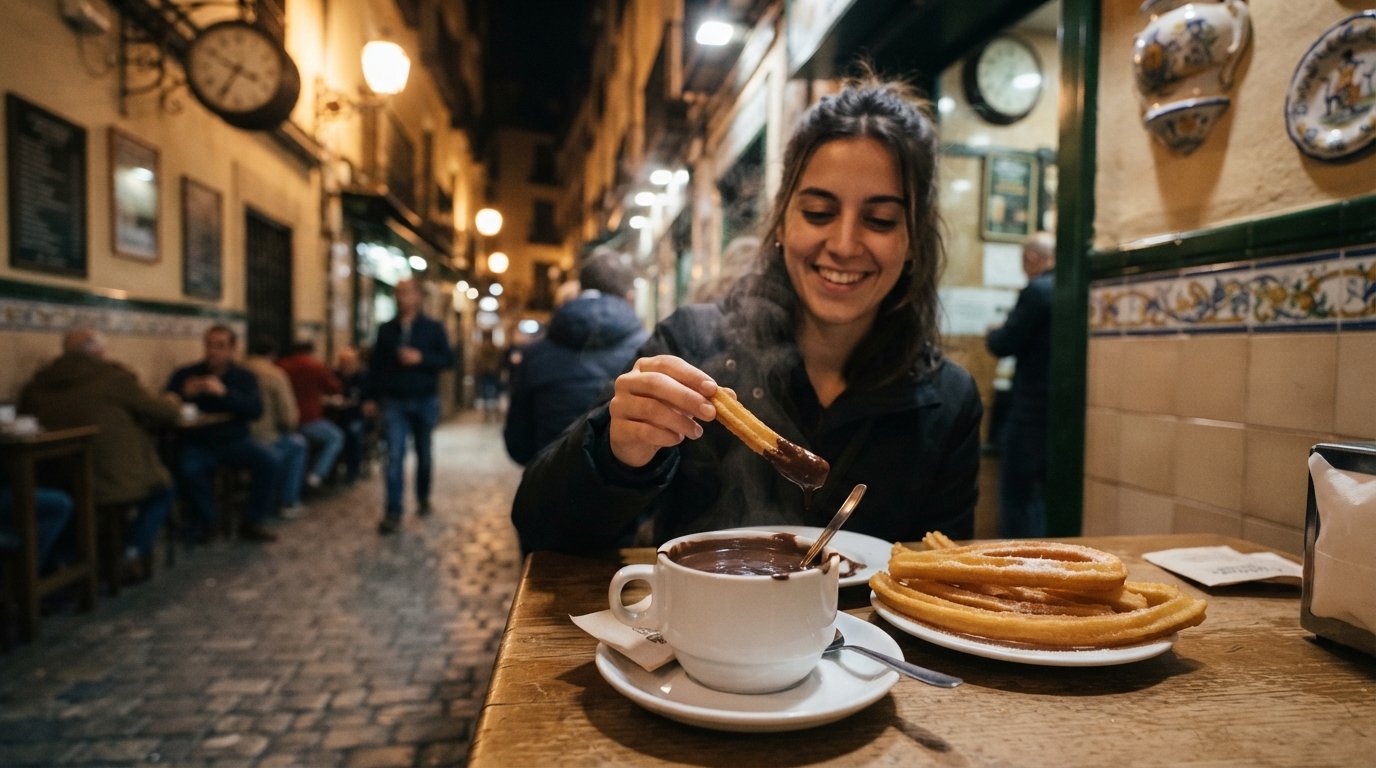
And for the ritual finish, Chocolatería San Ginés in its passageway off Calle Arenal has served churros con chocolate since 1894 and stays open around the clock. It is the kind of place that catches the city in every mood: early, late, and the odd hour when the rest of Madrid has stopped pretending to be sensible.
Going out
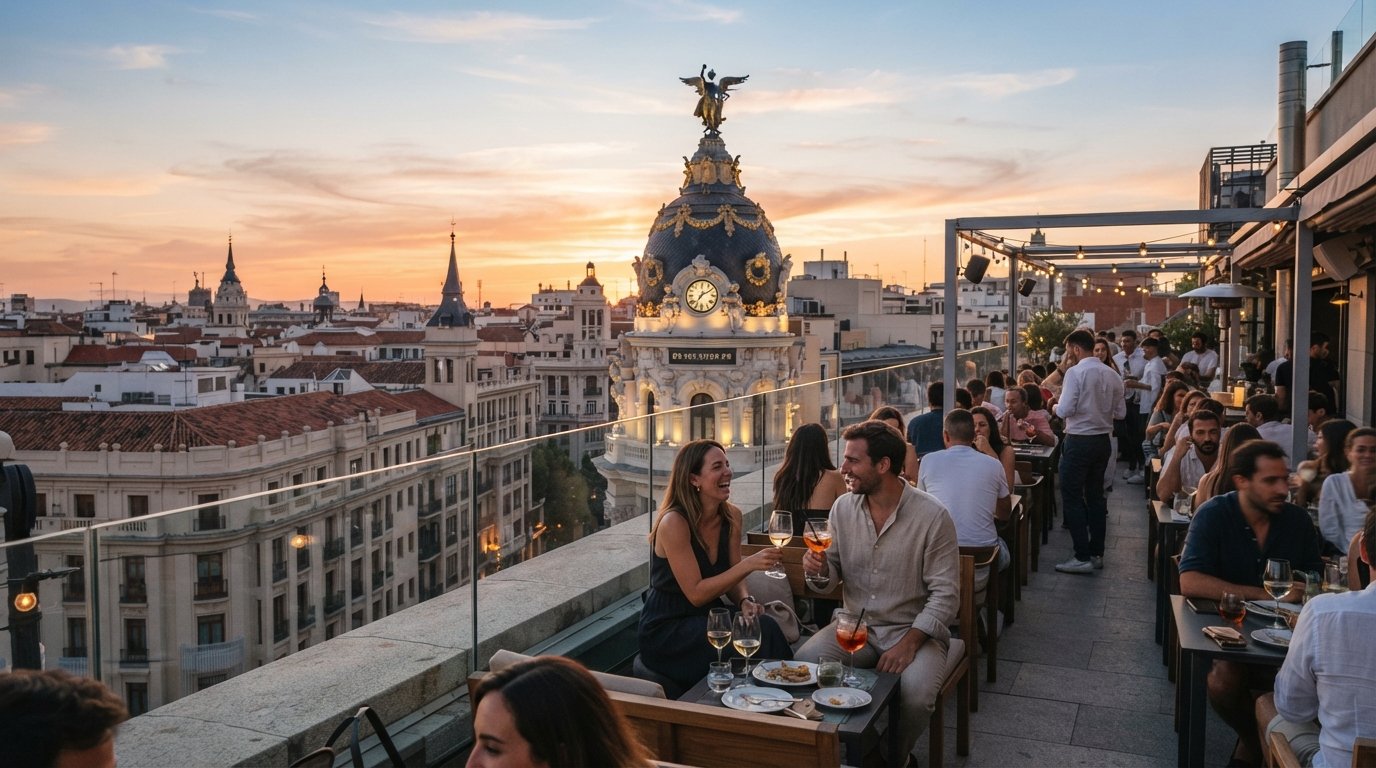
Centro’s evenings split neatly between height and noise. The classic aperitivo with a view is the Azotea del Círculo de Bellas Artes on Calle de Alcalá, where a small entry fee of around €6 gets you one of the best 360-degree panoramas in the city. Go early on weekends; the sunset queue builds fast, and the terrace is one of those places where the city seems to gather its own skyline back into view.
On Gran Vía, Picalagartos Sky Bar at the NH Collection hotel carries the evening up nine floors, while the Gourmet Experience Callao rooftop on the ninth floor of El Corte Inglés looks straight out over the Royal Palace and the avenue. You can go up for the view without ordering, which is useful to know when you want the city without the table service.
For a drink with a longer memory, Museo Chicote has been mixing cocktails since 1931 as Spain’s first American-style bar. The Art Deco room is still the point: a place where Hemingway, Ava Gardner and Frank Sinatra once leaned on the bar, and where the room itself seems to hold on to the old glamour without overplaying it.
When the hour turns later, Joy Eslava — also billed as Teatro Joy — turns a 19th-century theatre near Sol into a full-scale club. In this part of Madrid, late means late. The streets stay visible, the crowds stay dense, and the night keeps its own clock until well after the theatres empty.
Things to do / what to see
The best way to spend a day here is on foot, with no particular ambition beyond following the grain of the streets. Begin at Puerta del Sol, stand on Kilómetro Cero, and then let Calle Mayor or Calle Arenal carry you west toward Plaza Mayor. The walk is short, but it tells you a great deal: the square opens and closes, the arcades appear, and the city changes from a place of crossing to a place of lingering. Slip under the Arco de Cuchilleros and the old tavern quarter seems to fold back in behind the square.
From Sol, Gran Vía is the architecture walk. Go straight along it, and let the façades do the work. The Edificio Metrópolis, the Telefónica tower, and the Edificio Carrión with the Schweppes sign are not subtle, but they are the reason to be here. The avenue was built to show Madrid to itself in a new register, and it still does that best when you keep walking and look up.
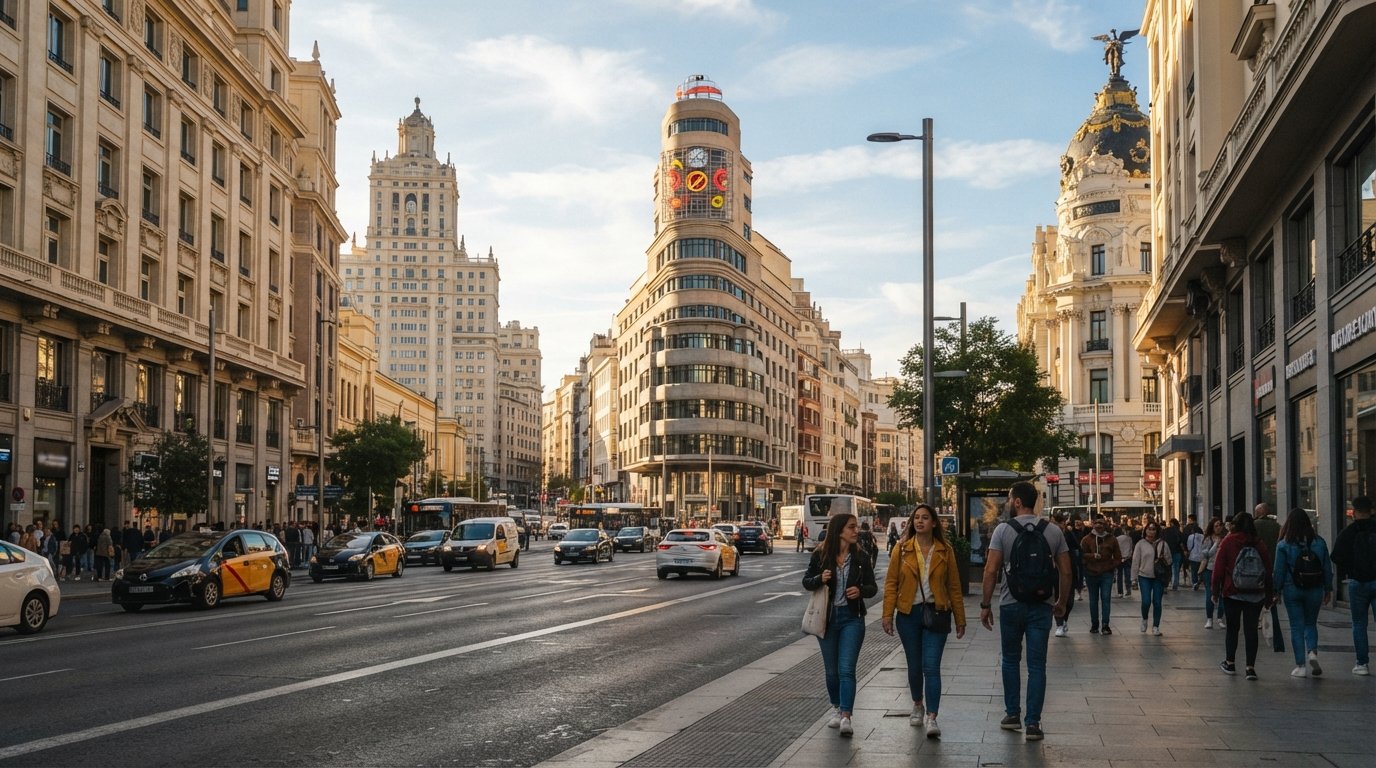
The street is also Madrid’s theatre strip. Teatro Lope de Vega has hosted long-running Broadway-style musicals, including The Lion King, while the Teatro Coliseum and Teatro Rialto carry the big productions that keep Gran Vía in motion after shopping hours end. Even if you are not going in, the façades tell you what kind of avenue this is: one that works on scale.
For culture beyond the shopfronts, the Círculo de Bellas Artes on Calle de Alcalá combines exhibitions, a grand café and its famous rooftop, and the Real Academia de Bellas Artes de San Fernando nearby holds Goyas and a serious old-master collection with far smaller crowds than the Prado. The contrast matters. Centro can be all traffic and neon at street level, but a few minutes away there are rooms where the city’s quieter ambitions still hang on the walls.
Don’t miss in Centro (Sol & Gran Vía)
The historic Plaza Mayor with its grand slate-spire architecture.
Gran Vía's impressive Belle Époque facades and theaters.
The bustling Puerta del Sol, the symbolic center of Spain's road network.
Shopping & markets
Centro is Madrid’s high-street engine, and it does not make much effort to hide that fact. Calle Preciados and Calle del Carmen, pedestrianised between Sol and Callao, are lined with global flagships and anchored by El Corte Inglés, the department-store cluster that defines this part of town. The crowds are constant, the bags are many, and the pace is brisk enough that you quickly understand why locals use these streets as a transit corridor as much as a shopping destination.
Primark Gran Vía is one of Europe’s largest Primark stores, spread over five floors inside a restored 1920s building. It is the sort of place that makes sense only in a district like this: old shell, fast turnover, and a queue that seems to belong to the street outside as much as the shop inside.
What saves Centro from feeling like pure chain retail is the survival of a few genuinely old specialist shops. Capas Seseña has been tailoring traditional Spanish wool capes since 1901 and has dressed everyone from Picasso to Hollywood. Casa de Diego sells hand-painted fans, mantillas and umbrellas from a shop that has traded on the square for generations. These are the kinds of places that give the district depth: not nostalgia, but continuity.
The Mercado de San Miguel also belongs in this section as much as in the eating one. Even if you do not stay for a plate, it is worth walking through for produce, cured ham and the market’s particular blend of display and appetite. Centro’s commerce is rarely gentle, but it is rarely bland.
Where to stay in Centro (Sol & Gran Vía)
Centro is the most convenient first-visit base in Madrid, full stop. From here, the Prado, the Royal Palace, Plaza Mayor and much of the nightlife are walkable, and Sol seems to collect every metro line in the city. That convenience comes with a price: noise, foot traffic and the occasional sense that the neighbourhood never fully closes its eyes.
Rooms facing Gran Vía or overlooking Puerta del Sol can be noisy well past midnight, so if you book here, ask for an interior or courtyard-facing room. Side streets around Calle de la Montera, the calmer stretches near Ópera, or the pockets toward Plaza de Santa Ana usually make better sleeping ground. The sweet spot is often a mid-range boutique hotel in a restored belle-époque building: central, characterful, and just removed enough from the main current of the street.
If you want central but a touch calmer, the western edge near Ópera and the Royal Palace keeps the walkability with less of the retail churn. Budget hostales still exist near Sol, and the grand five-stars remain on and around Gran Vía; the area spans the whole range, though it never really stops feeling expensive in location if not always in style.
Where to stay here
Hotels in Centro (Sol & Gran Vía)
Our best-rated stays in this neighbourhood. Prices are approximate “from” rates — confirmed at the provider when you continue. We may earn a commission if you book through our partners — at no extra cost to you.
 In this area
 In this area
 In this area
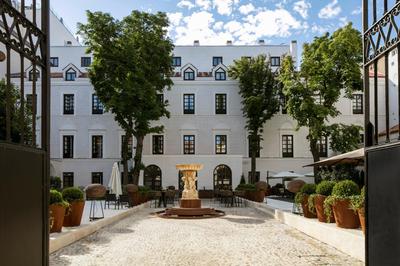
Palacio de los Duques, a Gran Meliá Hotel - The Leading Hotels of the World
 In this area
 In this area
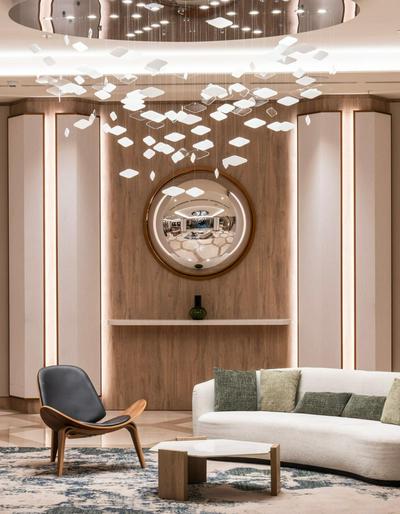
Madrid Marriott Hotel Princesa Plaza
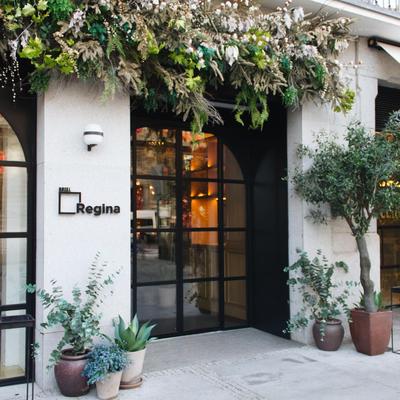 In this area
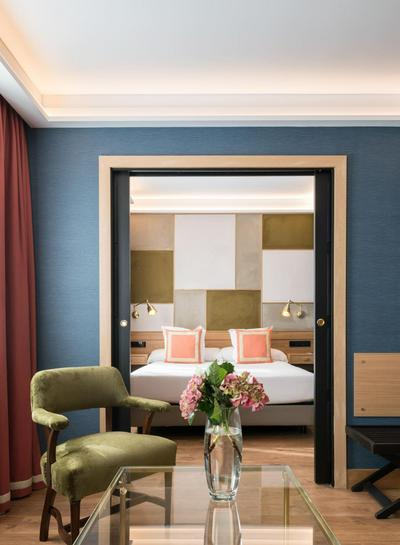 In this area
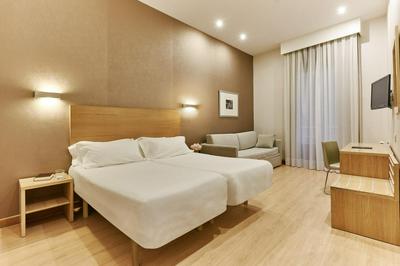 In this area
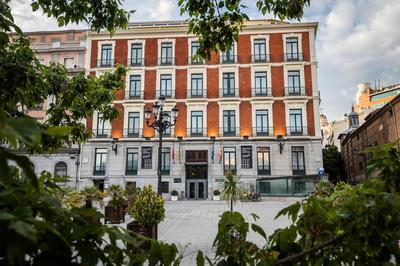 In this area
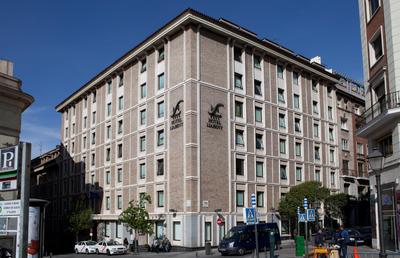
Intelier Palacio San Martin
 In this area
 In this area
 In this area
Getting around
Sol is the single most connected point in the city. The Sol metro station sits under Puerta del Sol on Lines 1, 2 and 3, and a deeper Cercanías station links C-3 and C-4 for quick hops to Atocha, Chamartín and beyond. Gran Vía and Callao stations put you on Lines 1, 3 and 5 within a couple of minutes’ walk, which is useful when the streets above are too crowded to think straight.
For the airport, take Metro Line 8 from Nuevos Ministerios and change at Sol for Terminals 1-2-3 and 4; the trip takes roughly 30-40 minutes door to door. The Airport Express bus also runs to Atocha and Cibeles near the eastern edge of Centro. But once you are here, the point is to walk. Sol to Plaza Mayor is five minutes. Sol to the far end of Gran Vía is about fifteen. The Prado and Retiro are a ten-to-fifteen-minute stroll east.
The practical warning is simple enough: this is Madrid’s busiest crush zone and its highest-pickpocket area. It is well lit, busy and policed late, but you still keep your bag zipped, your phone off the café table, and your attention away from petitions, shell games and the sort of “free” bracelets that are never free. Centro rewards movement; it just asks you to stay awake while you move.
Good to know
Centro (Sol & Gran Vía) — your questions
Is Centro (Sol & Gran Vía) a good area to stay in Madrid?
Yes. For a first visit, it is probably the most convenient base in the city: the Prado, the Royal Palace, Plaza Mayor and plenty of nightlife are walkable, and Sol connects to almost everything by metro. The trade-off is noise and crowds, so choose an interior or side-street room rather than one facing Gran Vía or the square.
Is Sol / Gran Vía safe?
It is safe to walk day and night and is well lit, busy and policed, but it is also Madrid’s biggest pickpocket zone because of the crowds. Keep your bag zipped and in front of you, keep your phone away from café-table reach, and ignore petitions, shell games and other distraction scams around Sol and Plaza Mayor.
What should I not miss in Centro?
Stand on the Kilómetro Cero plaque at Puerta del Sol, walk Gran Vía for the architecture, and eat something old-school: cod at Casa Labra, cochinillo at Botín, and churros con chocolate at San Ginés. If you have time, finish with sunset from the Círculo de Bellas Artes rooftop.
What is Centro best for?
It is best for first-time sightseeing, shopping, theatre and rooftop views. If you want a neighbourhood that feels residential and quiet, this is not it; if you want everything walkable from the door, it is hard to beat.
Gallery