The Madrid issue
Between Midnight and Sunrise: The All-Night Churrerías of Madrid
A calm, neighbourhood-by-neighbourhood map to Madrid's churros con chocolate, from the 1894 institution off Sol to a 5am takeaway counter — so you can fold a stop into wherever the night leaves you.
By Lieke DoornWalking routes, quiet hours and the barrios worth slowing down in
In Madrid the night does not so much end as thin out, and somewhere around three or four in the morning the crowd leaving the bars and the crowd arriving for an early breakfast meet over the same cups of thick chocolate. Churros con chocolate is the meal that bridges those hours: lengths of fried dough and a cup of chocolate dense enough to hold a spoon upright, ordered without ceremony and eaten standing or sitting as the room allows. What follows is an orienting map of where to find it between midnight and sunrise, arranged by neighbourhood so you can plan around wherever the evening actually leaves you.
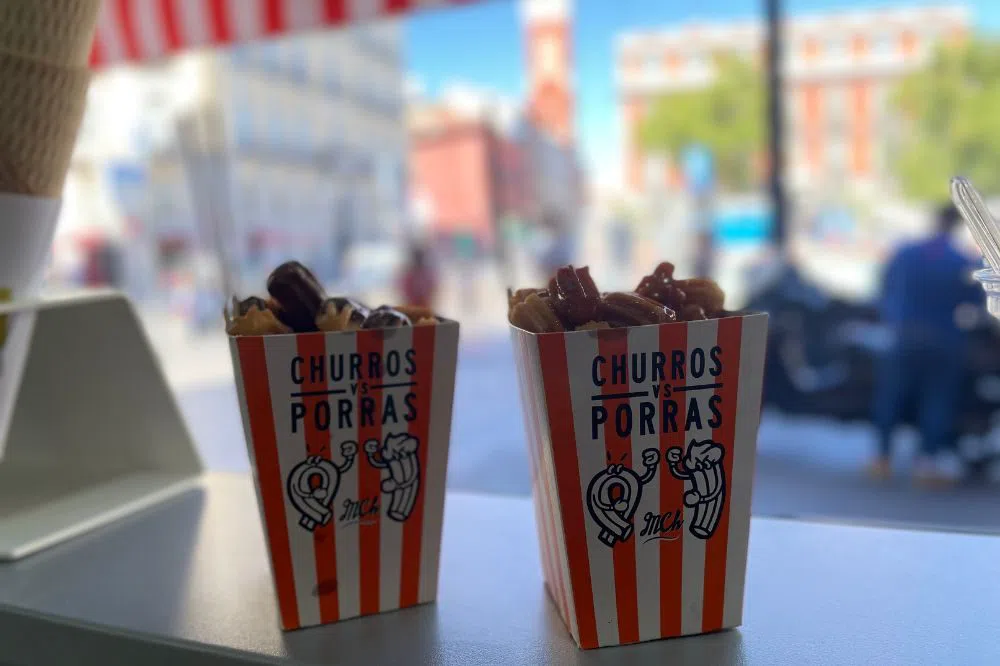
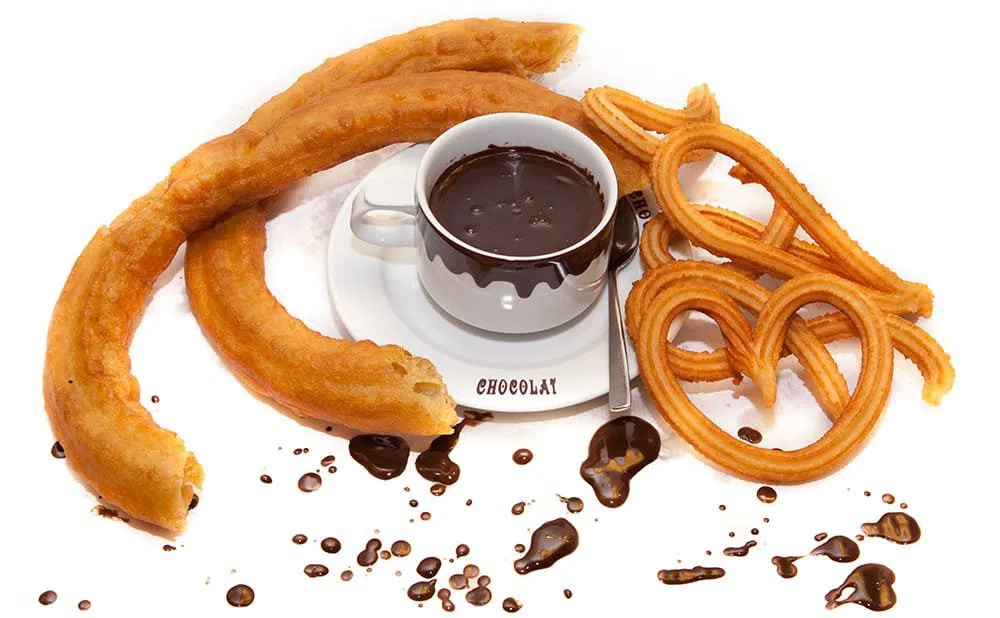
A quick note on vocabulary, because the menus assume you know it. Churros are the thin, ridged, star-sectioned sticks; porras are their thicker, softer, coiled cousins, fried in a single long spiral and cut to order. Most of the places below make both, and the chocolate that comes with them is a drinking chocolate — closer to a warm custard than to a hot cocoa. Prices across the city sit in a narrow band; a plate of churros or porras with a cup of chocolate runs roughly €3–7 depending on the room and the neighbourhood.
The anchors around Sol and Plaza Mayor
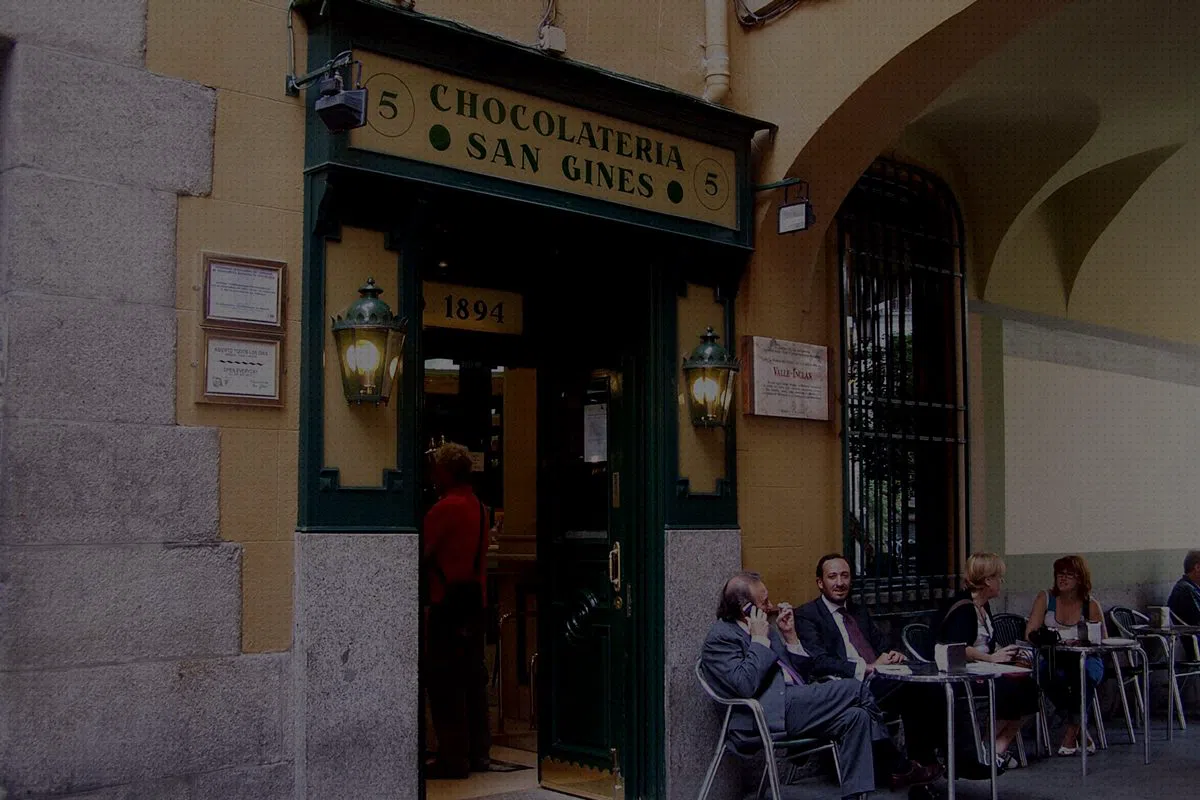
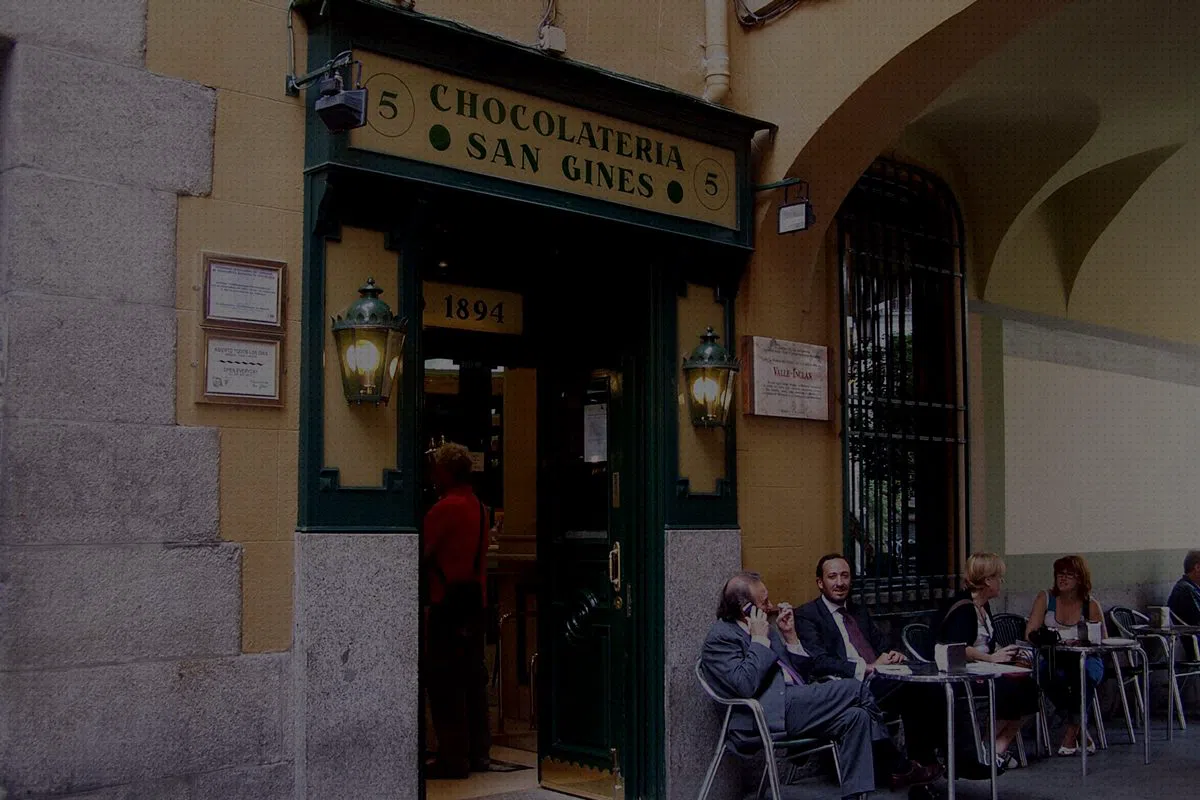
Most first nights in the city end within a few minutes' walk of Puerta del Sol, and so does most churros lore. Chocolatería San Ginés sits in the Pasadizo de San Ginés, a tiled passage off Calle Arenal between Sol and the Ópera, and has been frying since 1894. It is a large, multi-room institution with marble tables and green woodwork, long used to crowds, coach groups and a steady overnight trade — it is where a good number of madrileños still choose to end a night out. It takes no reservations, so a large party should expect a queue and either arrive in the small hours or come back for an early-morning cup once the after-midnight rush has passed; churros or porras with chocolate run about €5–7. It is touristy and it is queue-prone, and it is also genuinely the real thing.
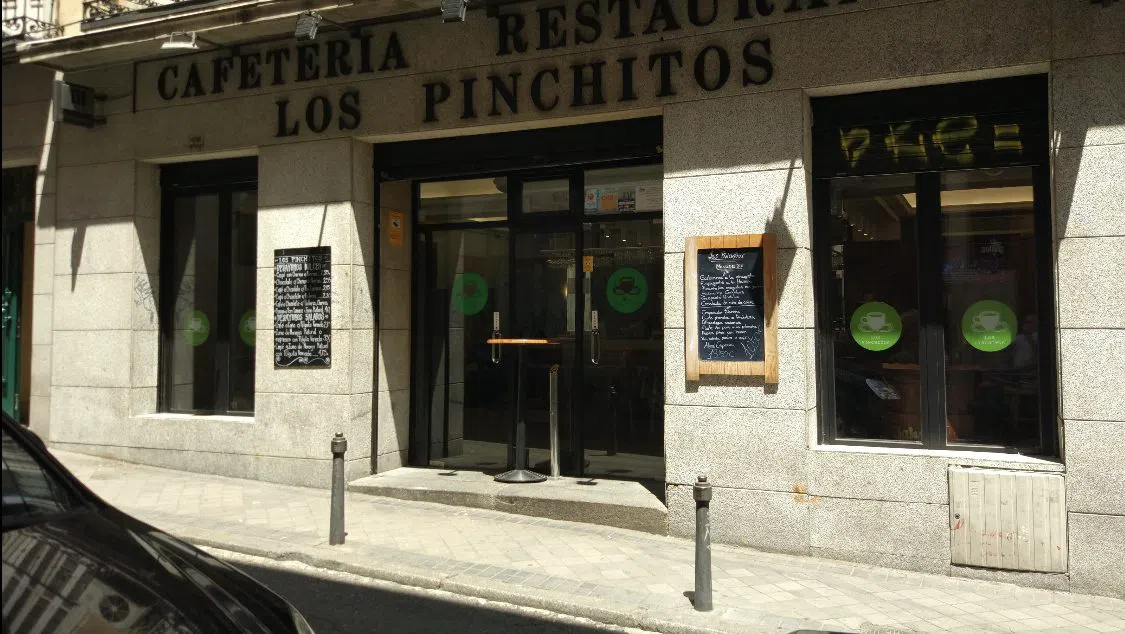
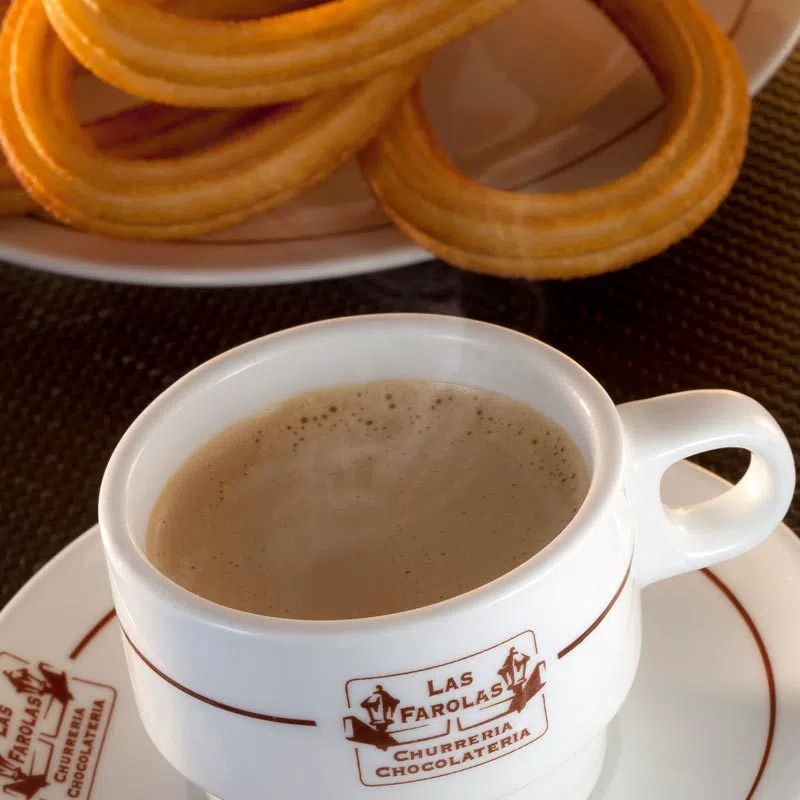
A short walk south, around Plaza Mayor, the options are smaller and quieter. Los Pinchitos is a tiny, traditional bar-churrería about fifty paces from the square, the kind of place built for standing at the counter or seating two or three at most. It is quick, unpretentious and cheap — roughly €3–5 — with next to no wait, which makes it the natural choice when San Ginés is mobbed and you only want a plate and a cup before moving on. Close by, Las Farolas is a small local chain of churrerías-chocolaterías with several central branches, one of them right by Plaza Mayor, most with a terrace. It keeps long hours and can usually seat a group, so it works as a dependable fallback when the better-known rooms are full; expect around €4–6.
A few minutes east of Sol, on Plaza de Jacinto Benavente, Maestro Churrero is the practical answer when the party is large or simply wants to sit down and stay a while. It is a century-old churrería-chocolatería spread across a big room with plenty of terrace seating, and — unusually for this trade — it takes reservations and even does delivery. If you are travelling in numbers and want a guaranteed table rather than a scrum, this is the one to book ahead; churros or porras with chocolate come in at about €4–6.
Plan your Madrid trip
Live prices from our booking partners.
Free cancellation on many rooms. We may earn a commission when you book.
Callao and the streets to the west
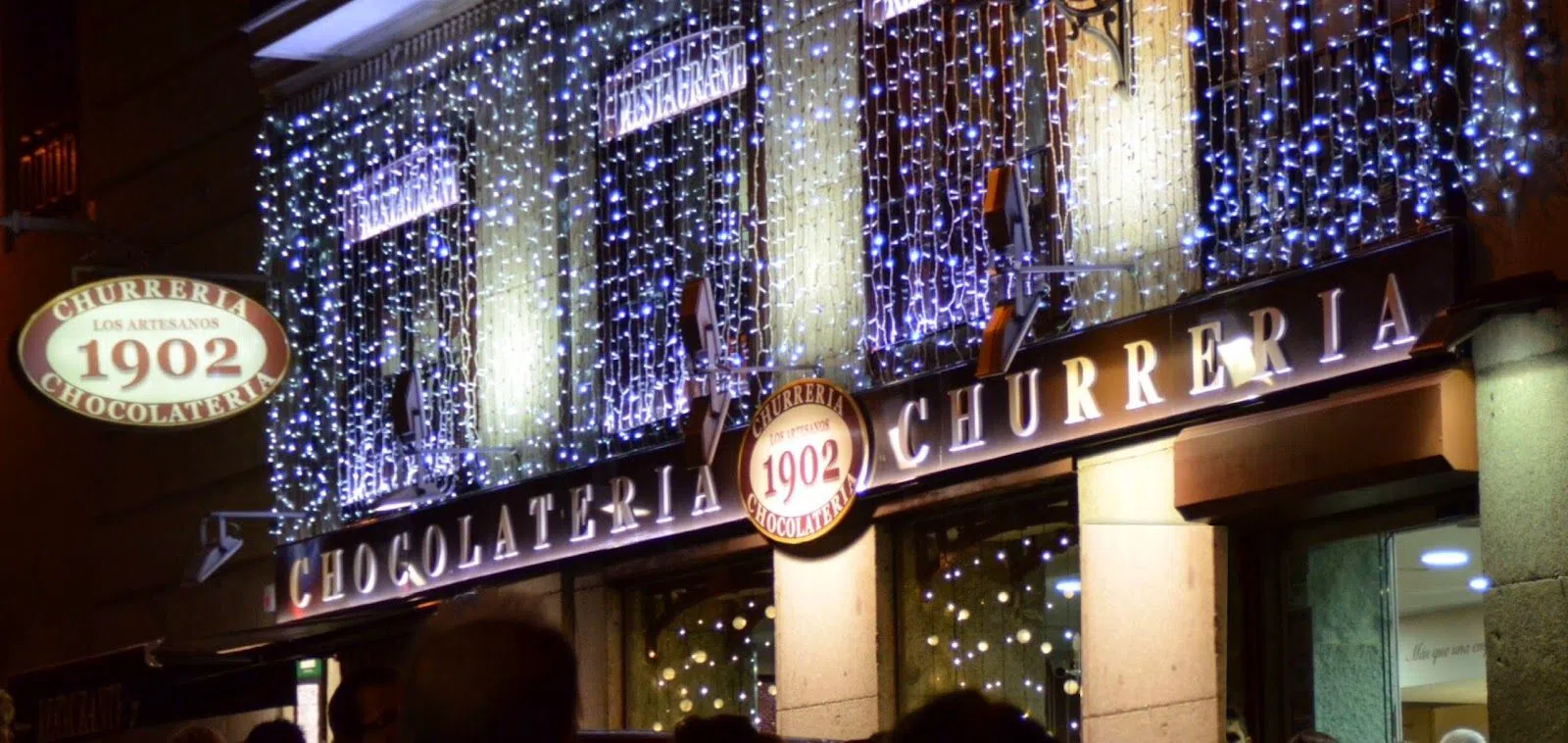
Just north of Sol, around Callao, two rooms reward the short detour. Chocolatería 1902, a block from the Callao squares, is a sit-down café run by the same family for some 120 years — it carried the name Los Artesanos 1902 for much of that time, and it is one operation, not two. It comfortably takes small-to-mid-sized groups and tends to have far shorter waits than San Ginés, which makes it a calmer, seated alternative a few minutes from the crowds; a plate with chocolate is roughly €4–6.
A little further along, Chocolatería Valor is the café arm of the Valor chocolate house, a Spanish name that has been making chocolate since 1881. It spreads over three floors, so groups are easy to seat, there is no door policy to speak of, and the draw is exactly what you would expect from a chocolate maker: a reliably thick, well-made cup, here in a spacious central setting. Churros with chocolate cost about €5–7. Both of these suit couples and groups equally; neither has any pretension about who comes through the door.

Calmer rooms in the literary quarter and Malasaña
Step away from the immediate Sol scrum and the mood softens. In the Barrio de las Letras, the old literary quarter of Cervantes and Lope de Vega, Chocolat Madrid has been making its own artisan chocolate on site, daily, since 2003. It has an interior room and a pavement terrace, which together make it straightforward for a group, and there is no door policy; this is a quieter, quality-first stop for anyone who would rather taste the chocolate than queue for the postcard. Reckon on roughly €4–6.
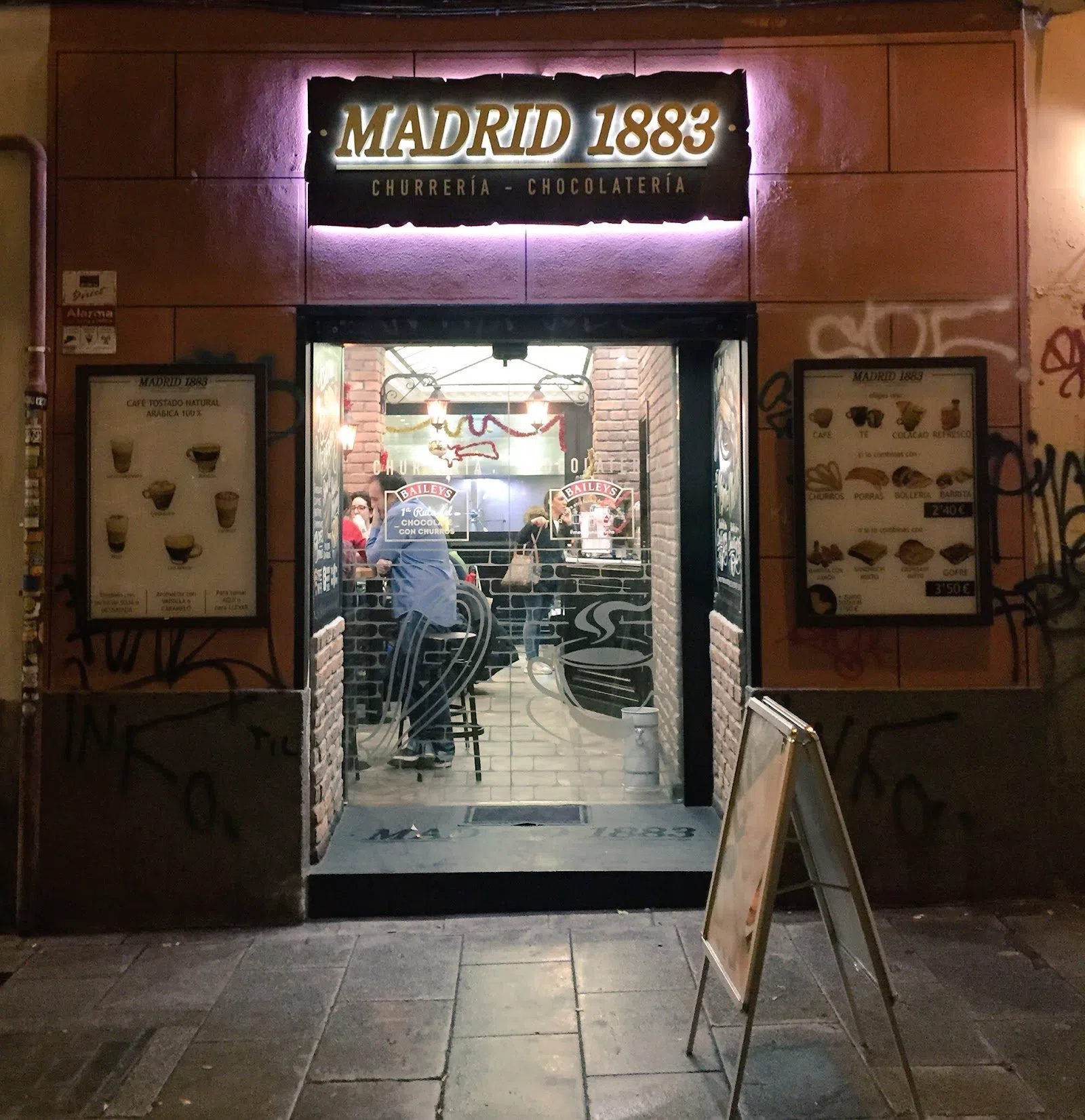
North of Gran Vía, in Malasaña, Churrería Madrid 1883 leans hard on heritage — it claims to be the city's oldest churrería, founded in 1883 and run by four generations — while sitting in one of the most youthful, international neighbourhoods in town. The space is roomy and modern-traditional and handles groups well, so it suits a mixed party winding through the Malasaña bars as much as an early breakfast; a plate with chocolate is about €4–6. The two rooms in this pair sit within easy walking distance of the centre but read as noticeably less hurried than the Sol institutions.
Neighbourhood churrerías, away from the crush
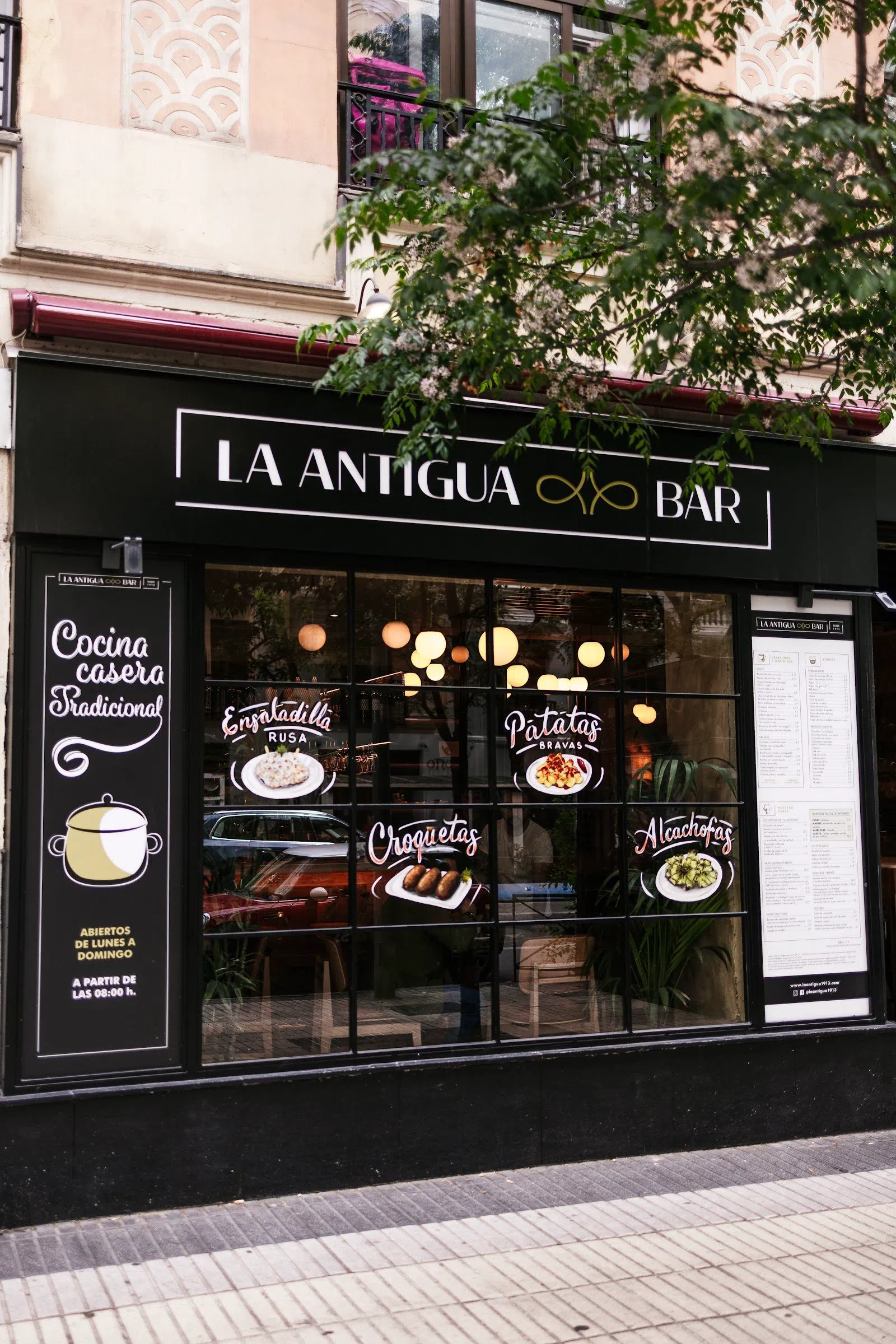
For a sense of how the city eats churros when no one is watching, walk out to the residential districts. In the Barrio de Salamanca, La Antigua Churrería is a genuine local — cosy, small, effectively tourist-free — working from a family recipe kept for around a hundred years, with porras that regulars come specifically for. Its size is the one caveat: it is fine for a couple or a few friends and tight for a large group. Prices are on the gentle side, roughly €3–5, and the room is the everyday-Madrid counterpoint to the passage off Arenal.
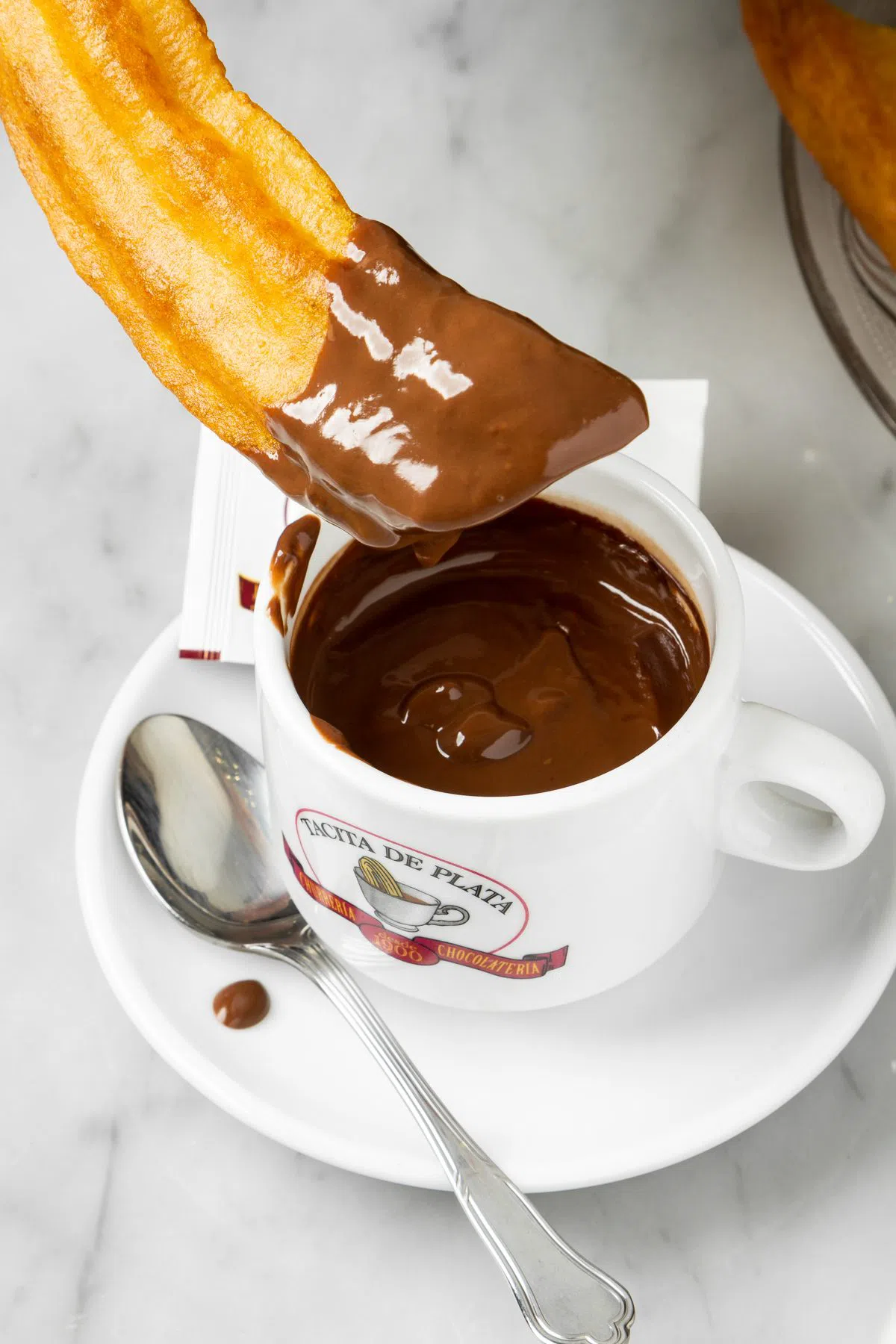
Chocolatería Tacita de Plata carries a name Madrid has known for more than ninety years, with roots reaching back to around 1900, and it is championed by locals as a non-San-Ginés classic. It keeps central and southern locations, offers both traditional sit-down service and takeaway, and is comfortable for small-to-mid-sized groups; like La Antigua, it is known above all for its porras. A plate with chocolate runs about €3–5. Either of these makes a good anchor if your evening is spent outside the immediate old-town core and you would rather not double back to Sol.
For the road: takeaway before sunrise
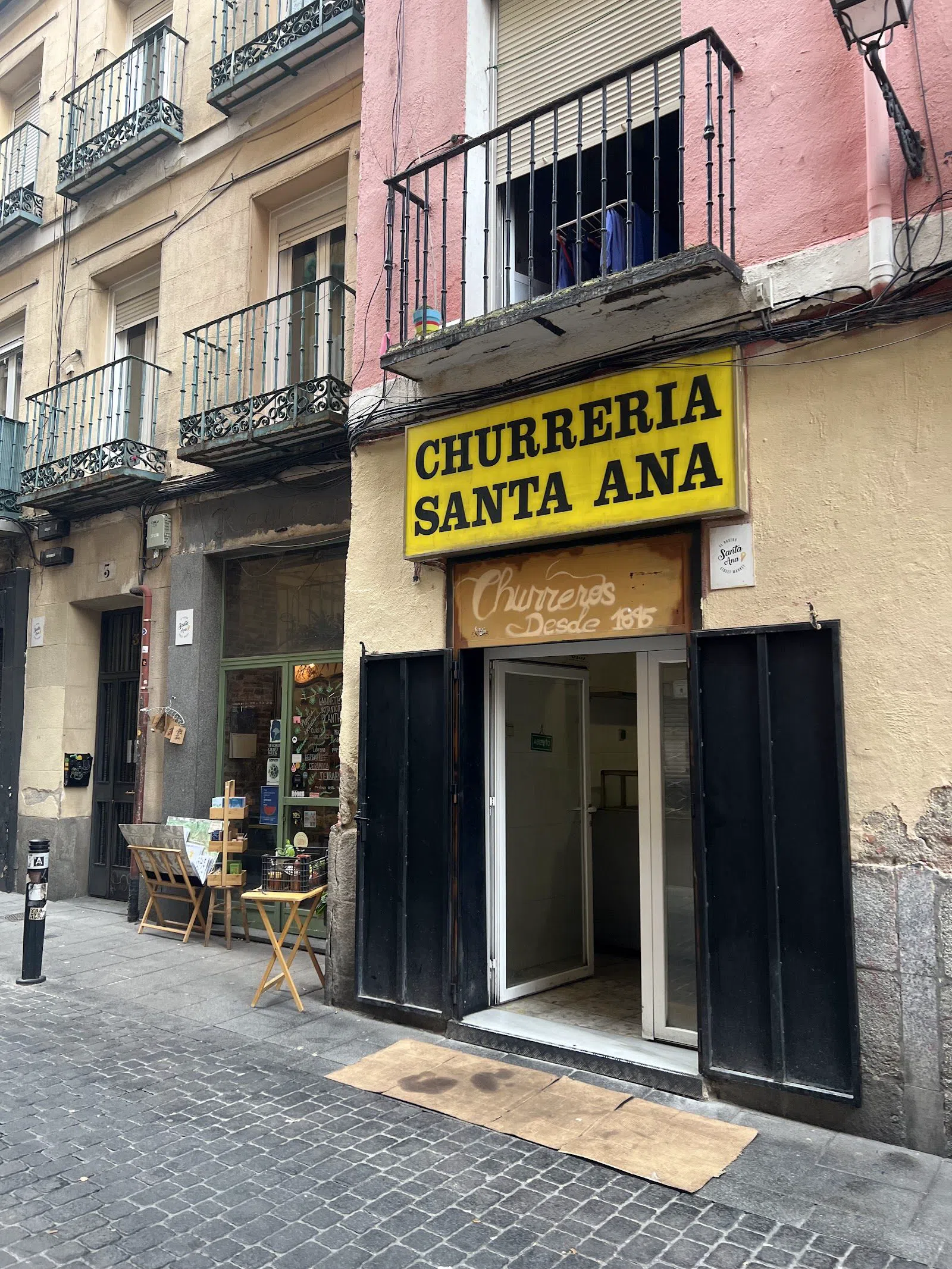
Some of the most honest churros in the city come with nowhere to sit. Churrería Santa Ana is an old-school, cash-and-carry counter that opens at 5am and deals in takeaway only — there are no tables, so a group buys paper bags of churros or porras to eat as they walk rather than settling in. It is a purist's stop, built for the true after-hours crowd and the earliest workers, and it is worth being clear about the trade-off before you arrive with a party expecting to sit: you will be standing on the pavement, and it helps to have coins ready. Expect around €3–5. Taken on its own terms — a warm bag at dawn on the way home — it is one of the more memorable ways to close the night.
Reading the door, and matching the place to your party
The useful thing to know is that churrerías have almost no door policy in the nightclub sense: nobody is judging your shoes at 4am. The real variable is space. If you are two or three, everywhere here works, and the tiny rooms — Los Pinchitos, La Antigua Churrería — are often the most pleasant. If you are a larger group, the maths changes: Maestro Churrero takes reservations and has room to spare; Chocolatería Valor's three floors, Las Farolas' terraces and Chocolatería 1902's café all seat numbers without drama; and Churrería Santa Ana, being takeaway only, means everyone eats on the move. San Ginés can absorb a crowd but will make you queue for the privilege. None of this is about exclusivity — it is simply about whether there is a table free when you arrive.
Planning your churros run
Timing. The window that gives this article its title is real. Many churrerías run late or reopen for the pre-dawn trade, and a few — Santa Ana at 5am chief among them — are built specifically for it. If you want the full end-of-night ritual, aim for somewhere between about 2am and 6am; if you would rather skip the queues, an ordinary mid-morning cup at the quieter rooms is just as authentic and far calmer.
Getting around. Everything in the first four sections sits within a walkable core around Sol, Callao, Plaza Mayor, the literary quarter and Malasaña — you can string several together on foot in a single night. The Metro stops running in the small hours (broadly around 1.30am until roughly 6am), so between those times you are relying on the búho night buses, which fan out from Plaza de Cibeles, or on taxis, which queue at Sol and the main plazas. The neighbourhood picks in Salamanca and to the south are better reached by a short taxi hop than on tired feet.
Cash. Card is widely accepted at the larger cafés, but the smallest counters — and takeaway-only Santa Ana in particular — are happiest with cash, so carry a few coins for the low-key stops.
Budget. Reckon on €3–7 a head for a plate of churros or porras with chocolate, right across this list; two people rarely spend more than €15 even at the busiest institution. It remains one of the least expensive genuinely traditional things you can do in the city after dark.
Where to stay. Basing yourself around Sol, Ópera, the literary quarter or Malasaña puts most of these within a night-time walk, which matters once the Metro closes; start a Madrid hotel search in those central barrios if late-night churros are part of the plan. For the wider picture — what to see, eat and do around these late hours — the Madrid guide sets the context, and this churros run slots neatly into the end of almost any evening it describes.
Before you go
What time do churrerías open in Madrid for after-hours churros?
Hours vary, but many central churrerías run late into the night or reopen for the pre-dawn trade. Churrería Santa Ana opens at 5am for takeaway, and Chocolatería San Ginés is a long-standing choice in the small hours. For the full end-of-night ritual, aim for roughly 2am to 6am.
What is the difference between churros and porras?
Churros are the thin, ridged, star-sectioned sticks; porras are thicker, softer and fried in a single coiled spiral, then cut to order. Most Madrid churrerías make both — La Antigua Churrería and Chocolatería Tacita de Plata are particularly known for their porras — and both are served with a cup of thick drinking chocolate.
Which Madrid churrería is best for a large group?
Maestro Churrero on Plaza de Jacinto Benavente takes reservations, has ample terrace seating and even does delivery, so it is the most reliable for numbers. Chocolatería Valor's three floors, Las Farolas' terraces and Chocolatería 1902's café also seat groups comfortably. Los Pinchitos and La Antigua Churrería are small and better for two or three.
Do I need cash for churros in Madrid?
The larger cafés widely accept cards, but the smallest counters prefer cash. Churrería Santa Ana is takeaway-only and cash-and-carry, so carry a few coins for the low-key and pre-dawn stops.
How much do churros con chocolate cost in Madrid?
A plate of churros or porras with a cup of chocolate runs roughly €3–7 per person across the city, depending on the room and neighbourhood. Two people rarely spend more than about €15, even at the busiest institutions.