
By half past nine on a September morning the line on Calle de Bailén already runs past the railings, and the light comes hard and white off the east front. Twenty metres away, through the gates, the Plaza de la Armería is empty and enormous, a grey granite field with the cathedral on one side and the palace on the other. Inside it is cool and dim and smells faintly of wax, and the whole visit takes less time than most people set aside for it.
September is a reasonable month to do this. The palace is still on summer hours, the afternoons have lost the worst of the August heat by the second half of the month, and the evening free window that runs from April has only a few weeks left. Below: what you see, how long it takes, how the timed-entry system works in practice, and what to do with the hours either side of your slot. For wider planning, the Madrid guide covers the rest of the city.
What you walk through
The old Alcázar burned on Christmas Eve 1734. The replacement was begun four years later and built in stone throughout, deliberately, so it could not happen again. Royal Palace of Madrid (Palacio Real de Madrid) (Palacio, on Calle de Bailén) is the largest working royal palace in Europe by floor area, and the part you visit is the ceremonial half, state rooms used for official occasions rather than lived in.
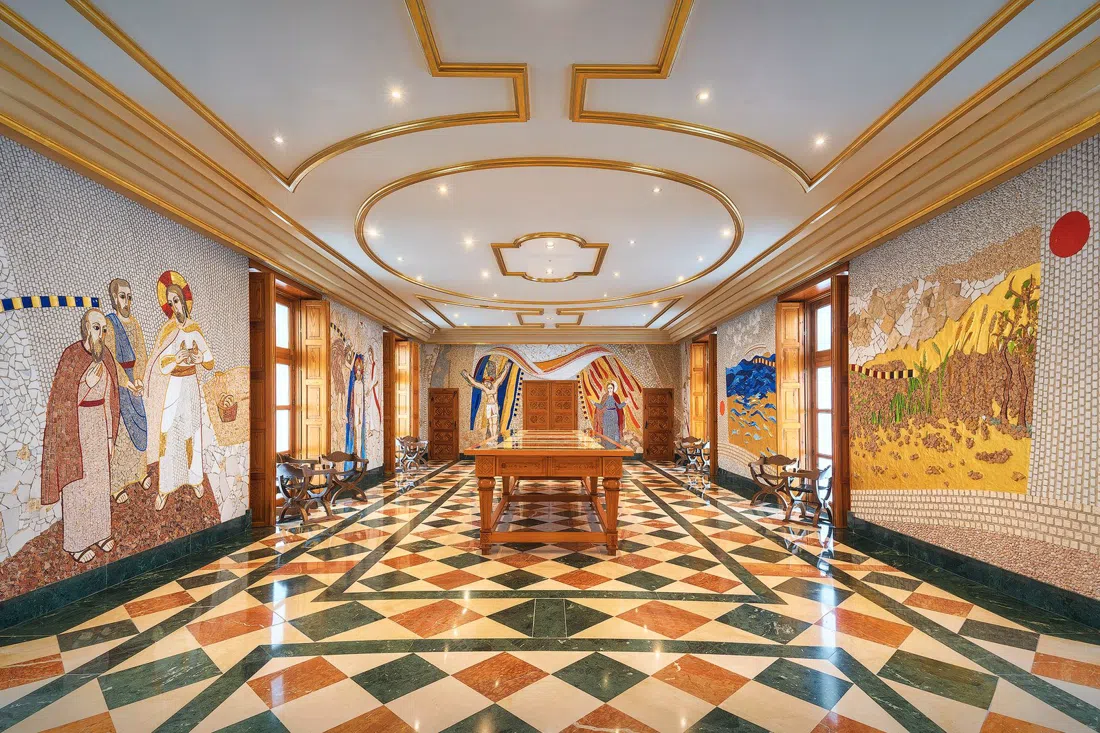
The route is one-way and fixed. You cross the Plaza de la Armería, pass security, and climb the main staircase into the Hall of Halberdiers. From there the rooms come in sequence: the Throne Room with its Tiepolo ceiling and red velvet walls, the Gasparini Room in carved and gilded stucco, the Porcelain Room, the Royal Chapel, and the banqueting hall laid as though for that evening. Signage is thin and the crowd moves at the pace of whoever is standing in front of you. The Royal Armoury sits off the courtyard in its own wing and is included in the ticket. It is a room of mounted figures in full plate, and it is the part people either walk straight past or spend half an hour in.
General admission is €18, reduced €9 for ages 5–16, over-65s and students under 25. The official guided visit is €26 and runs in English Monday to Saturday, roughly at 10:45, 11:45, 13:45 and 15:15. Two combined tickets cost €24 each: palace plus the Royal Collections Gallery, or palace plus the Royal Kitchen, which is a separate below-stairs route not included in the standard ticket. Guided options outside the official ones exist and are bookable in advance; the palace itself does not require one.
How long it takes
Allow 45 minutes for the state rooms and another 30 for the Armoury. With security, the courtyard and the walk between wings, an unhurried self-guided visit is an hour and a quarter to an hour and three-quarters. A guided visit runs closer to two hours because it stops and talks. Add the Royal Kitchen and you are at two and a half hours; add the Royal Collections Gallery and you have filled a half day.
So the palace does not fill a day, and planning it as though it does leaves you standing in Plaza de Oriente at noon with nothing arranged. Pick what goes with it from the sections below before you book the slot.
Getting in during September
Entry is by timed slot, run by Patrimonio Nacional. You pick a time, you arrive in the window, you go in. This matters most for anyone travelling as a group: a large party cannot queue up at the door and go in together, because the slot has to be booked and the official guided visits have fixed capacity. Couples and pairs have more room to improvise, but the same slot system applies.
Demand is steady rather than dramatic. The most-reviewed guided tour here is picking up about 5.3 reviews a day, which means it is being booked continuously right now rather than in spikes. Those guided departures run seven days a week. If the palace slot you want has gone, the gallery across the way opens later and is the usual fallback; it is covered below.
Booking ahead costs nothing beyond the ticket price and removes the only genuinely annoying part of the morning, which is discovering at 10:30 that the next available entry is after lunch. If you are at the door without a ticket, buy for the next slot on your phone in the queue rather than waiting to reach the window.
When to go in September
Summer hours hold through the month: Monday to Saturday 10:00–19:00, Sundays and holidays 10:00–16:00, with last entry one hour before closing. Watch the Sunday close at 16:00, because a Sunday afternoon plan gives you a last entry of 15:00 and a rushed Armoury.
First thing is the quietest hour inside, and in early September it is also the most comfortable, before the plaza stone starts throwing heat back at you. The other good window is late: from April to September, Monday to Thursday between 17:00 and 19:00, entry is free for EU and Ibero-American citizens and residents. If you hold one of those passports or a Spanish residency card, September is the last month of that window for 2026. If you do not, the same hours are still the thinnest crowd of the day on a paid ticket, and you need to be inside by 18:00 for the last entry.
Mid-morning, roughly 11:00 to 13:00, is when the guided groups and the coaches overlap in the state rooms. Avoid it if you can move either side of it.
The views that explain the building
From the ticket queue on Calle de Bailén the palace is a wall. It only reads as a single monumental block from a distance, and there are four free places to get that distance.
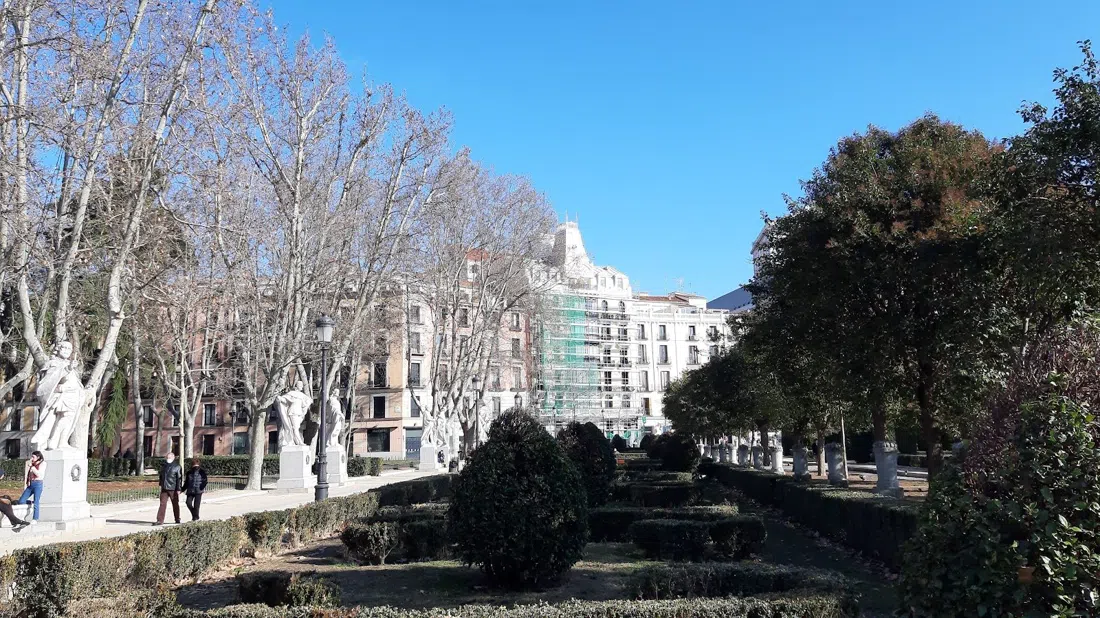
Plaza de Oriente (Palacio, between the palace and the opera house) is the closest. Joseph Bonaparte cleared the medieval blocks here in the early 1800s to open up the view, which is why it exists at all. It is also the standard muster point for walking groups: no restrictions, no booking, benches under the trees.
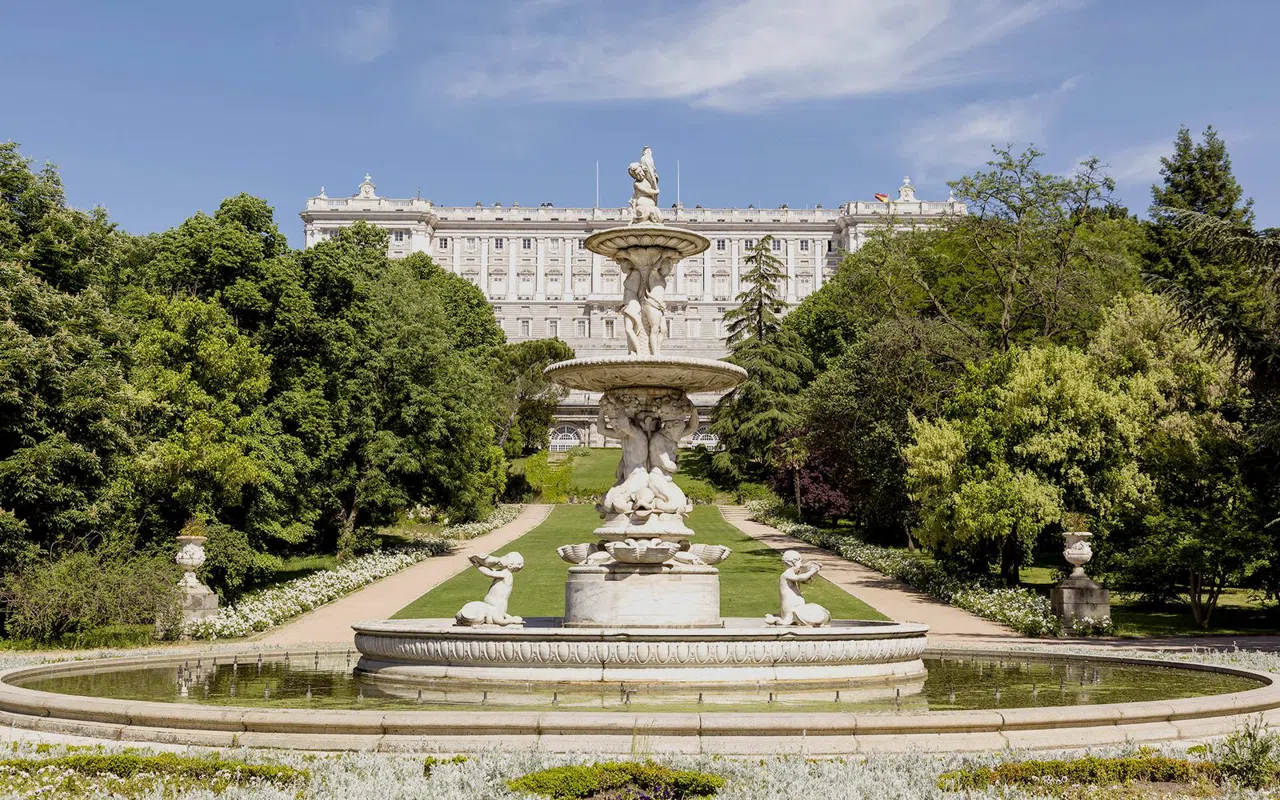
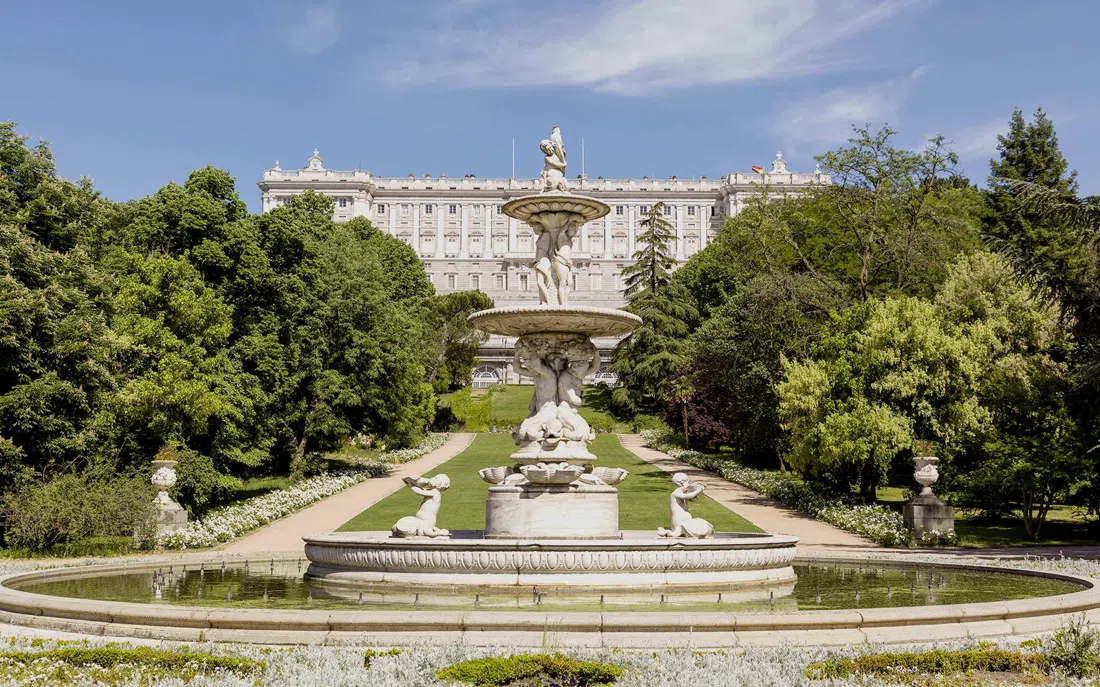
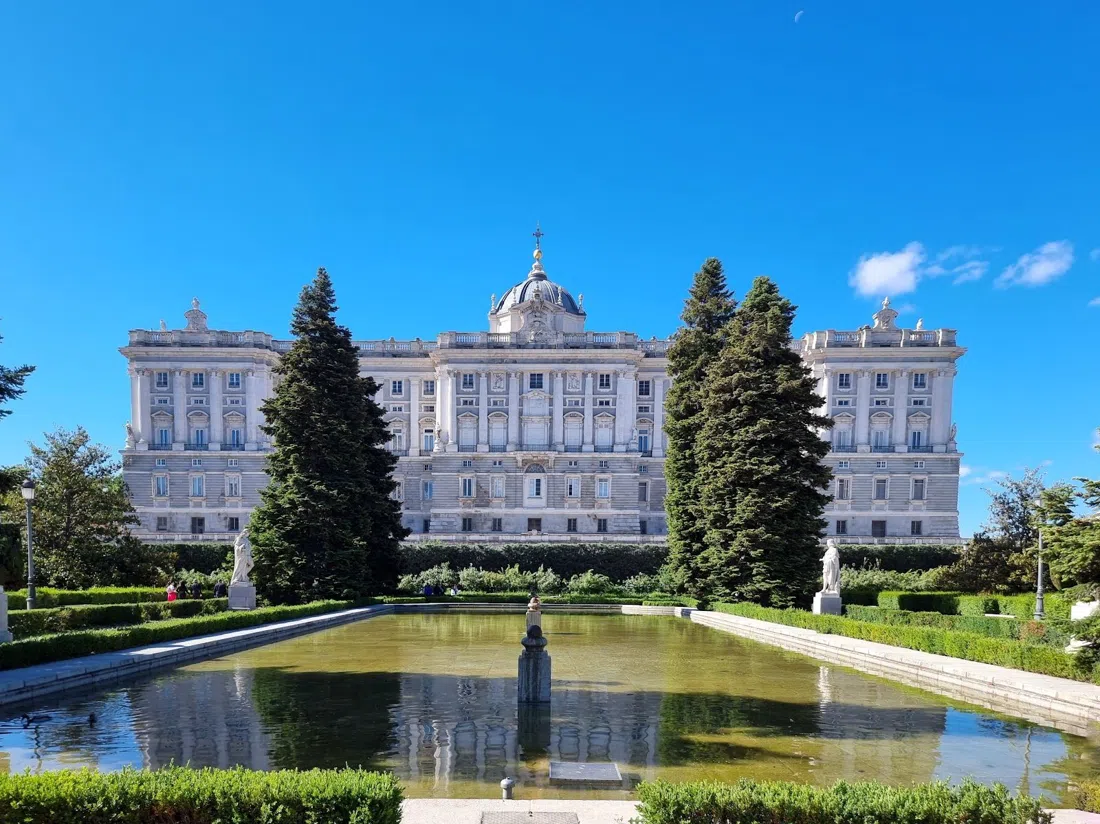
Jardines de Sabatini (Palacio, north side on Calle de Bailén) gives you the reflecting pool and the formal parterres. They were laid out in the 1930s on the site of the royal stables and named after the architect who built them. The gardens face west, so the facade takes direct light late in the day, which makes this a stop for after your visit rather than before it.
Campo del Moro Gardens (Palacio, below the palace on the Manzanares side) is the angle that shows how high the building sits above the river valley. The name refers to a Moorish encampment on the slope in 1109. There are three separate gates, Cuesta de San Vicente, Cuesta de la Vega and Paseo Virgen del Puerto, so arrange to meet at a named gate rather than at "the gardens". April to September hours run to somewhere between 20:00 and 22:00 depending on the gate, and a section of the Bonaparte Tunnel running toward Madrid Río opened to visitors in January 2026.
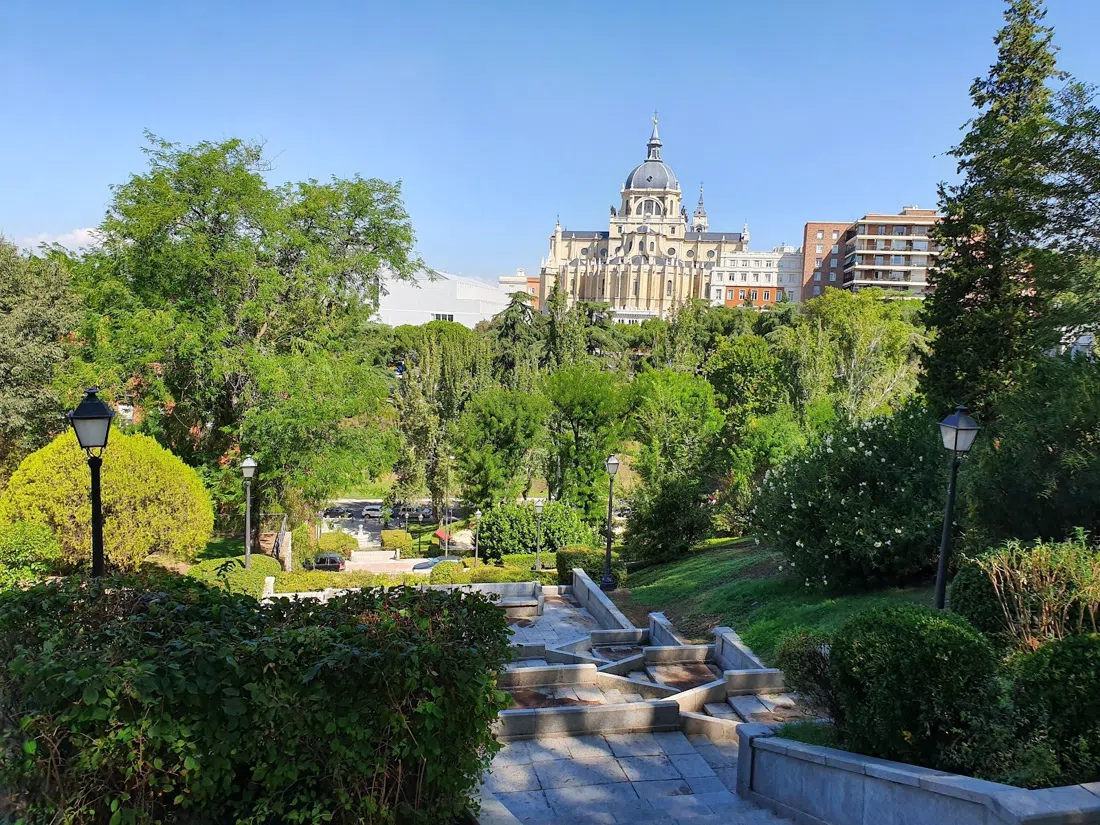
Santa María la Real de La Almudena Cathedral — Museum and Dome (Palacio, directly opposite across Plaza de la Armería) is the one place you can photograph the whole facade from above. The cathedral was begun in 1883 and only consecrated in 1993. The nave is free to enter, with a €1 donation suggested, and the museum and dome walkway together cost €7. The catch is the hours: Monday to Saturday 10:00–14:30 only, closed Sundays. It has to happen before lunch, which usually means doing the dome first and the palace after. The walkway is narrow, so groups should email [email protected] ahead.
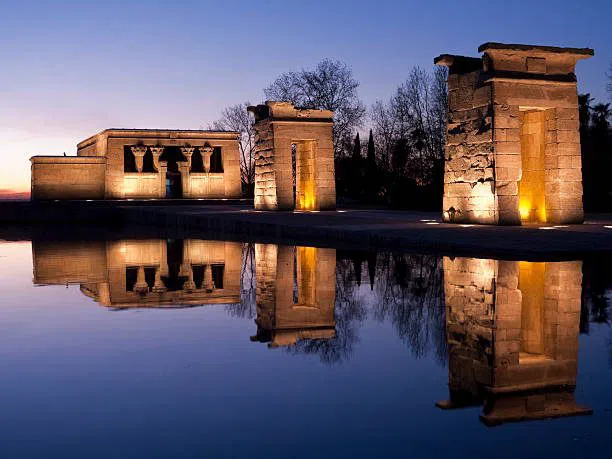
For the end of the day, Templo de Debod (Argüelles, ten minutes north of the Sabatini gardens) is a 2nd-century BC Egyptian temple gifted to Spain in 1968 and rebuilt stone by stone on the ridge. The gardens and the viewpoint are free and take any number of people. The interior is capped at 30 visitors for 30 minutes and needs an advance booking at madrid.es/debodreservas, and it closes intermittently for conservation. Treat the outside as the reason to come and the inside as a bonus. Closed Mondays.
What to put next to it
Galería de las Colecciones Reales (Royal Collections Gallery) (Palacio, on Cuesta de San Vicente beside the cathedral) holds the objects the state rooms have no space for (tapestries, carriages, armour, paintings) in a purpose-built hall with wide ramps and lifts. It is €14, €7 reduced, €8 for the exhibition only, or €24 combined with the palace, and free Monday to Thursday 18:00–20:00. It opens later than the palace, to 20:00 Monday to Saturday and 19:00 Sundays and holidays, with last admission 45 minutes before close, which is why it absorbs an afternoon when palace slots have gone.
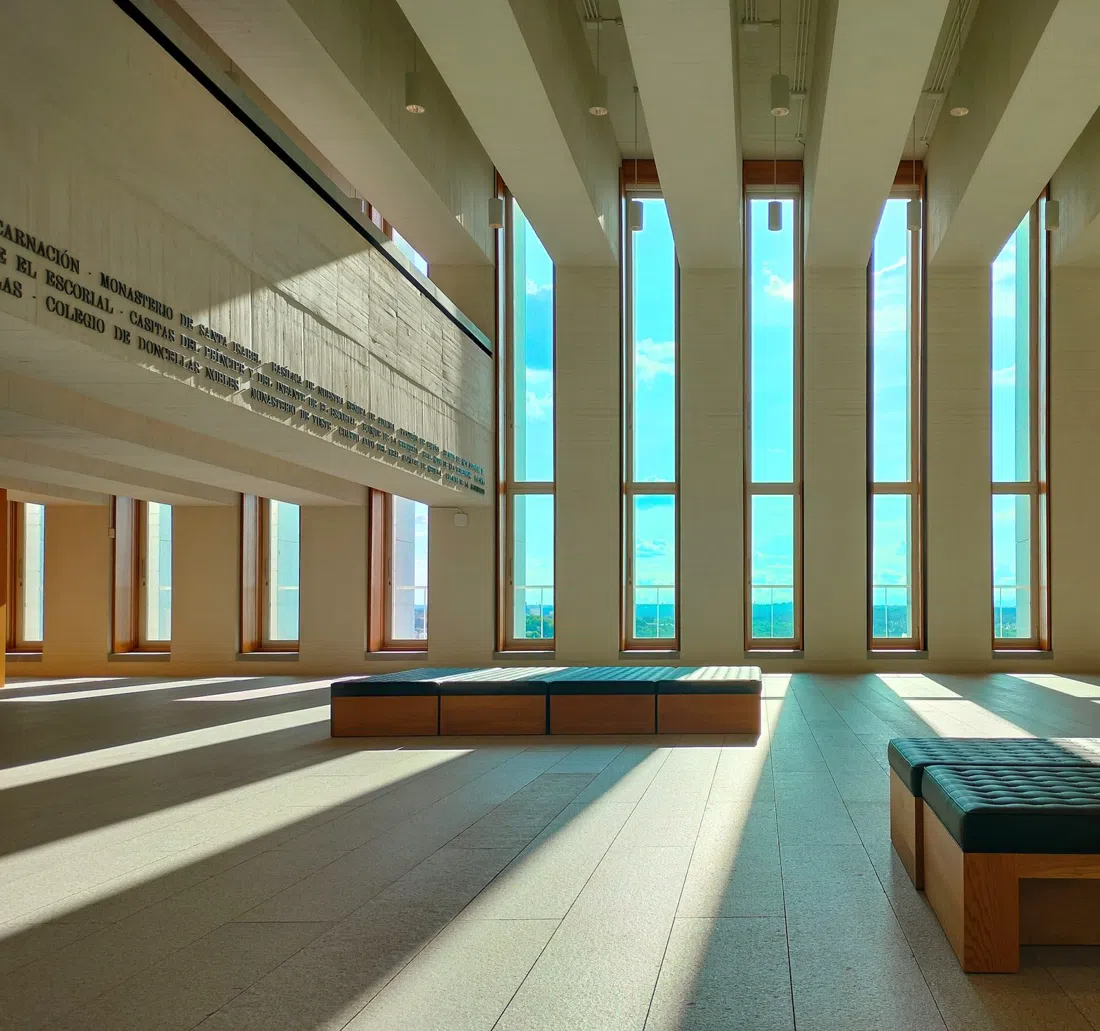
Real Monasterio de la Encarnación (Ópera, five minutes north of the palace) is a working convent founded in 1611 by Margaret of Austria, on the same Patrimonio Nacional ticketing as the palace at €9, free Wednesday and Thursday 16:00–18:30. Visits are guided in fixed groups and capacity is small, so book ahead. Closed Mondays, open Tuesday to Saturday 10:00–14:00 and 16:00–18:30.
Monasterio de las Descalzas Reales (Sol, ten minutes east) was founded in 1559 by Juana of Austria and is still an enclosed convent, which is why it feels nothing like the palace. Every visit is a compulsory guided group of fixed size, about an hour. It closes Mondays and shuts at 14:00 for a long lunch, so it does not combine with an afternoon palace slot. €9, free Wednesday and Thursday 16:00–18:30.
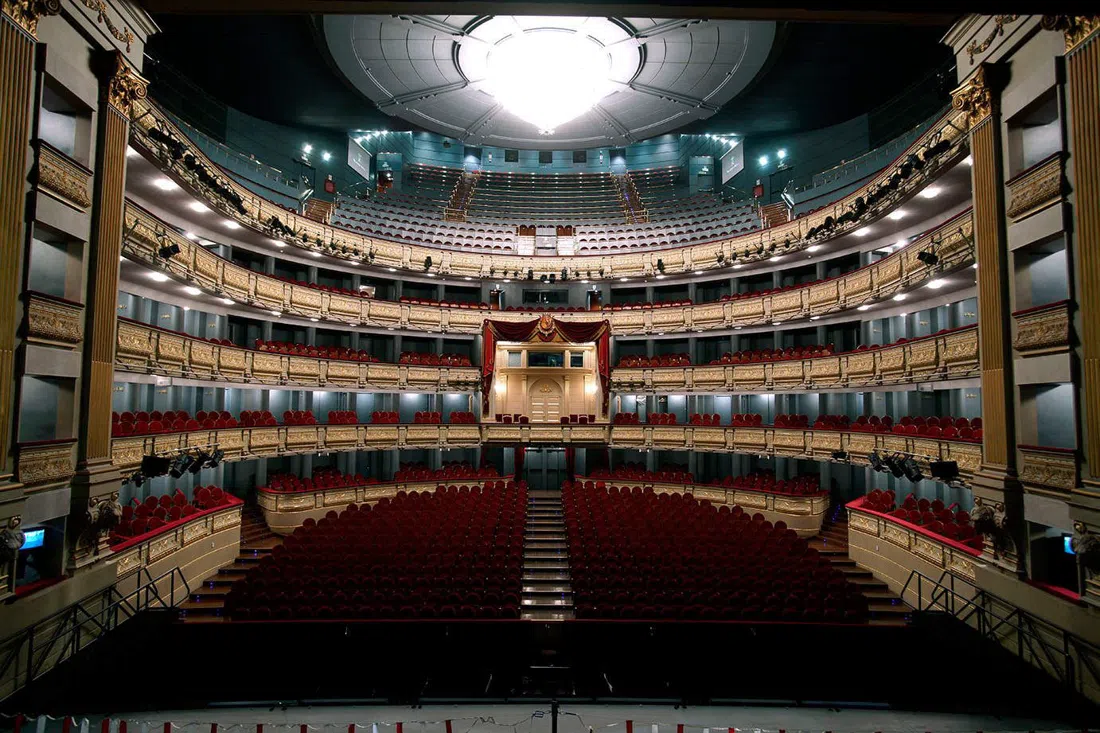
Teatro Real (Ópera, thirty seconds from Plaza de Oriente) opened in 1850 and runs tours of the house and the machinery behind it: audio tour €8 (€7 reduced), general guided €13 (€11), artistic tour €20, backstage technical tour €23. It is explicitly set up for parties, with a mixed-visit rate from €17 per person for 17 or more, maximum 50 people, or 60 with instructors, departing at 10:00 or 13:30 by prior form request. Photography is banned on the guided tours and anyone more than five minutes late is refused.
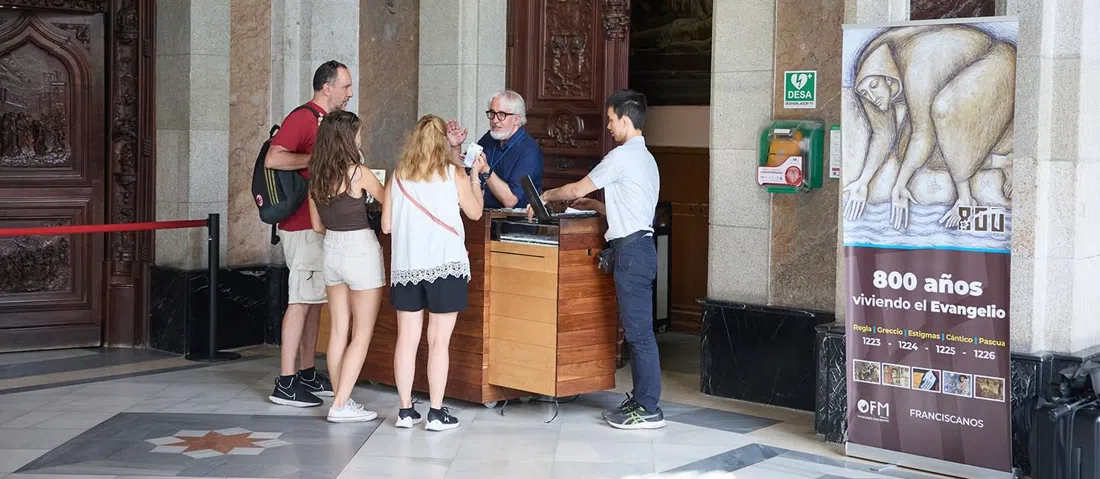
Real Basílica de San Francisco el Grande (La Latina, a short walk downhill from the cathedral) reopened in February 2026 after its dome restoration, so the frescoes are cleaner than they have been in decades. The museum route is roughly €5–6, free on Thursdays, open Tuesday to Saturday 10:30–14:30 and 16:00–18:30, and parts of it are guided, so ring ahead for a larger party.
Eating around the palace hours
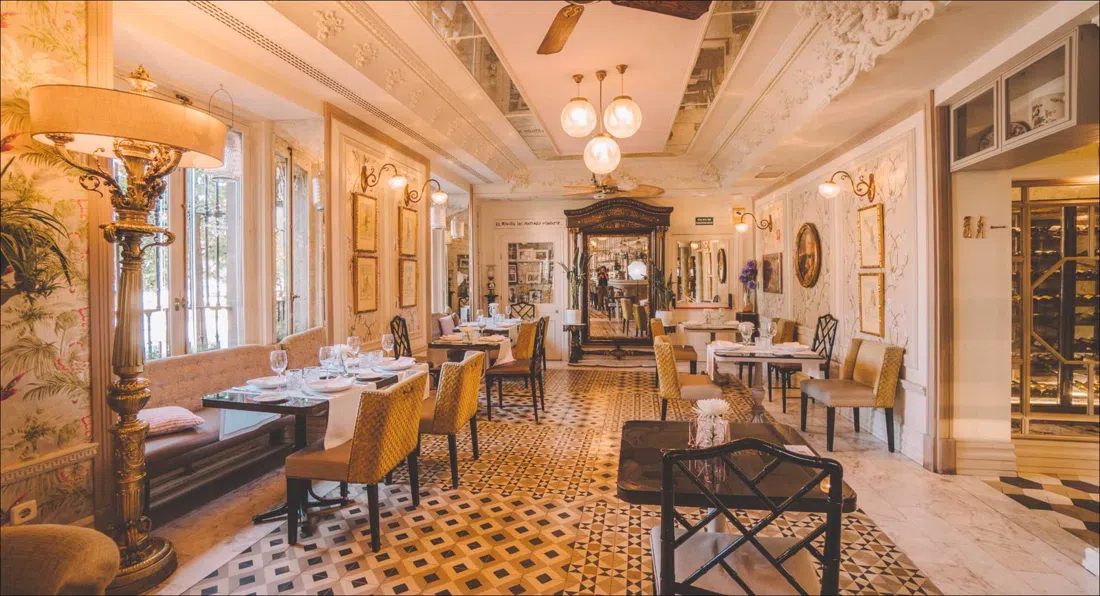
You come out of the palace at a time when Madrid kitchens are shut. Café de Oriente (Palacio, east side of Plaza de Oriente) has the palace-facing terrace and publishes set group menus, but it serves lunch 13:00–16:00 and dinner 21:00–24:00, open every day of the year, so it does not cover the 16:00–21:00 gap when most visitors emerge. Reserve if you want a terrace table.
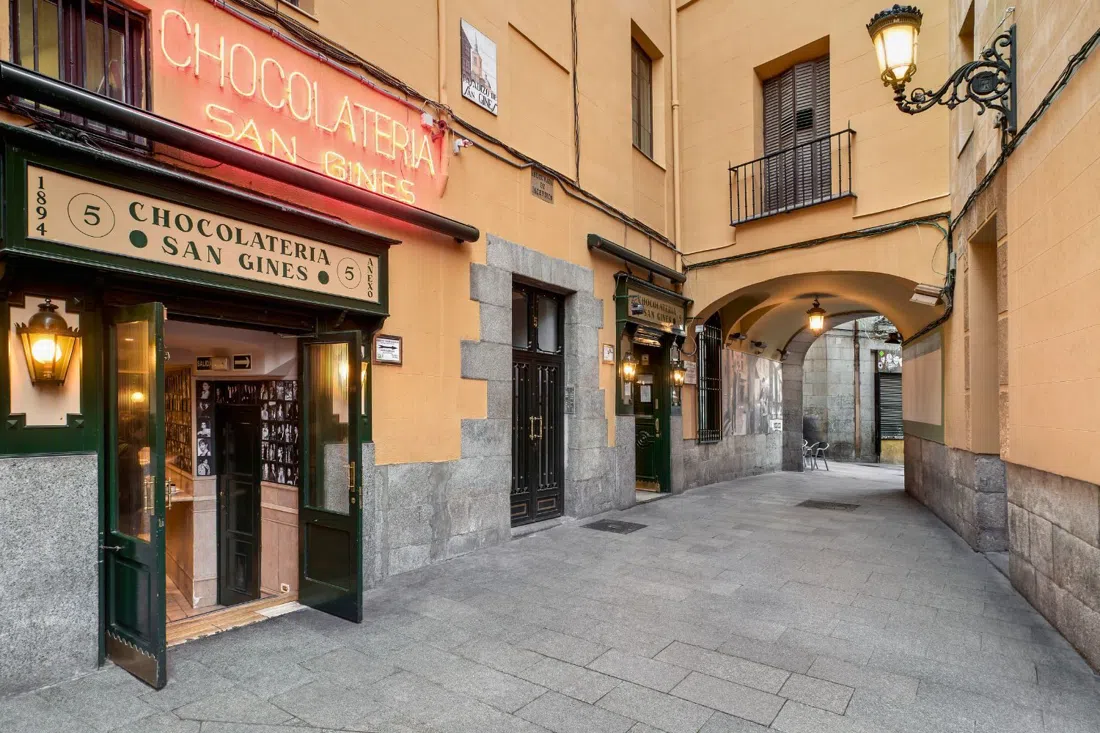
Chocolatería San Ginés (Sol, in the passage off Calle Arenal) has been serving chocolate con churros since 1894 and stays open round the clock at the end of the week, which makes it the reliable option at 17:30. Around €6, no reservations, two floors, first-come, so a large group will end up split across tables.
Mercado de San Miguel (Austrias, ten minutes' walk by Plaza Mayor) is a 1916 iron-and-glass market turned tapas hall, open 10:00–24:00 and to 01:00 on Fridays, Saturdays and holiday eves. No door policy and no bookings, but it is standing room only and a genuine crush at lunch and dinner; small plates run roughly €3–10 and add up quickly. Come at opening or not at all.
Jardín de las Vistillas (La Latina, five minutes from the cathedral) is a public garden with several independent terrace bars and no reservations. A caña costs a few euros and the tables fill at sunset. It is where the neighbourhood sits out instead of going up to a rooftop, and it works for any group size as long as you are relaxed about sitting apart.
Rules, bags and access
Large backpacks and suitcases are refused at the door and there is no left-luggage arrangement, so sort storage before you arrive. Photography without flash is allowed for personal use inside the palace. The Royal Collections Gallery is the easiest building in the group for anyone with a wheelchair or a pushchair, with wide ramps and lifts throughout. The cathedral dome walkway is the hardest: narrow and stepped.
Is it worth it
Yes, with a caveat about expectations. This is a tour of finished ceremonial rooms, not a house where you feel someone lived. The pleasure is in the craftsmanship (the Gasparini stucco, the clocks, the tapestries) and in the scale of the courtyard and the plaza. If you like decorative arts, or you want one big set-piece building in a city otherwise defined by its picture galleries, it earns the €18 comfortably. If you are travelling with children who need something to do rather than look at, the Armoury holds them and the state rooms will not.
A guided visit is worth the extra €8 over general admission if you want the rooms explained, because the on-site signage will not do it. Going in cold and moving at your own pace is a perfectly good visit too, and cheaper.
Practical notes for September 2026
Metro Ópera on lines 2 and 5 puts you in Plaza de Oriente in two minutes. Príncipe Pío is the stop for the lower gates of Campo del Moro, and Ventura Rodríguez or Plaza de España for Debod. The whole cluster (palace, cathedral, gallery, opera house, Sabatini) is walkable in under ten minutes end to end, all of it on slopes and cobbles, so wear something you can stand in for four hours.
Cards work everywhere that issues a ticket. Carry €20–30 in coins and small notes for churros, the cathedral donation and the Vistillas terraces. A realistic day comes to €18 for the palace, €7 for the cathedral dome, €6 for chocolate and a few euros for a drink at sunset, so call it €40 per person with the gardens and the plazas free. Add €6 if you combine the palace with the gallery at €24, which is the better value of the two combined tickets if you have the afternoon.
On timing: book the palace slot first, put the cathedral dome before it if you want the aerial photograph, and leave Sabatini or Vistillas for the end of the day when the light turns. September evenings stay warm enough to sit out until well after dark. For somewhere to stay within walking distance of the gates, start with the Madrid hotel search. The streets around Ópera and Plaza de Oriente put you five minutes from the queue, which on a 10:00 slot is worth more than it sounds.