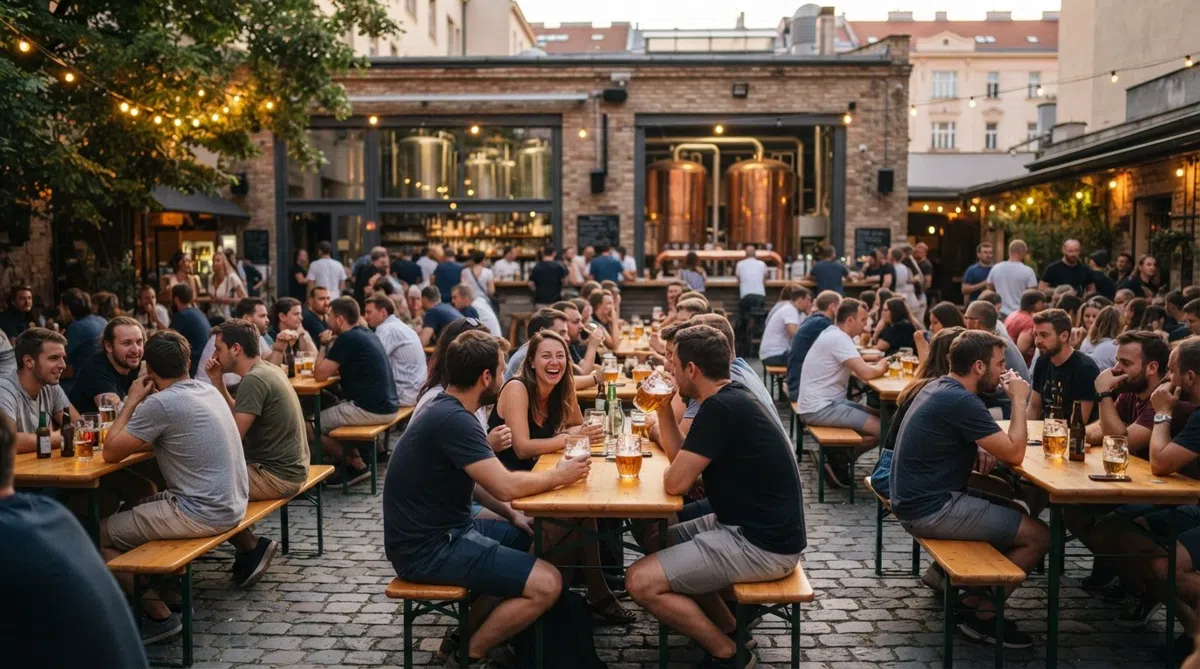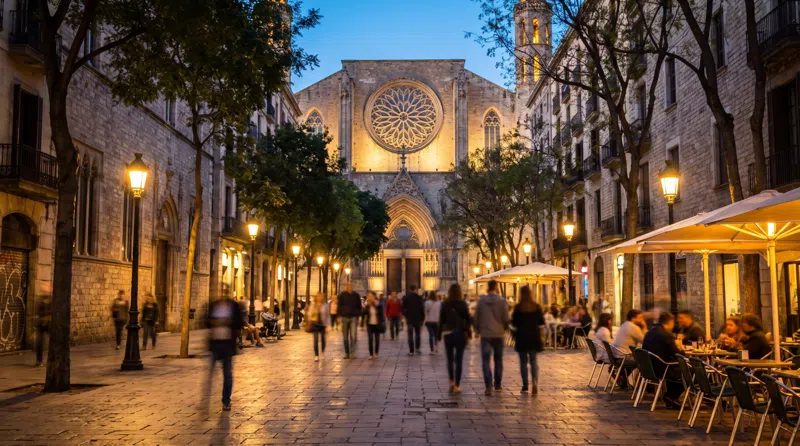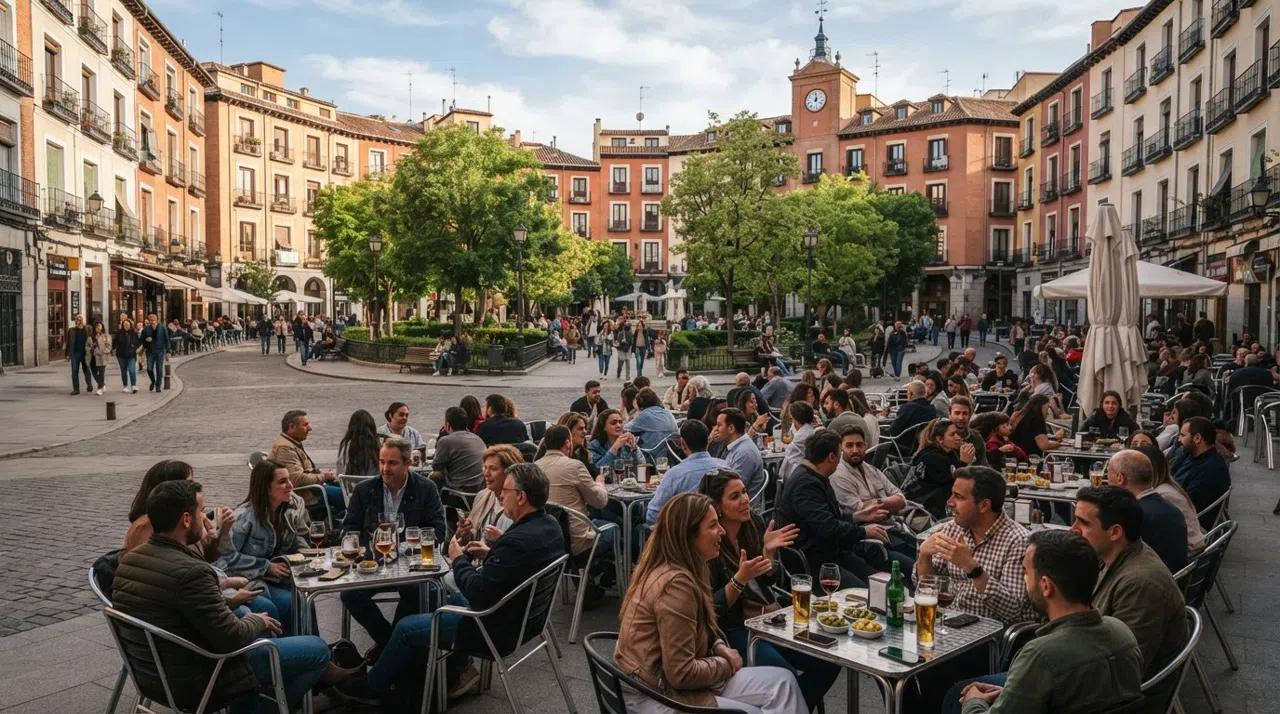
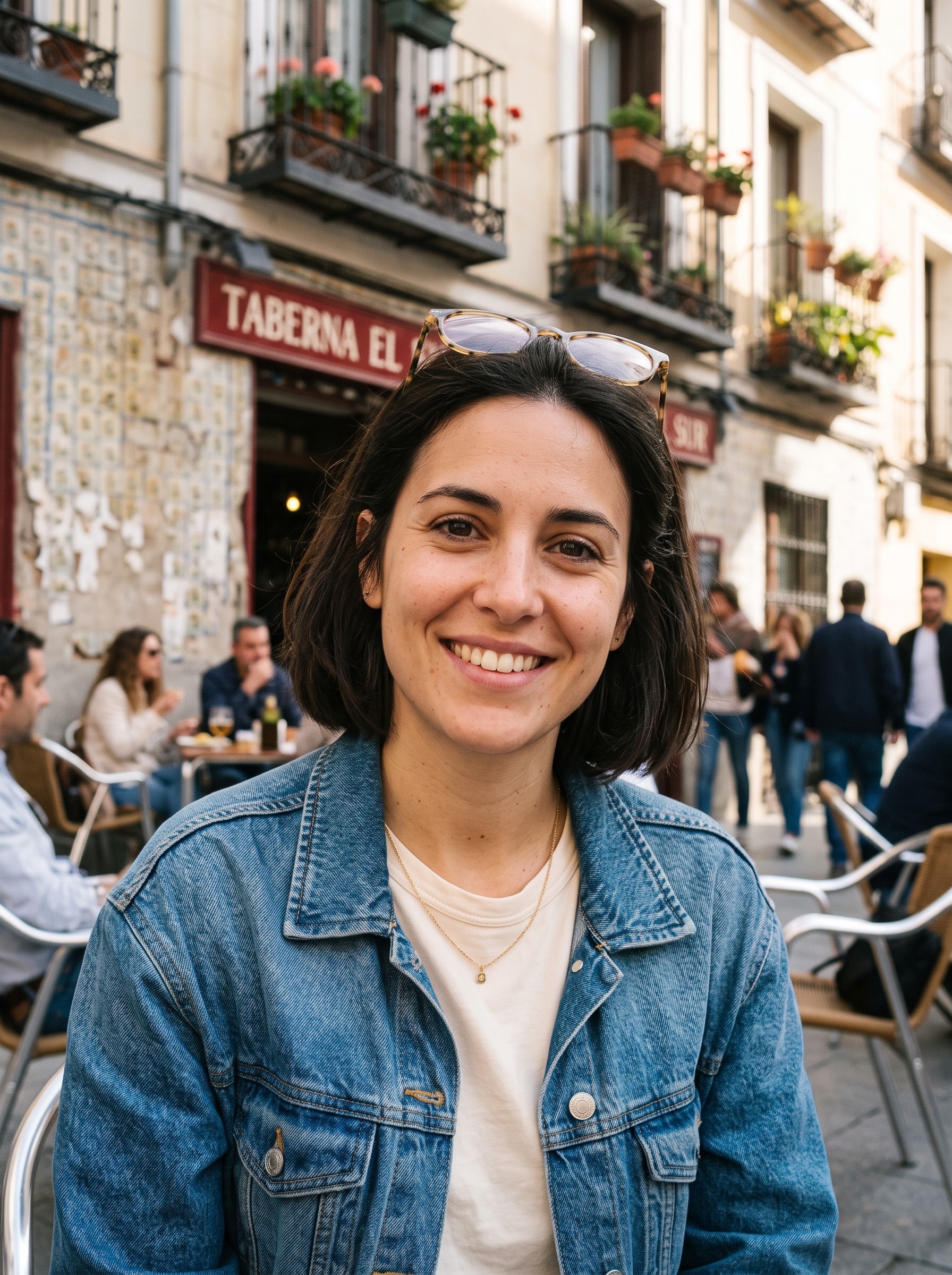
Ask a madrileño where the locals actually eat, and sooner or later they’ll point you north to Chamberí. This is the barrio where Madrid keeps its dignity and its appetite at the same time: handsome early-twentieth-century apartment blocks, wrought-iron balconies, wide tree-lined streets, and a pace that never seems to be hurrying for the sake of being seen. You come for the food, certainly, but what stays with you is the rhythm — glasses clinking on terrace tables, the hiss of a beer tap, children kicking a ball around Plaza de Olavide while their parents nurse a vermut. Chamberí is residential first and destination second, which is precisely why it feels so good to spend time in it.
What Chamberí is known for
Two things, above all: eating well and doing it among locals. Chamberí carries an outsized share of Madrid’s serious kitchens, several of them tucked into streets that, from a distance, still look entirely ordinary. But the barrio’s everyday identity is not the tasting menu; it is the taberna, the vermouth bar, the market, the long lunch that rolls into the afternoon without making a scene. Its spine is Calle Ponzano, a stretch once dubbed one of the liveliest streets in the city and now so associated with bar-hopping that locals turned the act into a verb: ponzaning.
The name matters because it tells you how Chamberí works. You don’t come here to conquer a checklist. You come to drift. One street leads to another, and the neighbourhood keeps revealing its comforts in layers: a serious kitchen hidden behind an ordinary façade, a square where everyone seems to know the point of the hour, a museum lodged in a place you might otherwise walk past. That last part is important. Chamberí is not only about eating and drinking well. It also holds the ghost metro station beneath Plaza de Chamberí, the restored Frontón Beti-Jai, and the Museo Sorolla, all reminders that this is a barrio with cultural weight as well as a good appetite.
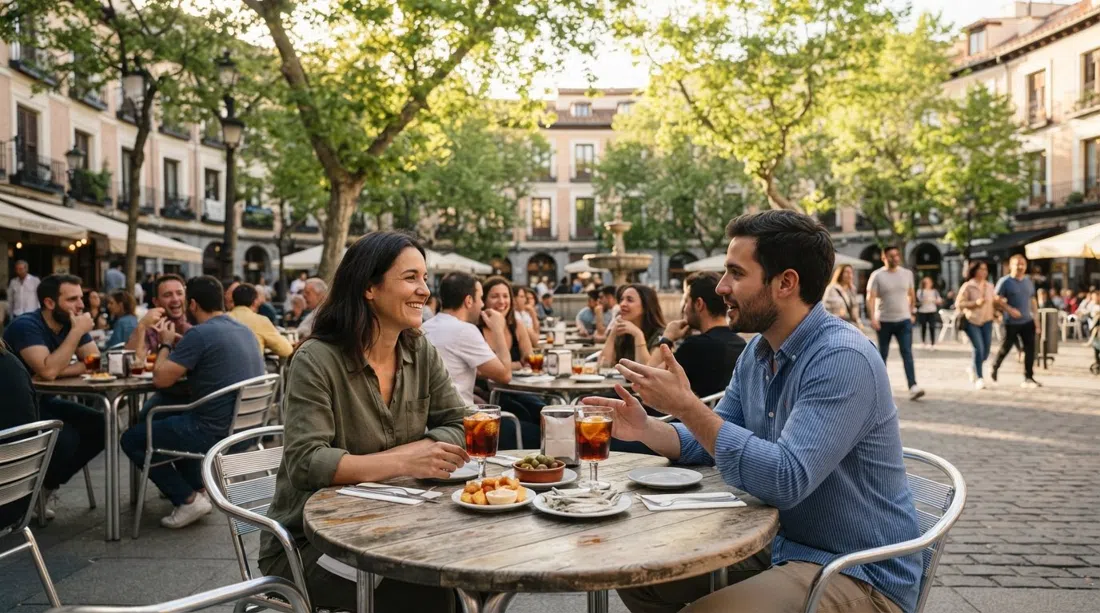
At the centre of its social life is Plaza de Olavide, a circular, semi-pedestrianised square that functions as the neighbourhood’s living room. A 2024 makeover added trees, planting and street furniture, and the terraces around its edge now feel like the default stage for the neighbourhood aperitivo. This is where Chamberí’s calm becomes visible: people linger, talk, order another round, and let the day slow down in public.
Beyond that square, the barrio changes register from one sub-district to the next. Almagro has its mini-palaces and embassies; Gaztambide is a touch louder near the university; Trafalgar and Arapiles sit closer to the eating-and-drinking current that runs off Ponzano. But the mood stays recognisably Chamberí: sophisticated without being showy, well dressed without trying too hard, and more Spanish than English in the air.
Where to eat & drink
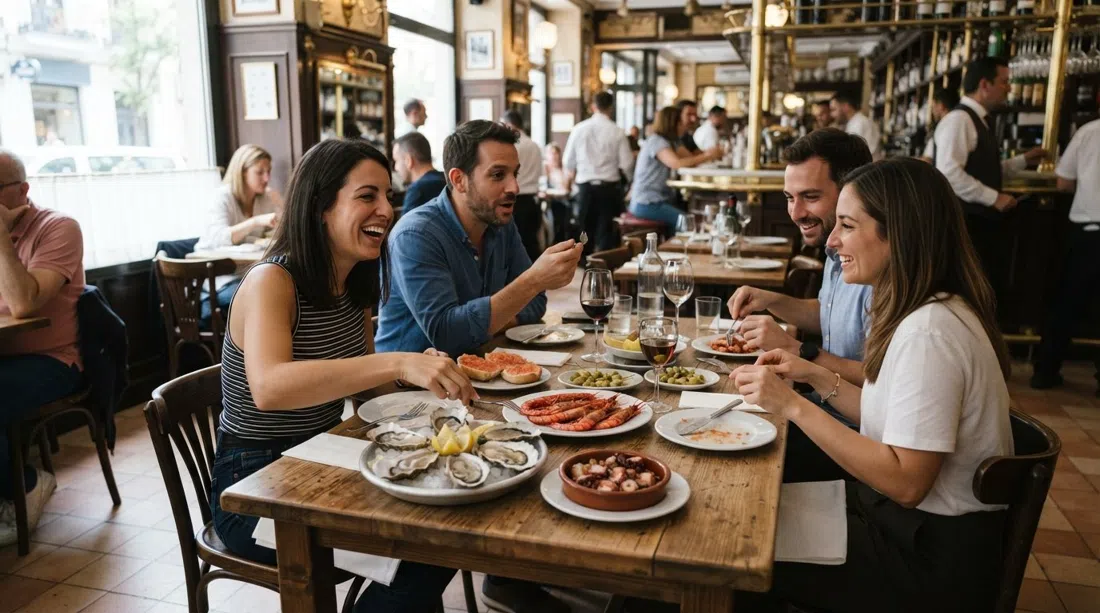
Start on Calle Ponzano and let it carry you. It is the street that best explains Chamberí’s reputation, because it contains the barrio’s range in a few blocks: dependable classics, serious kitchens, and the kind of places where a casual drink can easily become dinner. At No. 41, La Máquina de Chamberí is the reliable classic — Cantabrian seafood, red prawns, oysters and high-end tapas like mini veal burgers — the sort of place you point first-timers to when you want to show them that this neighbourhood’s standards are not theoretical.
A few doors up, at No. 85, El Invernadero is chef Rodrigo de la Calle’s temple of gastrobotánica, a Michelin-starred, Green-starred tasting menu built almost entirely around vegetables, with meat used as a garnish rather than the main event. It is one of those restaurants that gives away the neighbourhood’s confidence: Chamberí can host a kitchen this exacting without making a fuss about it. The room is part of the point, of course, but so is the street outside, where the evening carries on at a human scale.
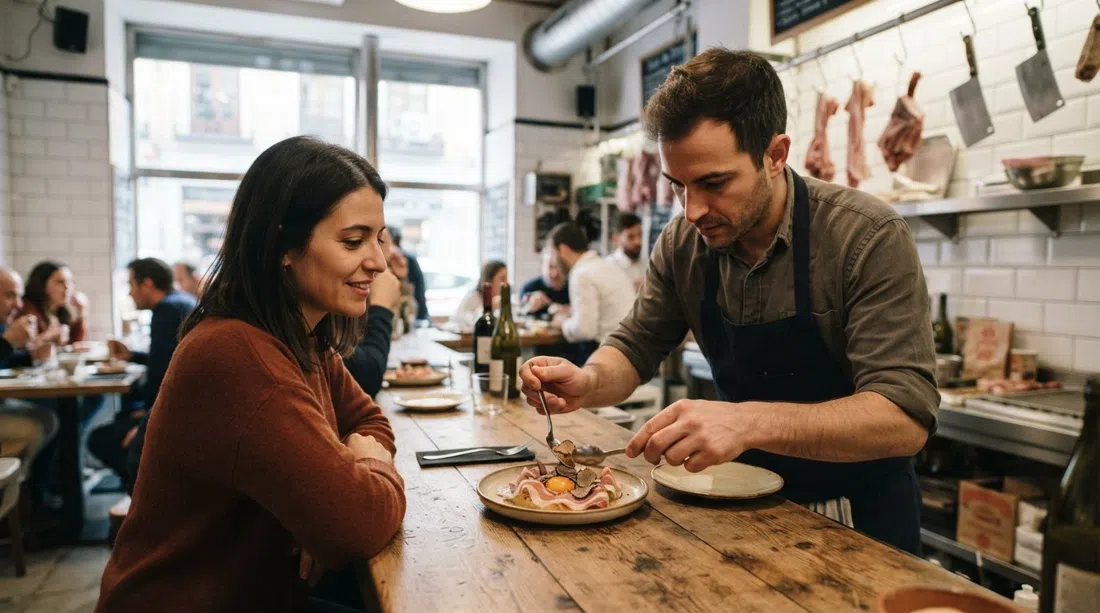
For the barrio’s most theatrical meal, Sala de Despiece moved in 2024 to a bigger room at Calle Alonso Cano 28, where nose-to-tail Spanish cooking arrives with table-side assembly and the signature Rolex — a thin sheet of pancetta wrapped around low-temperature egg yolk, foie and truffle — still draws the eye before the first bite. This is Chamberí in a different key: not the old taberna, not quite the formal tasting menu, but a room where the performance is built into the plate.
At the very top sits Coque on Calle del Marqués del Riscal 11, the Sandoval brothers’ two-Michelin-star production that walks you through a cocktail bar, a sherry cellar and an open kitchen across one long evening. It is one of the barrio’s great reminders that Chamberí’s dining scene is not merely broad; it is deep. You can eat simply here, or you can spend an evening being led from one room to the next in a carefully choreographed sequence.
If what you want is the old-Madrid register, head to Casa Ricardo on Calle de Fernando el Católico, on the western edge of the barrio. It has been serving Castilian cooking since 1935 under walls of bullfighting photographs, and its rabo de toro is regularly called one of the best in the city. The room feels like a stubborn continuation of another Madrid, one that still values stew, memory and a proper lunch over novelty.
Then there is Fismuler on Calle de Sagasta 29, where ex-elBulli chefs Nino Redruello and Patxi Zumárraga have hidden a genuinely great kitchen in a stripped-back industrial room. The burnt Basque-style tarta de queso has a cult following for a reason; it is the sort of dessert that makes a table go quiet in the best way. For coffee between meals, Toma Café near Plaza de Olavide, at Calle de Santa Feliciana 5, was one of the pioneers of Madrid’s specialty-coffee wave back in 2012. It is a useful stop not because Chamberí lacks cafés, but because it helps mark the day between lunch and the next glass.
Going out
Chamberí’s evenings are grown-up. That is the first thing to understand. This is not a district for warehouse clubs or 6 a.m. queues; it is for the long dinner, the terrace vermut that stretches past sunset, and live music in an intimate room. The signature ritual is the Sunday vermut: a chilled glass of house vermouth on tap, an olive, and a few tapas, taken slowly on a Plaza de Olavide terrace while the neighbourhood does the same all around you. There is something almost corrective about it, as if the barrio insists that leisure should still have manners.
When you do want a proper night out, the anchor is Clamores on Calle de Alburquerque 14, a jazz and live-music institution running since 1981. It puts on soul, funk, blues, tango and pop as well as the jazz that made its name, and on Friday and Saturday nights it turns into a late club with DJs after 2 a.m. The room has the useful intimacy of a place that knows exactly what it is. You don’t go there to be overwhelmed; you go because the music has a shape and the night can still be allowed to deepen.
Most of the time, though, the pleasure is simpler: working your way along Calle Ponzano from bar to bar, a caña and a plate at one place, a glass of Ribera and some jamón at the next. That is the true nightlife grammar here, and it is how locals spend a Thursday or Friday evening. Book ahead for the sit-down restaurants at weekends; the standing bars you just muscle into. Chamberí rewards patience more than momentum.
Things to do
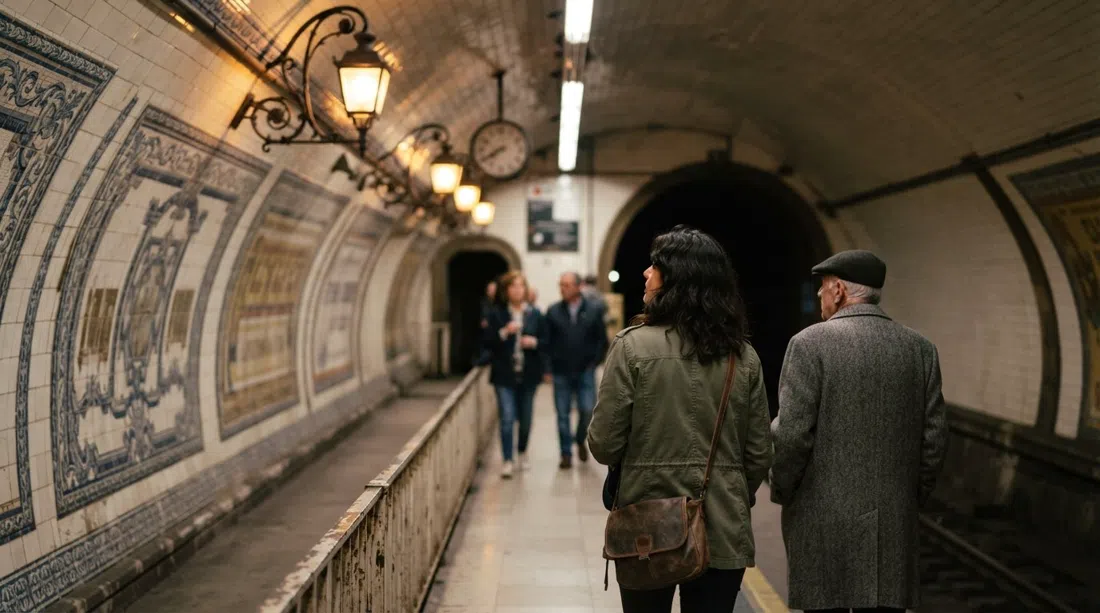
Chamberí rewards curiosity between meals. The standout is Andén 0, the ghost metro station beneath Plaza de Chamberí — a Line 1 platform frozen since 1966, its walls lined with vividly coloured 1919 ceramic advertising tiles that made early Madrid Metro stations small works of art. It reopened as a free museum, booking ahead is essential because slots sell out, and in 2025 it began a fresh conservation round to repair the historic tilework. It is one of those places that changes the way you think about the city’s underground life: not merely infrastructure, but design, memory and civic vanity preserved in ceramic.
A short walk away, the Museo Sorolla occupies the former home and Andalusian-garden studio of Joaquín Sorolla, Spain’s painter of dazzling coastal light, at Paseo del General Martínez Campos 37. It closed in October 2024 for a major renovation and expansion and is expected back in 2026, so check before you plan around it; the place matters enough to be worth the note. When it reopens, it will again offer one of the city’s most graceful domestic museum experiences, a house where light is almost the subject.
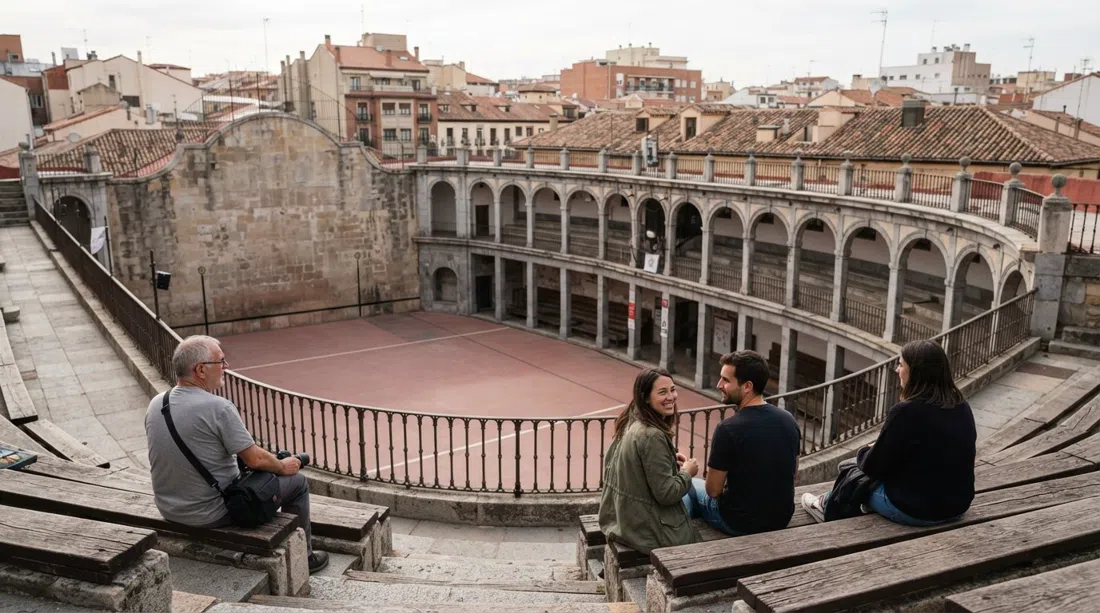
For something genuinely unusual, the Frontón Beti-Jai on Calle del Marqués de Riscal 7 is the last surviving monumental Basque pelota court of the thirty Madrid once had. Painstakingly restored, it reopened to free public visits in March 2024 with an interpretation centre and guided tours. It is the sort of landmark that feels discovered rather than announced, and that suits Chamberí well. Round it out with the free Museo Geominero in Ríos Rosas, whose fossils and minerals sit under a beautiful stained-glass ceiling. That ceiling alone is worth the detour, but the collection gives the visit a satisfying weight: the barrio’s pleasures are not only edible.
Shopping
Chamberí’s markets are half the appeal. The refurbished Mercado de Vallehermoso on Calle de Vallehermoso pairs traditional grocers’ stalls with a food hall that has become a destination in its own right. Tripea, Roberto Martínez’s tiny Peruvian–Southeast-Asian–Spanish counter with a constantly changing tasting menu, has earned Michelin recognition and needs a booking; Kitchen 154 slings Asian-leaning plates like sweet-chilli wings and Korean ribs; and Biang Biang Bar hand-pulls Shaanxi noodles to order. It is one of those market halls that still feels partly local even as it pulls in serious eaters from across the city.
The older Mercado de Chamberí, open Monday to Saturday since 1943, is more of a working neighbourhood market with a handful of tapas counters folded in. That difference matters. Vallehermoso has become a destination; Chamberí remains a market you could still use to buy dinner ingredients on the way home. Both belong to the barrio’s larger way of life, where eating well is not reserved for special occasions.
For browsing rather than eating, Calle de Fuencarral between the Bilbao and Quevedo roundabouts is the barrio’s main shopping run, thick with cosmetics, fashion and bookshops. It is an easy street to wander rather than target, and that suits Chamberí’s temperament. The area is for pottering, not power-shopping.
Where to stay in Chamberí
Chamberí suits travellers who want a residential, upscale-but-relaxed base rather than a front-row seat to the sights. The most elegant pockets are in Almagro, around Calle Zurbano and Calle Fortuny, where quiet embassy-lined streets sit within walking distance of the Paseo de la Castellana and the metro carries you into the centre in minutes — this is the higher end of the price range. Around Plaza de Olavide and along the streets feeding into Calle Ponzano, in Trafalgar and Arapiles, you are in the thick of the eating and drinking, still calm at night but never far from a terrace or a caña; prices here feel mid-range and better value than an equivalent room downtown. Gaztambide, nearer the university, runs a touch livelier and cheaper.
Wherever you land, you are trading a five-minute walk to the Prado for a genuine neighbourhood on your doorstep. That is the bargain Chamberí offers, and it is an unusually good one for travellers who prefer to live among residents rather than beside monuments.
Getting around
Chamberí is compact and flat enough to walk end to end, and well wired into the Metro. Bilbao, with Lines 1 and 4, and Iglesia, on Line 1, sit near Plaza de Olavide and the Ponzano scene; Quevedo, on Line 2, covers the western side; Alonso Cano on Line 7 and Ríos Rosas on Line 1 bracket the northern end of Ponzano; and Alonso Martínez, with Lines 4, 5 and 10, and Rubén Darío on Line 5, serve elegant Almagro. From most of the barrio it is a single quick metro hop — roughly 10 minutes — down to Sol and the Gran Vía, or a 15–20 minute walk to Malasaña and the museum district. For the airport, take Line 1 or 4 to Nuevos Ministerios and change to Line 8, which runs straight to Barajas in around 20–25 minutes; a taxi is typically 25–35 minutes depending on traffic. Within the neighbourhood, you will rarely need anything but your own feet.
The practical truth of Chamberí is that it behaves like a city within the city. You can stay quietly, eat very well, slip to a museum, and be back on a terrace before the light leaves the square. That is its charm: not drama, but continuity, and an unusually polished version of everyday Madrid.