
Madrid's night doesn't arrive so much as widen. By the time other capitals are calling last orders, this city is only reaching its dinner reservation — and by the time that dinner is finished, an entirely separate schedule of sherry, jazz, and flamenco is just getting started. None of it is staged for visitors; it's simply how the clock has run here for generations, and the venues that keep it running prove it night after night, in rooms that have mostly been doing this since long before anyone called it a tourist attraction.
Dinner Starts When Other Cities Stop Serving
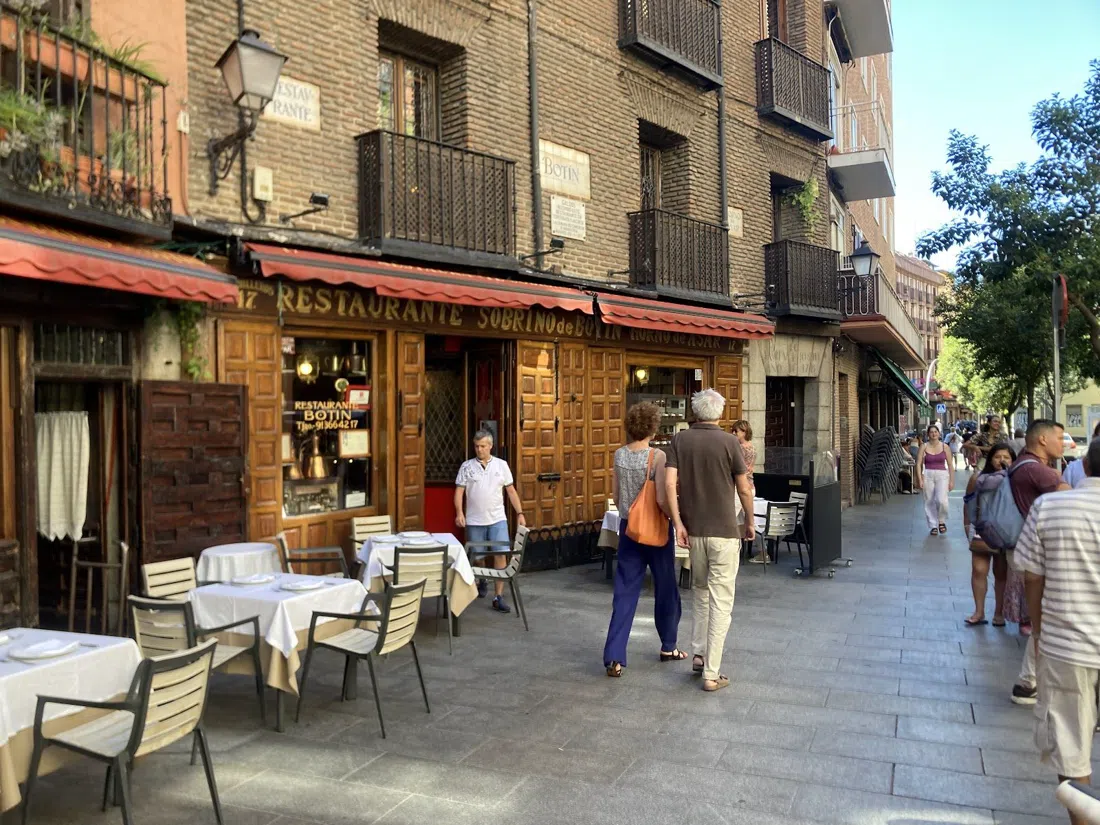
The first sign that Madrid runs on a different circadian rhythm is the dinner reservation itself. Restaurante Botín (Sobrino de Botín), spread across several dining rooms in a lane near Plaza Mayor, is Guinness-certified as the world's oldest restaurant and still seats parties for dinner until 11:30pm. That's not a novelty late sitting reserved for one table in the corner — it's the normal closing time, and the restaurant takes group reservations across its multiple floors, which makes it one of the more straightforward venues in this piece to book for a party rather than a couple. Expect €€€ pricing and a request to book ahead, especially if the group is large or the date falls on a weekend.
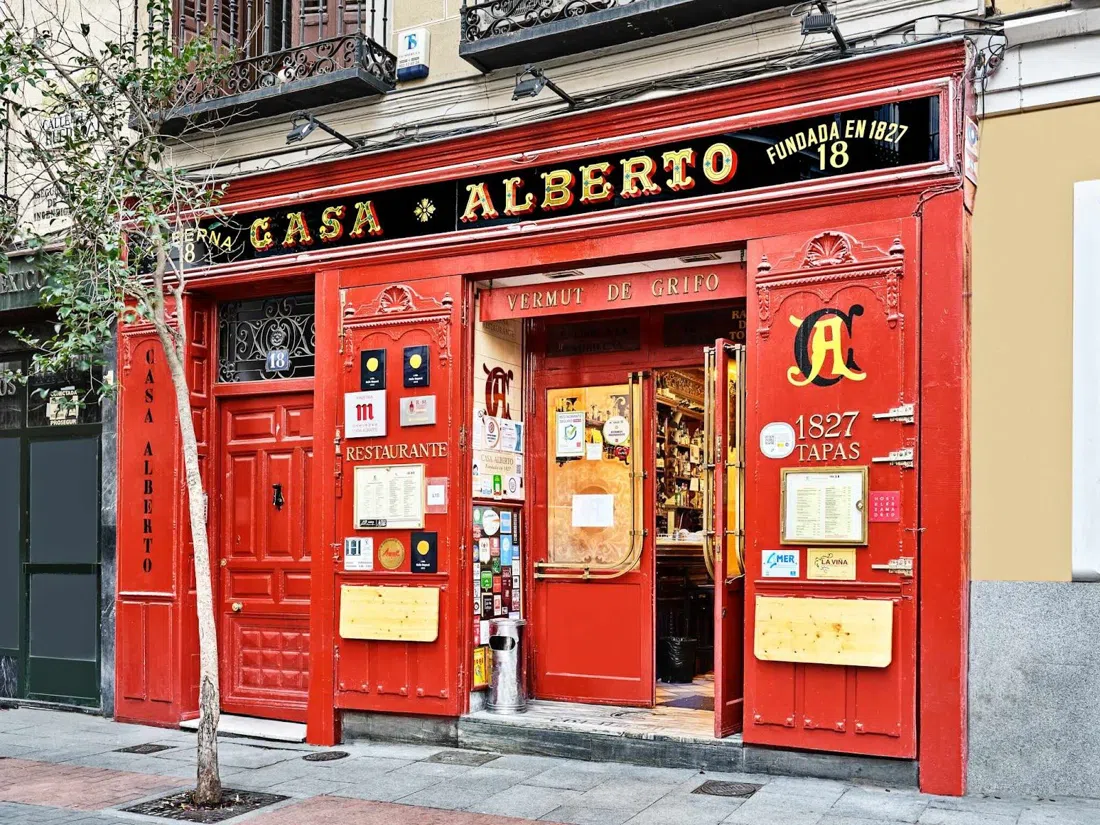
A ten-minute walk away in the Barrio de las Letras, Casa Alberto keeps the same logic on a smaller, quieter scale. This sit-down tavern serves until midnight Monday to Saturday and takes reservations for small groups — it was a 2026 Repsol Sun pick, which says something about how unremarkable an 11pm dinner still is here. It's a good second option when Botín is full, or for a couple who'd rather not eat in a room built for larger parties. Between the two, the message is consistent: in Madrid, a reservation for 10 or 11pm isn't pushing the limits of the kitchen. It's the default, and planning a night around an early dinner will mean eating mostly alone in a half-empty room.
The Sherry and Cocktail Hours That Bridge Midnight
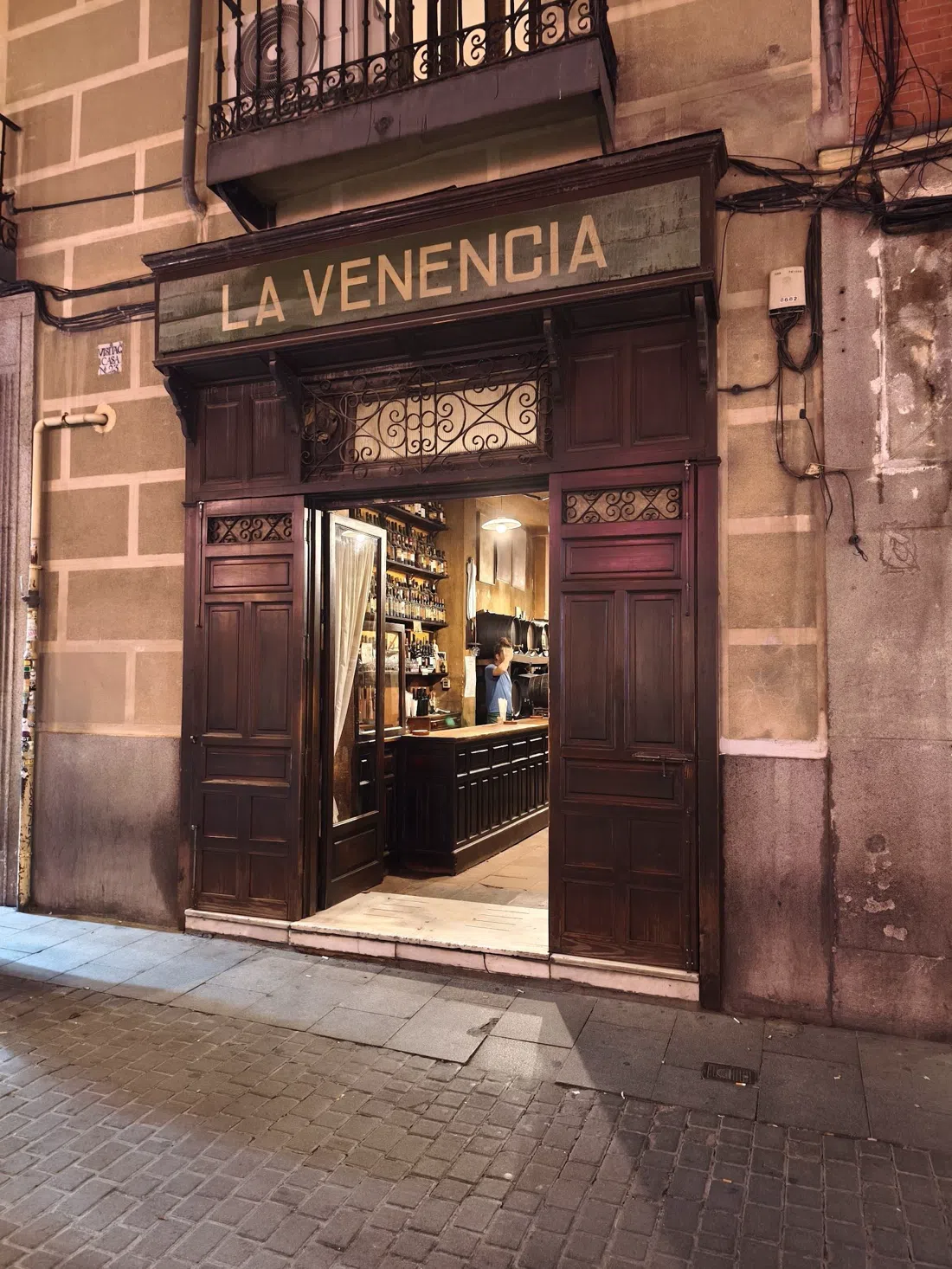
Once dinner plates clear, Madrid moves into a drinking culture that predates most of the bars serving it. La Venencia, a narrow standing sherry bar in Huertas, has been pouring since the Spanish Civil War and still serves only sherry — nothing else, no cocktails, no wine list, and reportedly no photographs of the bottles behind the counter, a house rule as old as the bar's wariness of outsiders during the war years it opened in. It's a small room with a handful of tables, which makes it a natural stop for a pair or a small group but not a venue that can absorb a large party; there are no bookings, so it's a walk-in-and-see situation, best treated as one stop on a longer route rather than the destination for the whole evening. It closes around midnight to 1am, which in Madrid terms counts as early.
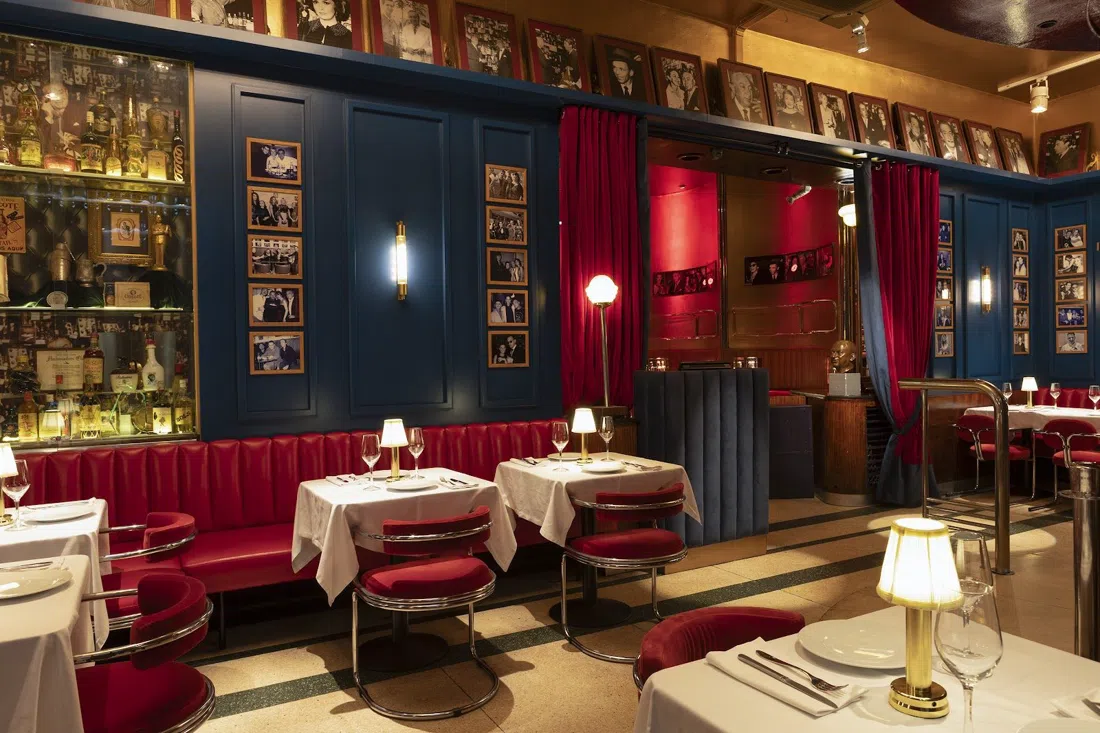
For a room with more polish and more history behind the bar itself, Museo Chicote on Gran Vía has been pouring cocktails since 1931, when Perico Chicote opened it, and it has spent the decades since as a fixture of the street rather than a period-piece revival. It takes reservations through its website, and early evening is the easiest time to secure a table for a group — after 1am the door becomes actively managed and space tightens considerably, so arriving without a booking late is a gamble. At €€€ it sits at the higher end of the bars in this piece, but it earns that placement as the hinge between old Madrid glamour and the cocktail culture that carries the city on to 2am and beyond, pouring until 3–3:30am most nights.
A Rooftop and a Jazz Room for the Hours In Between
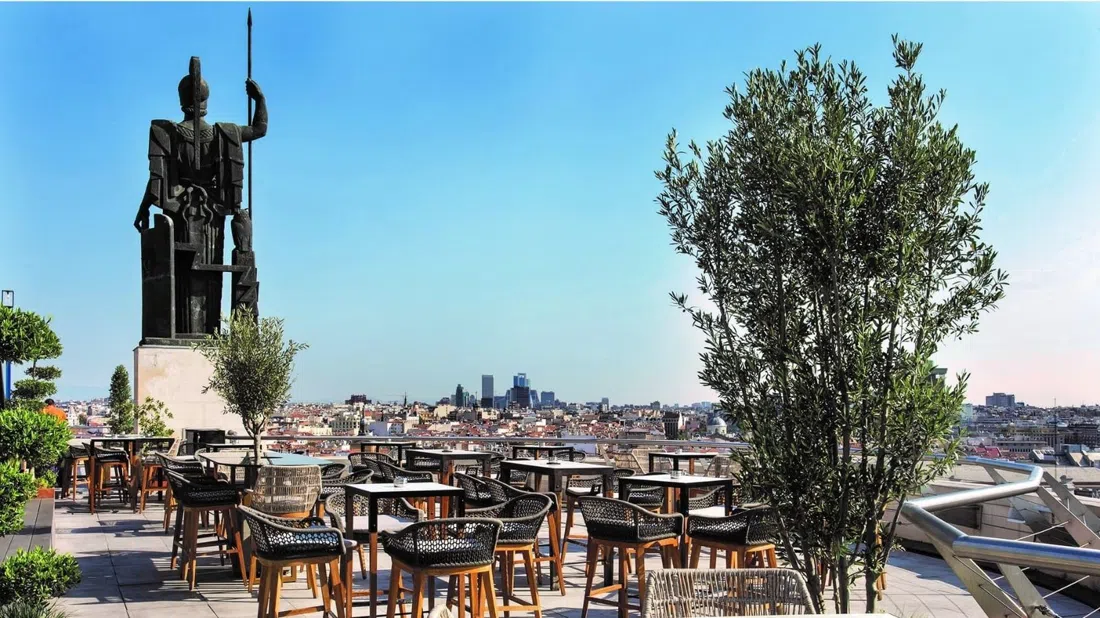
Not every late stop in Madrid is about drinking. Azotea del Círculo, the rooftop terrace of the Círculo de Bellas Artes on Calle Alcalá, is ticketed at around €5 and offers one of the more open skyline views available after dark in the city centre. It can absorb groups, but the terrace itself takes no reservations and capacity is limited, so arriving with time to queue matters more than arriving with a booking confirmation — going early in the evening avoids the worst of it. It runs to 1am Sunday through Thursday and 2am Friday and Saturday, hours that, on a rooftop rather than in a club, feel later than they are.
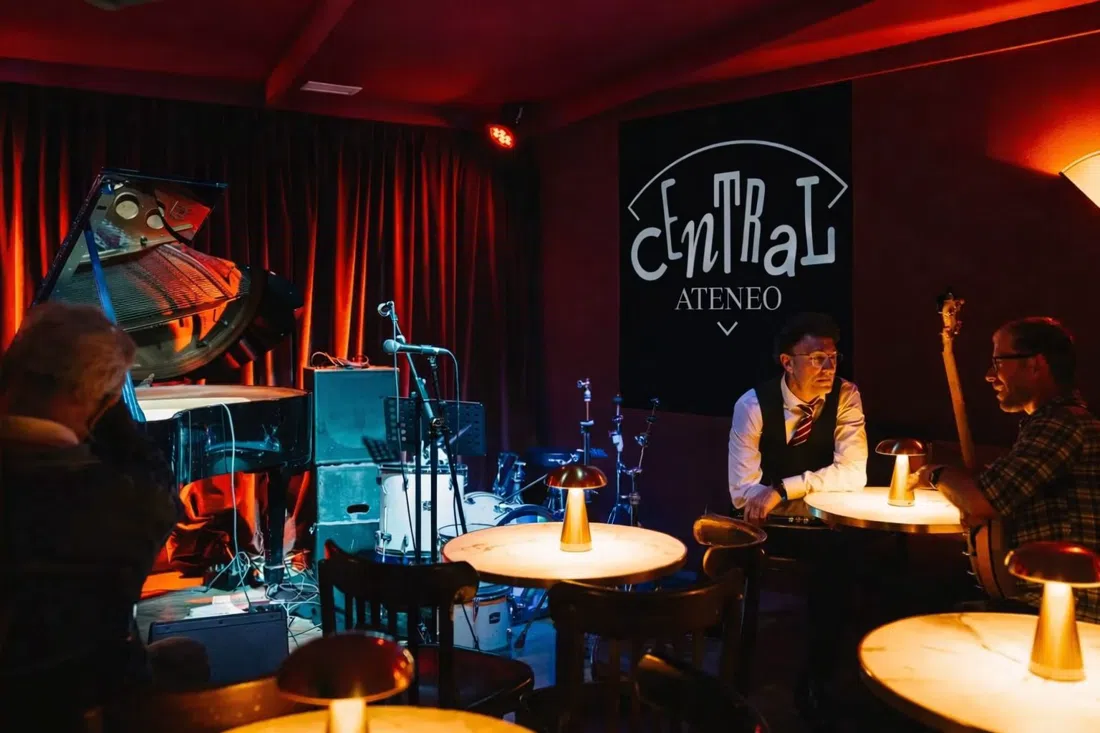
For a different late-night register, Café Central, now inside the Ateneo after relocating there in April 2026 following decades at its previous home near Plaza del Ángel, is a jazz club that has been ranked by DownBeat and The Guardian among the notable rooms of its kind. It takes table reservations via its website, and group tables are bookable, though the room's small footprint caps how many people can be seated together comfortably — this is a venue to book ahead for, not to arrive at hoping for space. Live music runs every night of the year, and the bar itself stays open past 2am, proof that Madrid's late-night calendar isn't only clubs and cocktails; it has a listening room too, and one with a genuine reputation behind it rather than a tourist-friendly label.
Flamenco That Runs Past Midnight
Corral de la Morería, in La Latina, marks 70 years of continuous operation in 2026 and sells group packages with dinner-and-show seating as standard, not as an upsell bolted on afterward. Shows regularly stretch to three hours, and at €€€€ it's the most expensive venue in this piece — but the price reflects a genuine long-running institution rather than a set built for cameras. Because it explicitly packages for groups, it's one of the more straightforward bookings here for a party planning to build a full evening around a single venue rather than moving between several, and it suits an occasion — a birthday, an anniversary, a last night in the city — better than a casual midweek stop.

Clubs, Late Markets, and the Run to 6am
Madrid's clubbing hours don't overlap with most cities' nightlife so much as start where it ends. Teatro Kapital, a multi-floor mega-club, opens midnight to 6am Wednesday through Saturday and is built explicitly for groups — VIP tables and group tickets are sold directly through the venue, which makes advance booking the sensible route for any party larger than a couple, particularly on a Friday or Saturday when demand at the door climbs fast. At €€€, it sits in the same price bracket as Chicote, but the experience is a different one entirely: this is the venue where the idea of Madrid starting when other cities are closing is most literally true, since the doors open at the hour most clubs elsewhere are already thinning out.
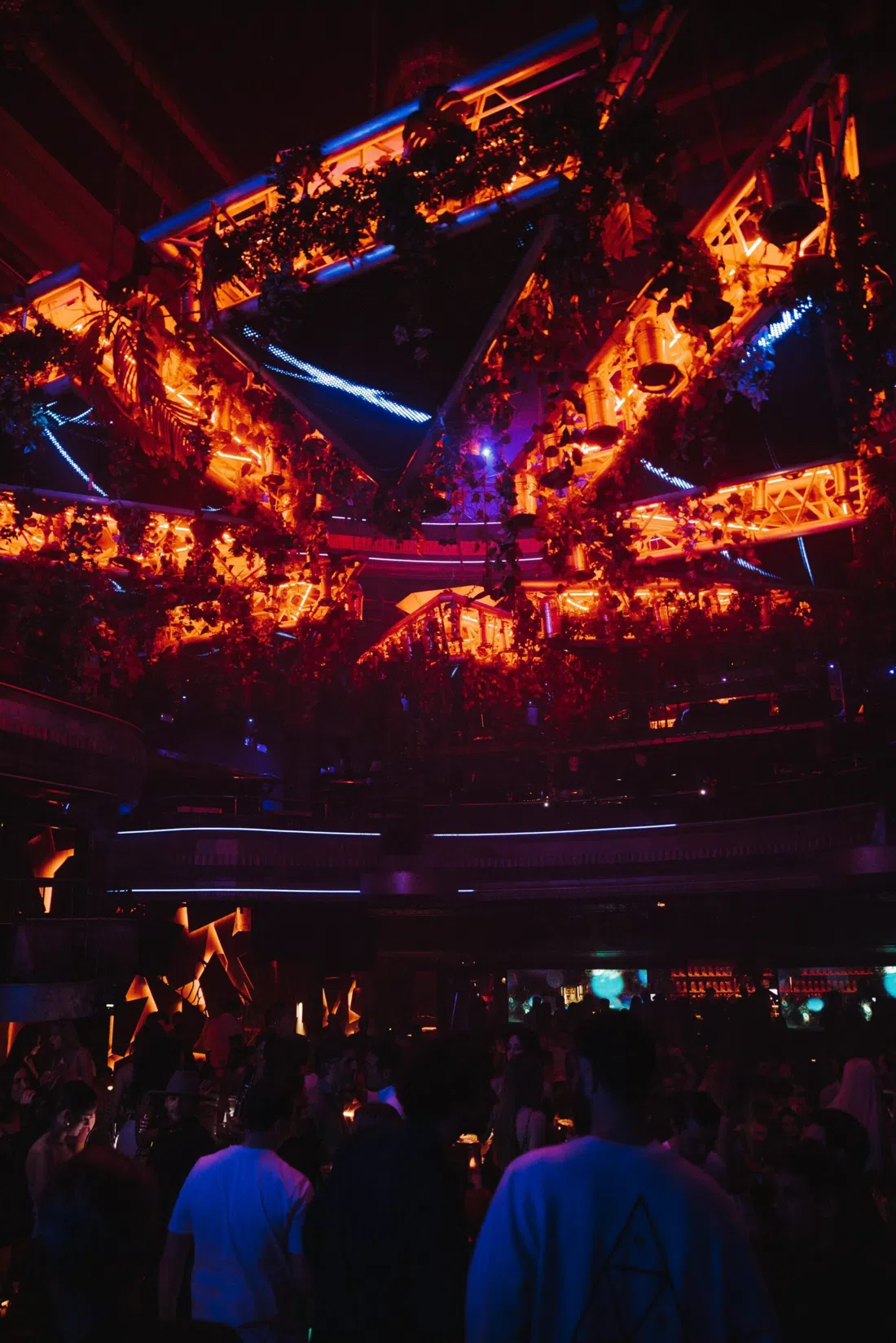
Joy Eslava, near Sol, has run 365 nights a year since 1981, with doors open from 11:30pm to somewhere between 5:30 and 6am. It's not a pop-up or a seasonal club — it's a fixture, and group tickets and tables are available through nightlife ticketing partners rather than only at the door. At €€, it's a more accessible entry point into Madrid's club scene than Kapital, without asking a group to plan its whole night around one big-ticket venue.

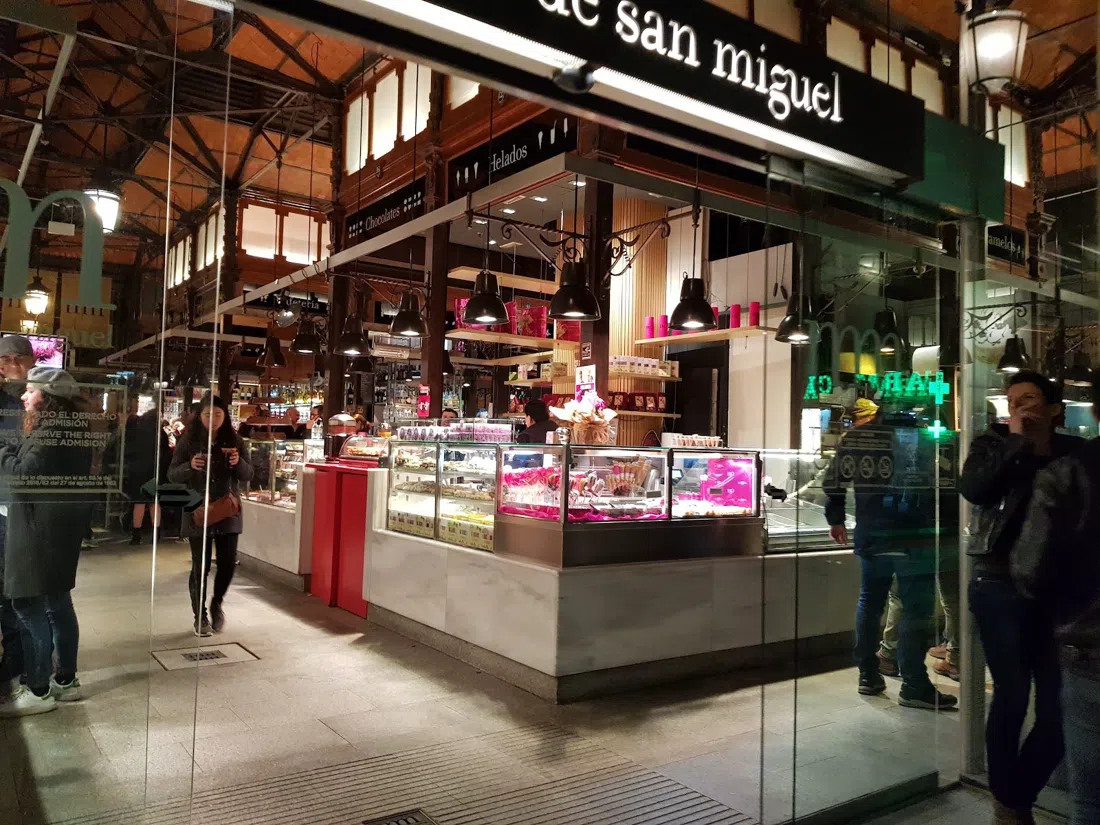
Between the bars and the clubs sits a different kind of late venue: the food market. Mercado de San Miguel, by Plaza Mayor, needs no reservation at all — its grazing format, dozens of stalls under one roof, naturally absorbs groups who want to split up and regroup rather than commit to one table for the evening. It stays open to 1am on Fridays and Saturdays, midnight the rest of the week, and it's worth remembering as an option precisely because it shows Madrid's late-night infrastructure isn't only bars and clubs — it's food halls built to stay open as late as the drinking does, useful for a group that can't agree on one cuisine or one closing time.
Where the Night Actually Ends: Churros at Dawn
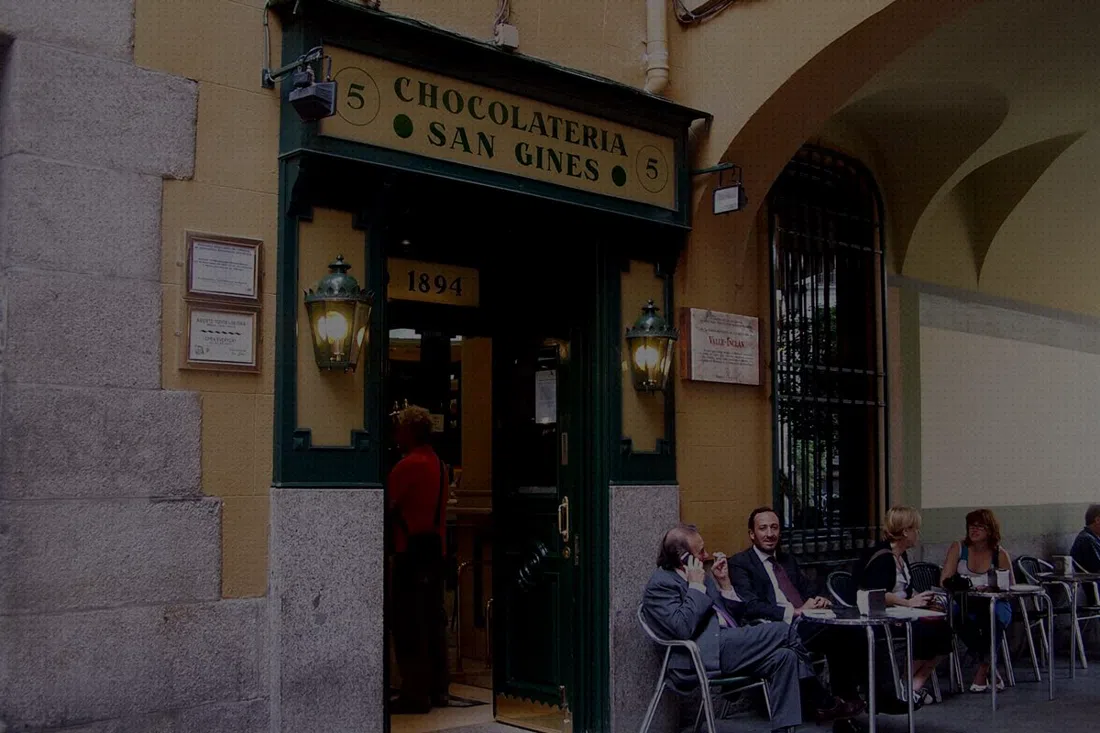
Every account of a Madrid night eventually arrives at churros, and the city has two venues that have earned that reputation rather than inherited it. Chocolatería San Ginés, just off Puerta del Sol, has been open since 1894 and runs 24 hours Thursday through Saturday, with shorter but still late hours the rest of the week. It's walk-in only, no reservations, and while the standing and counter room absorbs groups easily, expect a queue on weekend nights — that queue is, in its own way, part of the ritual, and cutting it short by arriving mid-week rather than Friday or Saturday is the only real workaround. At €, it's the cheapest stop in this piece and arguably the most telling one: a night that ends in fried dough and hot chocolate rather than sleep.
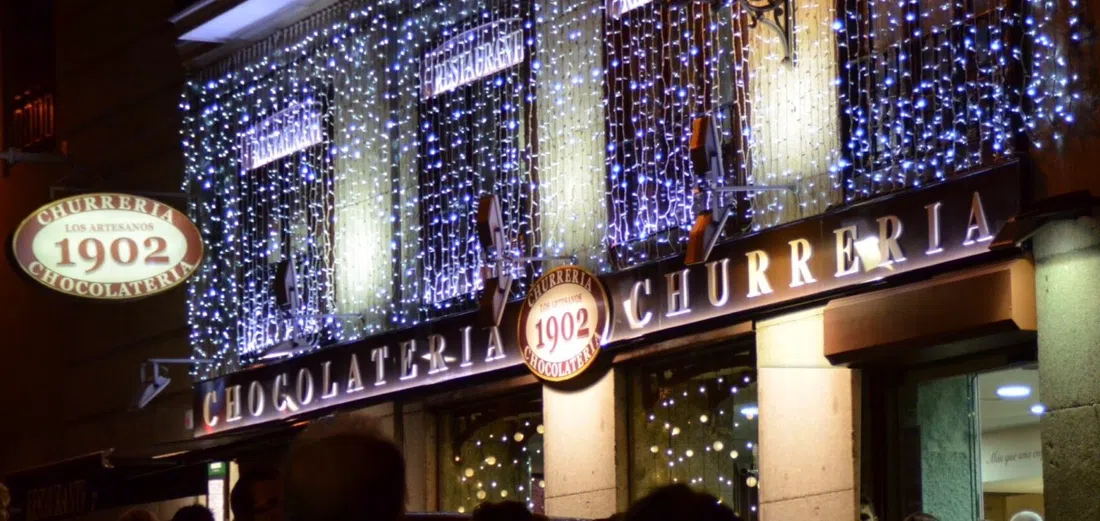
For a quieter version of the same tradition, Churrería Los Artesanos 1902 in Malasaña has been run by the same family since 1902 and keeps more conventional hours — open daily from 7am to 11pm, rather than through the night. It suits pairs or small groups better than a crowd, and locals favour it precisely because the queues run shorter than San Ginés's. Between the two, a visitor gets both ends of the churro tradition: the round-the-clock institution built for the very last stop of a night out, and its calmer daytime counterpart for anyone who'd rather not wait until 3am for the same plate.
Practical Notes for Planning a Late Madrid Night
Transport: The Metro runs until around 1:30am on weeknights and slightly later Friday and Saturday, before handing over to the night bus network (the Búho lines), which covers the city through to the Metro's morning reopening. For anything after 2am, taxis and ride-hailing apps are the more reliable option — Madrid's taxi supply holds up reasonably well into the small hours compared with many capitals, but weekend surges around Sol, Gran Vía, and the club district are real, so building in a short wait is sensible rather than optimistic.
Cash: Card payment is standard almost everywhere in this piece, including older, smaller venues like La Venencia and the churrerías, but carrying a little cash smooths queue-heavy moments — a fast churro order at San Ginés at 3am, or a taxi driver who prefers it. Something like €20–40 in small notes is a reasonable buffer for a night out, more if the plan includes a club's VIP table.
Timing: For anyone trying to experience the full late-night arc in one go, the natural order follows the city's own rhythm: dinner from around 9 to 11pm at Botín or Casa Alberto, a sherry or cocktail stop from 11pm to 1am, a jazz set or rooftop view somewhere in the 1 to 2am window, clubbing or dancing from around midnight through the small hours, and churros whenever the night decides to end — which in Madrid can genuinely mean sunrise rather than midnight.
Budget: Expect € for churrerías and sherry bars, €€ for markets, jazz, and the more accessible clubs, €€€ for cocktail bars, dinner at Botín, and Kapital, and €€€€ reserved for a full dinner-and-show evening at Corral de la Morería. A realistic night touching three or four of these venues — dinner, a bar, and a late stop — comfortably runs from budget-conscious to splurge depending on how many of the pricier venues make the list.
Planning where to sleep off all of this matters too, even in a city that treats sleep as optional: a Madrid hotel search close to Sol, Huertas, or Gran Vía keeps most of the venues above within walking distance, cutting down on the 3am taxi math considerably. For the rest of what the city offers by daylight, the Madrid guide covers the hours this piece deliberately leaves alone.