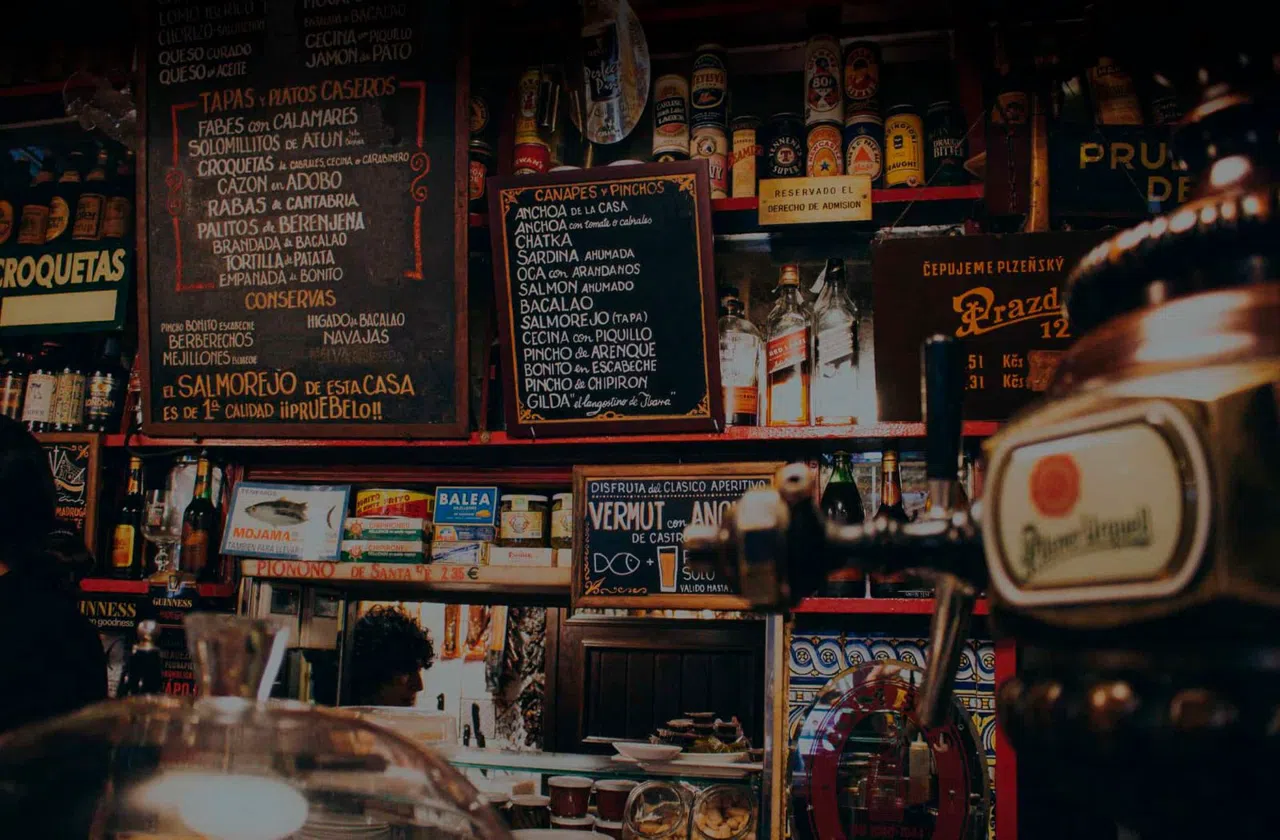

By eleven on a Sunday morning, Madrid stops pretending it has anywhere else to be. Chairs scrape out onto pavements, barrels get tapped, and small glasses of sweet, ruby-red vermouth start arriving alongside plates of olives, anchovies and tinned seafood. La hora del vermut has no fixed clock — it can run from late morning until the kitchens open for lunch — but everyone in the city recognises the feeling of having arrived inside it.
Vermouth itself isn't Spanish in origin — it arrived from northern Italy as an aromatized wine steeped with herbs, bark and citrus peel, and took root in Spain's own vermouth country around Reus — but Madrid adopted it as its own sometime in the early twentieth century, and the city never really gave it back. The classic pour is "de grifo," straight from a barrel or tap behind the bar, served in a small glass with a single olive and, if you're lucky, a slice of orange. What follows is a walk through the city's vermouth map: the tabernas that never stopped tapping their own barrels, and the newer rooms that picked the ritual back up. For where to base yourself between stops, see the Madrid guide.
The old guard: barrels tapped since the 1800s
A handful of tabernas in the historic centre have been pouring from their own barrels since before the Spanish Civil War, in some cases well before it. None of them treat vermouth hour as an excuse to modernise — the fittings, the marble counters and, in most cases, the barrels themselves are original. That authenticity comes with real constraints: several of these rooms are tiny, none of them do formal reservations for the bar itself, and turning up with a group of six expecting a table is usually a mistake.
Bodega de la Ardosa (Malasaña) has been tapping vermouth since 1892, from an exclusive barrel sourced in Reus, and the room has barely grown to match its reputation — it's standing-room only, fine for two or three people willing to squeeze in, but a group of five won't fit. There's no reservation system, so the plan is to arrive early, particularly on a Sunday, before the queue forms outside on Calle Colón. Order the vermouth with a wedge of tortilla and you've had the ur-version of the ritual — a combination locals rarely feel the need to improve on. Vermouth runs €2.50-3, tapas €4-12.
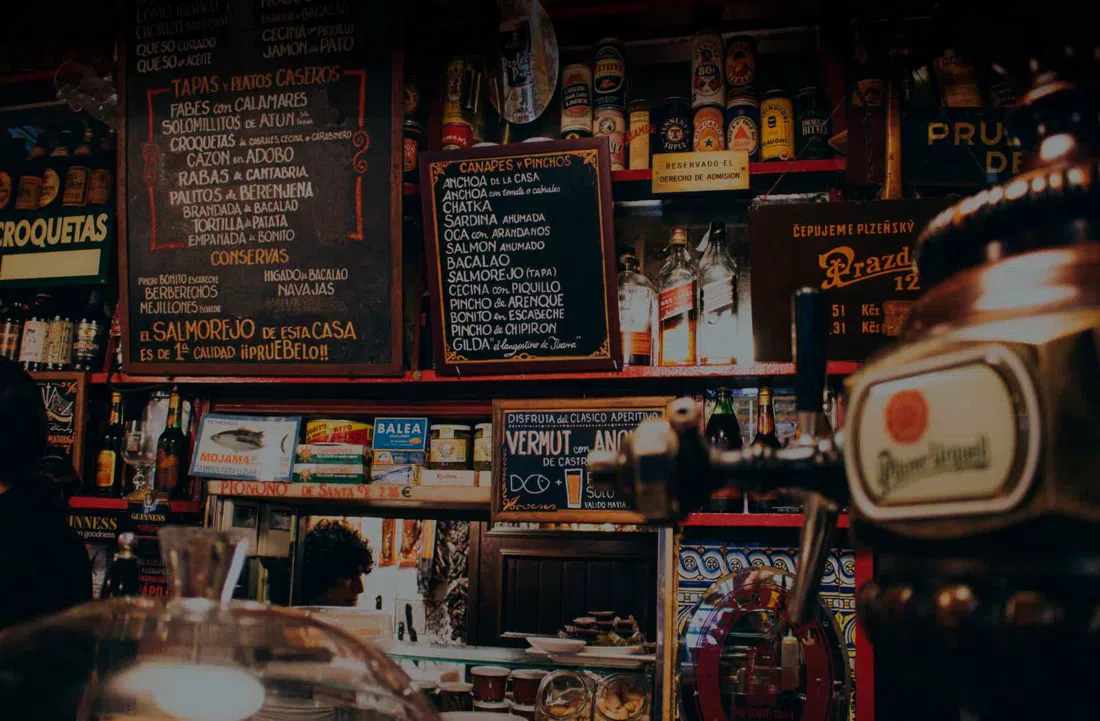
Taberna Ángel Sierra (Chueca) has been pouring from the same taps since 1917, and the interior is just as cramped as Ardosa's — but the tables spill out onto Chueca's plaza, which gives small groups somewhere to actually sit. There's no formal booking here either. The plaza seating is the real draw on a Sunday: sit outside with a glass of vermouth and watch the neighbourhood pass by over an hour or two. Vermouth is around €3, tapas €5-10.
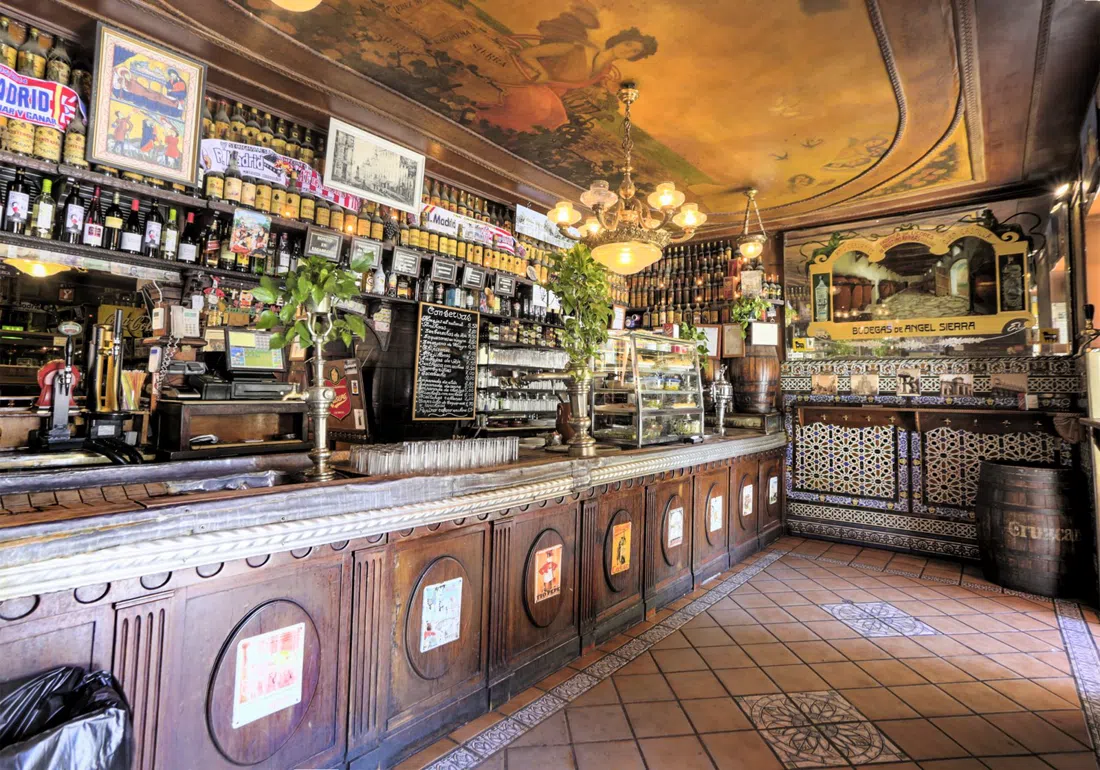
Casa Alberto (Barrio de las Letras) is the exception on this list in one important way: it runs a full restaurant behind the bar, seats around 70, has a private room for roughly 35, and actually takes reservations. Founded in 1827, it's considered Madrid's oldest working tavern, and it still taps its own vermouth at the bar rather than leaving that job entirely to the kitchen. For a group larger than a pair, book the dining room; for the ritual glass on its own, you can still just prop up the bar. Vermouth is about €3.50, and the sit-down menu runs €25-35 per person.
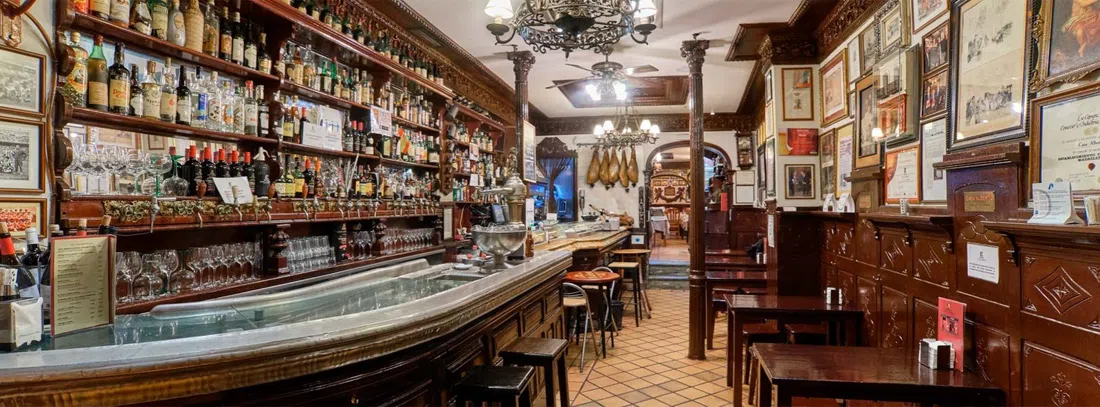
El Anciano Rey de los Vinos (the old city, near the Royal Palace) opened in 1909 and has more room to work with than most tabernas here — several interior rooms plus a terrace, and reservations are worth making for larger parties. The terrace looks across to the cathedral and the royal palace at midday, one of the reasons regulars linger past the first glass. Vermouth is around €3, tapas €6-12.
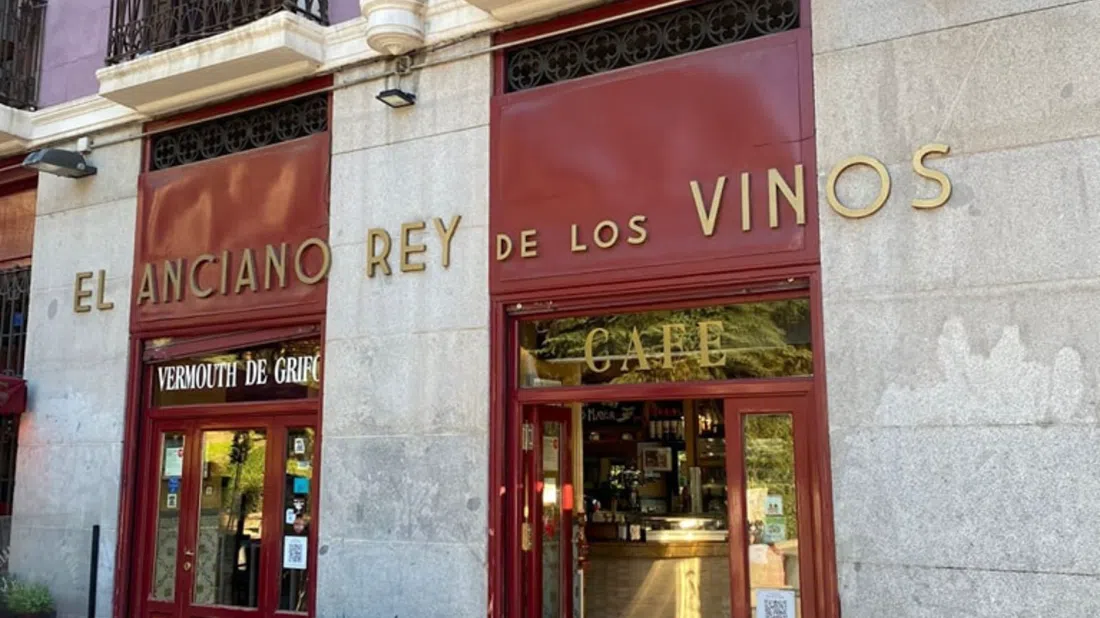
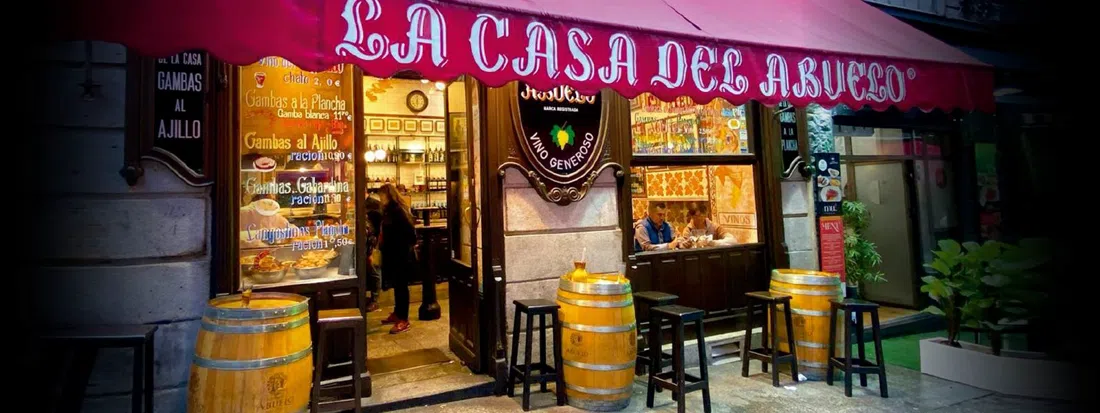
Casa del Abuelo (Barrio de las Letras, plus branches at Núñez de Arce, Goya and Toledo) solves the space problem the old tabernas usually can't: with four branches around central Madrid, a group generally finds a spot somewhere, even if the original location is tiny and standing-only at peak hours. The vermouth here is piped straight from Casa Alberto's own barrels — a link between the two tabernas that goes back to 1906 — and it's traditionally drunk alongside a plate of gambas al ajillo, the pairing that built the place's reputation. The Goya branch has a terrace, useful if you'd rather sit outside. Vermouth runs about €3, gambas al ajillo €10-14.
Cava Baja and La Latina's Sunday crawl
La Latina is where Madrid's Sunday vermouth crowd concentrates most visibly, largely thanks to El Rastro flea market spilling downhill into the neighbourhood every Sunday morning and depositing its browsers straight into the bars by midday.
La Bolita Negra (La Latina, on Cava Baja) is one of the newer rooms on this street of tavern after tavern, and it's set up in a way most of the old guard isn't: it can be booked through Salir or Privateaser, and its terrace seating on Cava Baja handles a group comfortably, especially if you arrive at midday before the street's evening crowds arrive and the pavement fills up. Order the draft vermouth and treat it as a starting point — Cava Baja rewards grazing from one tavern to the next rather than settling in at just one. Vermouth is €3-4, tapas €6-14.
The new vermuterías reviving the ritual
Alongside the old tabernas, a newer generation of vermuterías has opened over the past decade, built specifically around vermouth rather than treating it as one drink among many on the shelf. They tend to pour a wider range — vermouths from across Spain rather than a single house barrel — and several of them are more practical for groups than the historic rooms, since they were designed with bookings and turnover in mind from the start.
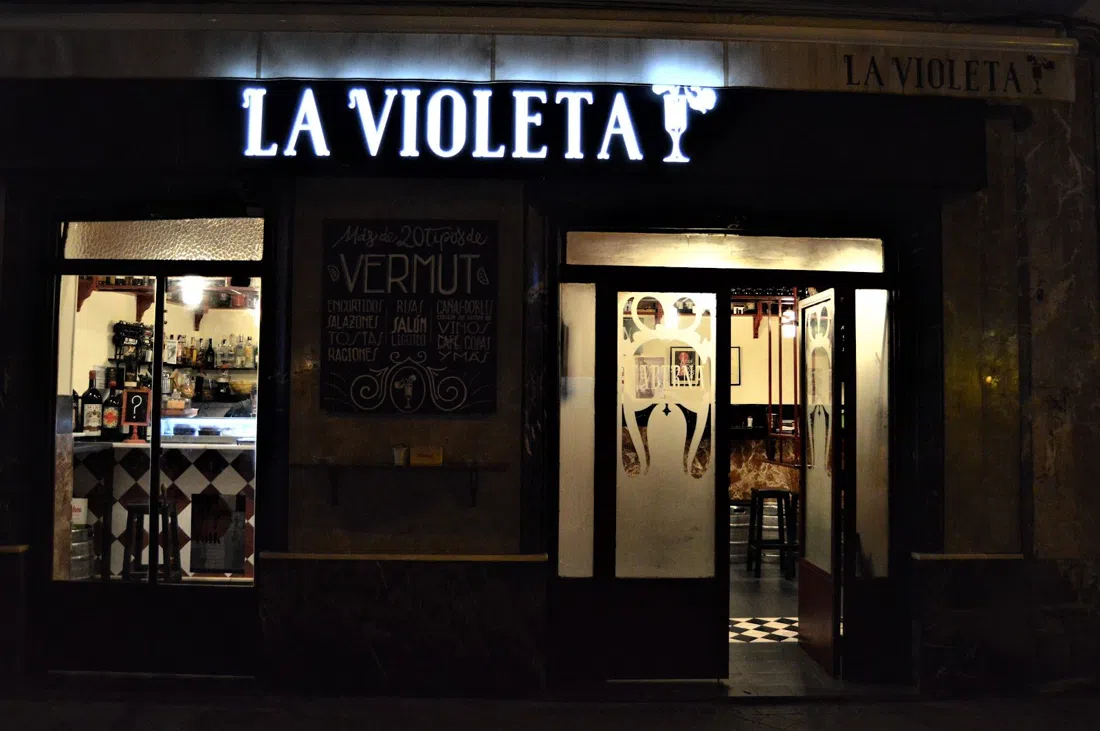
La Violeta (El Pasaje) is the place to go if the goal is comparison rather than just a glass — it pours vermouths from Galicia, Andalusia, the Basque Country and Catalonia side by side, so you can actually taste the regional differences rather than assuming all Spanish vermouth tastes the same. It's a casual bar with standing room, no formal reservations, but relaxed about groups filtering in through its Friday-to-Sunday vermouth sessions. Flights and glasses run €3-6.
Vermutería Chipén (near Plaza de España) is attached to a hotel and open long hours daily, which means walk-in groups are rarely turned away. It suits anyone staying near Plaza de España who wants a serious range of vermouths without chasing a reservation across town. Vermouth starts at €3, sharing boards €10-20.
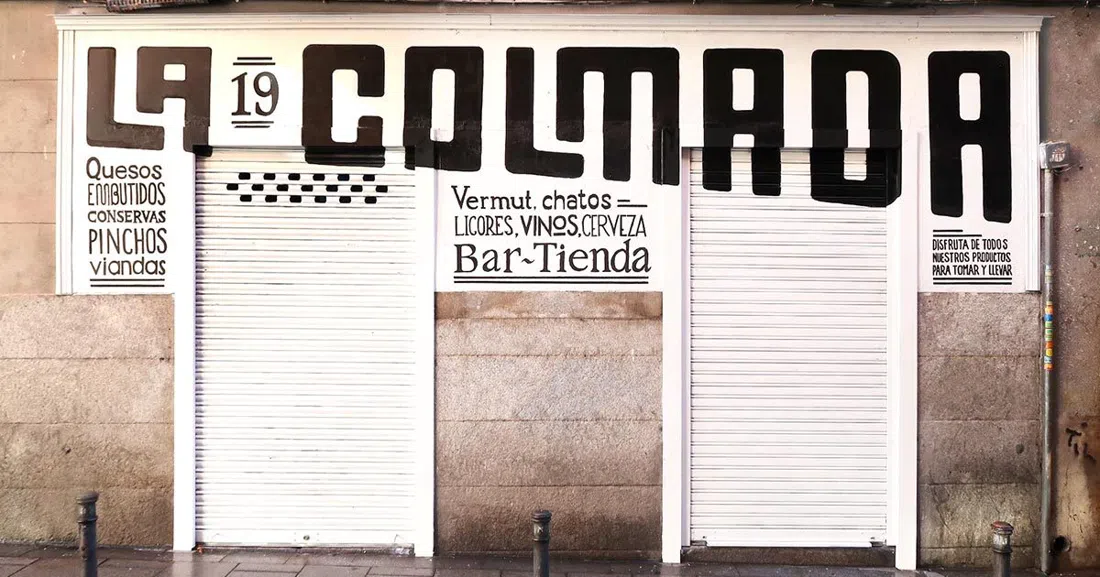
La Colmada (central Madrid) takes a narrower, more deliberate approach: it's a small deli-bar format, better suited to a pair or a small group grazing at the counter than a large party, and it orders its vermouth specifically to go alongside the tinned Galician seafood it's meant to be drunk with. If you want the pairing taken seriously rather than treated as an afterthought, this is the room for it. Vermouth is around €3, tinned seafood boards €8-18.
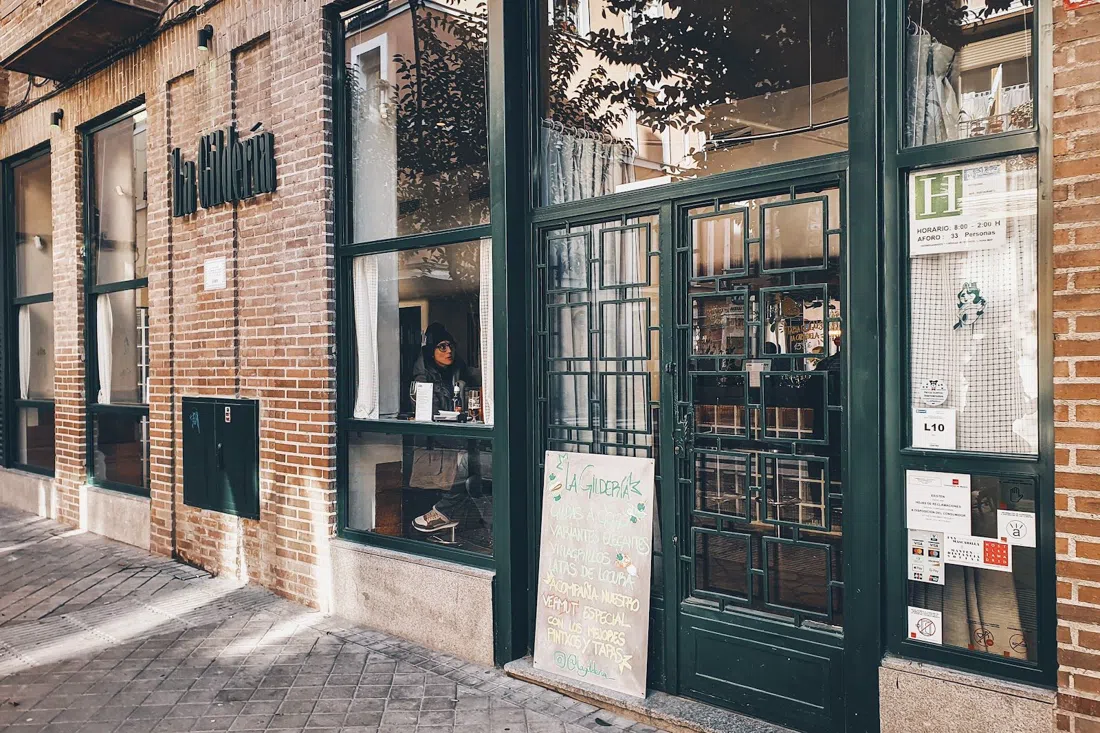
La Gildería (the city centre) opened in 2021 with a younger, design-forward take on the tradition, reviving the pairing of vermouth with a gilda — the skewered combination of anchovy, olive and guindilla pepper that Basque bars made famous. It fits around 33 people and takes bookings through Privateaser, useful for anyone planning to host a private group session rather than just turn up. The Sunday midday session, starting at noon, is the one worth timing a visit around. Vermouth is about €3.50, gildas and tapas €4-12.
Lavapiés: vermouth finds a new neighbourhood
Lavapiés has spent the past decade absorbing wave after wave of immigration, and its food scene reflects that more than any other part of the city — which makes it an interesting place to watch vermouth, a tradition as Madrileño as they come, fold itself into something newer.
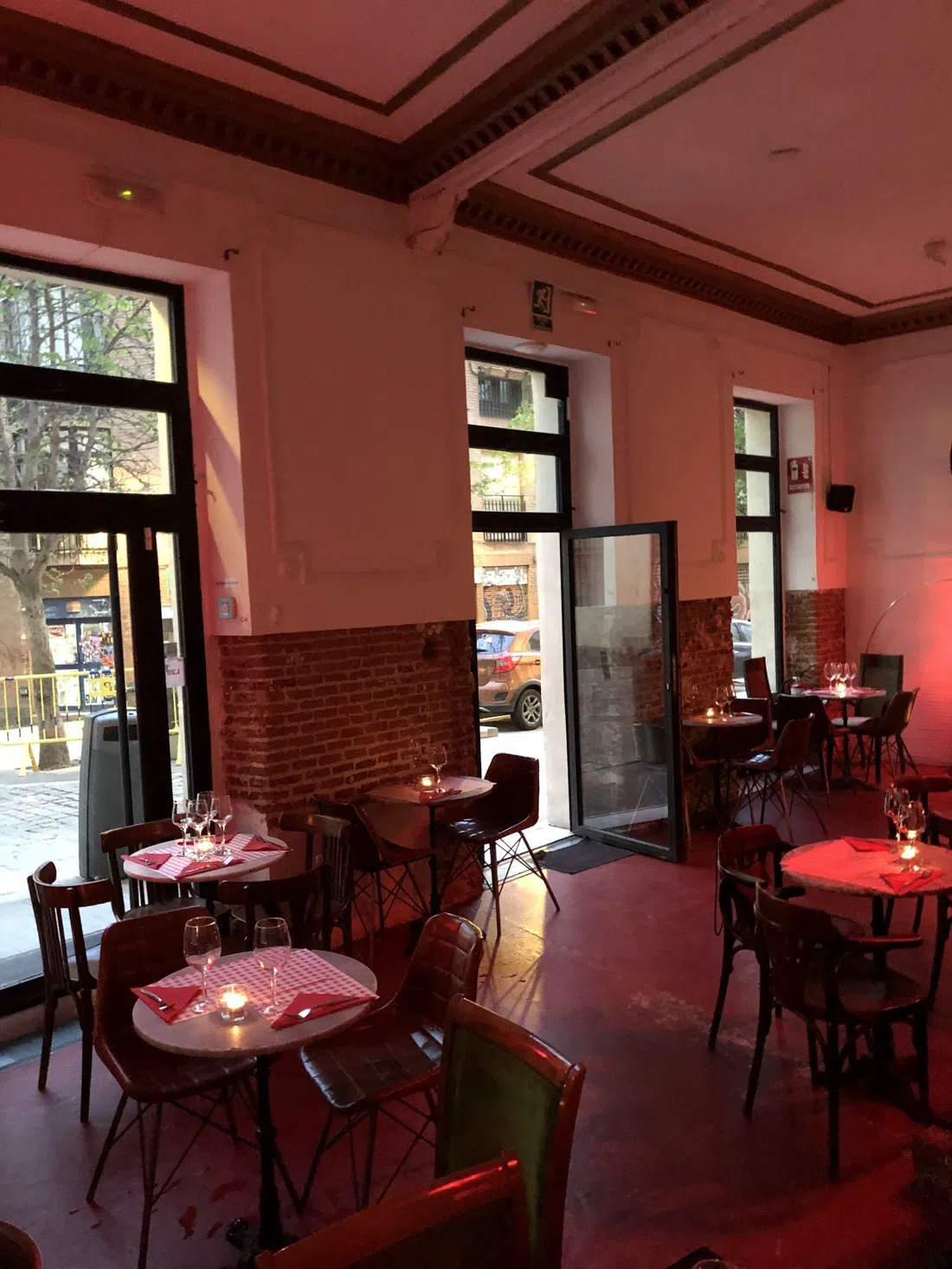
Cemento (Lavapiés) has a private space explicitly set up for birthdays and afterwork groups, bookable free through Privateaser — worth knowing about if you want to lock in a private event rather than hope for space on the night. The room folds vermouth into the neighbourhood's immigrant-influenced food scene, pairing it with chipá and small plates alongside the usual anchovies and olives, and rotates a local-artist programme on the walls. Vermouth on tap is €2.50, chipá and small plates €4-8.
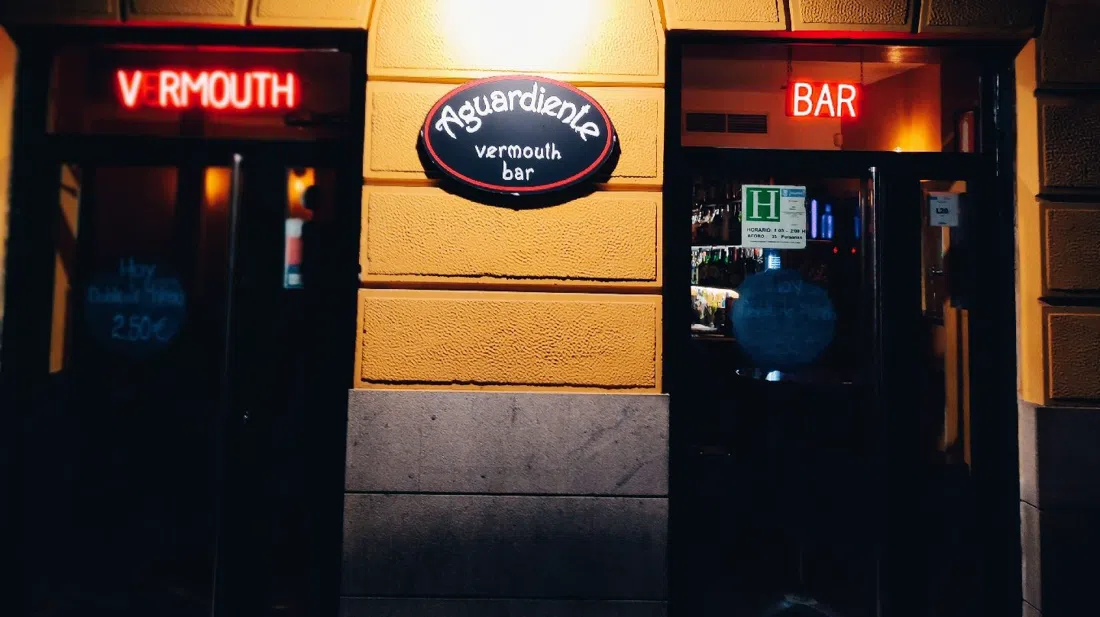
El Aguardiente (Lavapiés) treats vermouth with the same seriousness it applies to its tinned-seafood conservas, and has built a reputation as one of the neighbourhood's trusted new vermuterías as a result. Seating is casual with no formal group-booking system, but it's relaxed enough for a small-to-medium group to fold in during peak Sunday afternoon hours. Vermouth starts at €3, seafood conservas €8-16.
Planning your vermouth hour
Timing. The ritual peaks on Sunday, roughly from late morning through early afternoon, once church lets out and before lunch proper begins around 2pm or 2:30pm. Weekday vermouth hour exists too, usually clustered around 1pm-2pm or again in the early evening, but it's a quieter, more local affair without the Sunday theatre. If a specific session matters to you — La Gildería's Sunday noon sitting, for instance — arrive at or just after the stated start rather than late.
Reservations. Treat the old tabernas as walk-in only: Ardosa, Ángel Sierra, Casa del Abuelo and El Aguardiente don't take bar reservations, so arriving early is the only real strategy, especially on a Sunday. Casa Alberto, El Anciano Rey de los Vinos, La Bolita Negra, La Gildería and Cemento all take bookings in some form, useful if you're organising a group in advance.
Groups. For anything over four or five people, the more workable options are Casa Alberto's dining room, El Anciano Rey de los Vinos, Casa del Abuelo's branches, La Bolita Negra's terrace, Chipén, or La Gildería and Cemento's bookable spaces. The historic single-room tabernas — Ardosa above all — are built for pairs and trios, not parties.
Budget. A glass of vermouth across the city runs roughly €2.50-4, with tapas to go alongside from about €4 upward per plate. A relaxed vermouth-and-tapas stop for two, sharing two or three small plates, typically lands somewhere in the €20-35 range before moving on to the next place or to lunch.
Cash and cards. Most of these bars accept cards, but the older, smaller tabernas can be cash-preferred at busy periods, particularly for small rounds — carrying some euros in cash avoids any friction at the counter.
Getting around. The venues on this list cluster into a few walkable pockets — the historic centre around Sol and Barrio de las Letras, La Latina's Cava Baja, Chueca and Malasaña to the north, and Lavapiés to the south — and Madrid's metro connects all of them within a few stops. Walking between two or three stops in the same neighbourhood is usually faster than taking the metro for one hop. If you're building a trip around this, start with the Madrid hotel search and pick a base near whichever cluster you want to anchor your Sunday to.