The Madrid issue
Madrid's Vintage Loop Over a Slow October Weekend
Two days on foot through Malasaña's shopfronts, a monthly market under a train shed and a Sunday morning at El Rastro, with hours, prices and how many people each room actually holds.

By Lieke DoornWalking routes, quiet hours and the barrios worth slowing down in
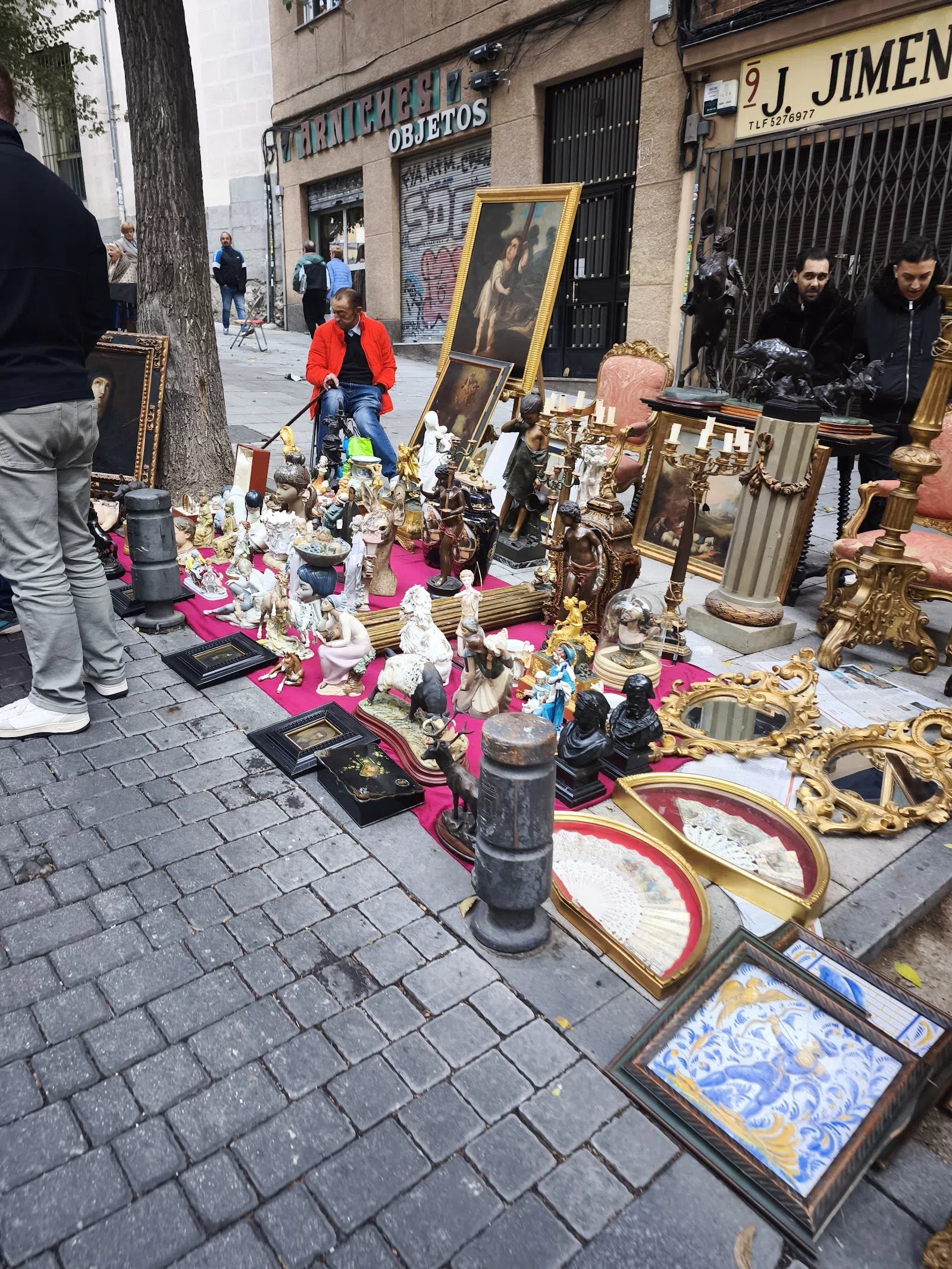
Calle Velarde is barely forty metres of pavement and holds six vintage shops, which is the whole argument for doing this on foot. Madrid keeps its second-hand trade in two clusters: the tight grid of Malasaña north of Gran Vía, and the slope of El Rastro falling through La Latina on a Sunday morning. October is the month the walk between them stops being work. The mornings are cool enough to justify trying on a coat, and the doors stand open rather than sealed against the heat.
What follows is two days on foot with one metro detour, built around a single fact: most of these shops close on Sunday, and the two markets that matter only happen at the weekend. Plan the weekend around the markets and let the shops fill the gaps, not the other way round.
Saturday starts in Plaza del Dos de Mayo
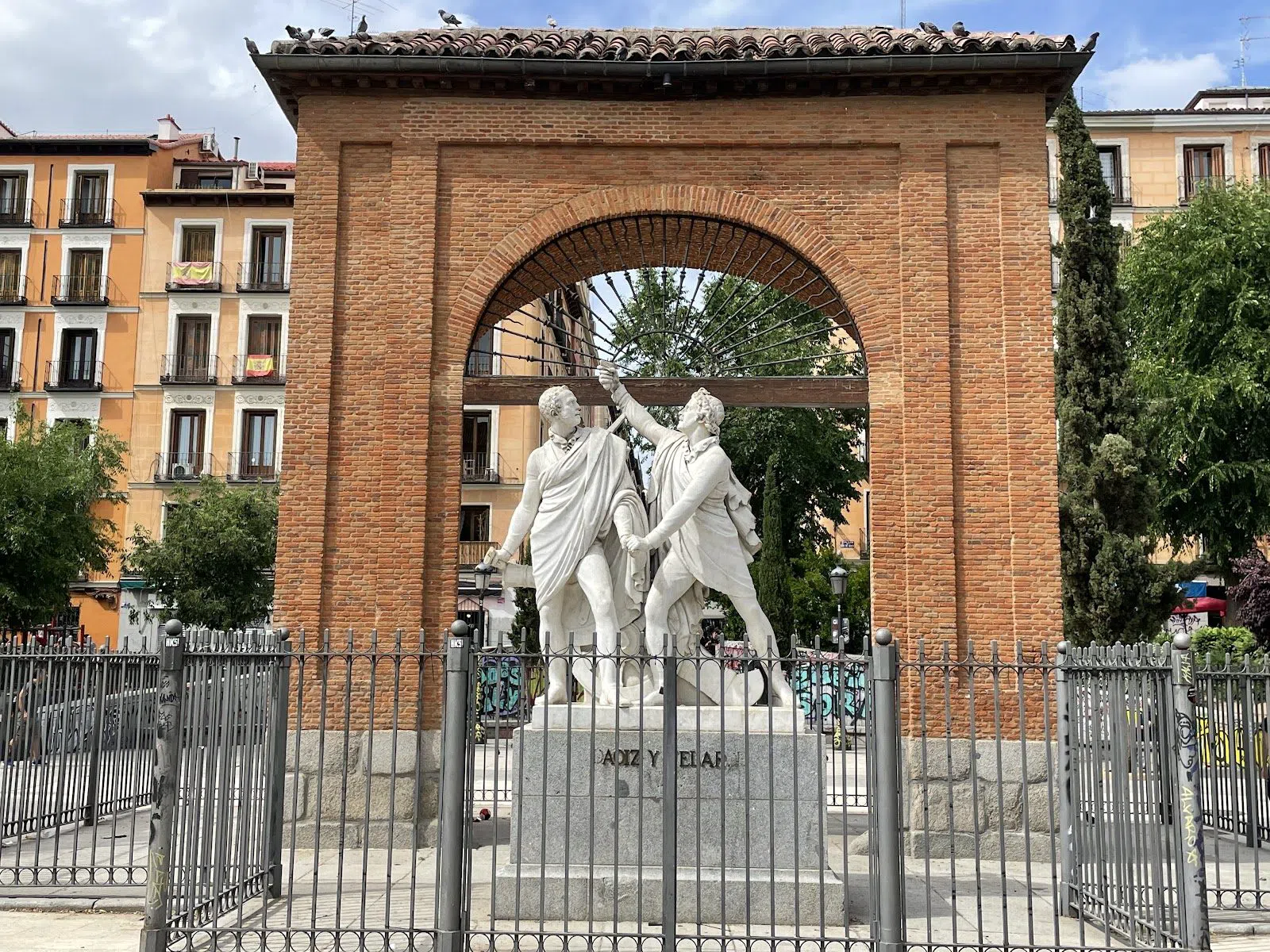
Mercadillo de la Plaza del Dos de Mayo (Malasaña) sets up on Saturdays, roughly 10:00 to 14:00, in the square named for the rising of 1808 against Napoleon's troops. The brick arch standing in the middle of it is the surviving gateway of the artillery barracks the fighting turned on. The market itself is modest: around thirty stalls of antiques and collectables, most of it priced between €2 and €30. Postcards, tins, small silver, costume jewellery, the occasional camera body. Half an hour covers it properly.
Because it is an open square with no door and no restrictions, a group of any size can move through it together and talk while they browse. That will not be true again until Sunday morning, so use it: this is the stop where six people can behave like six people.
One caution. The market's day has shifted before, and nobody posts a notice when it does. Check it locally in the week you travel rather than building a Saturday morning around it. If it has moved, you have lost thirty minutes rather than the day, and Calle Velarde is three minutes downhill.
Plan your Madrid trip
Live prices from our booking partners.
Free cancellation on many rooms. We may earn a commission when you book.
Six shops on one block of Velarde
Velarde is where the density is, so you will spend the middle of Saturday walking twenty paces at a time. All of these rooms are small. The numbers below are capacity.
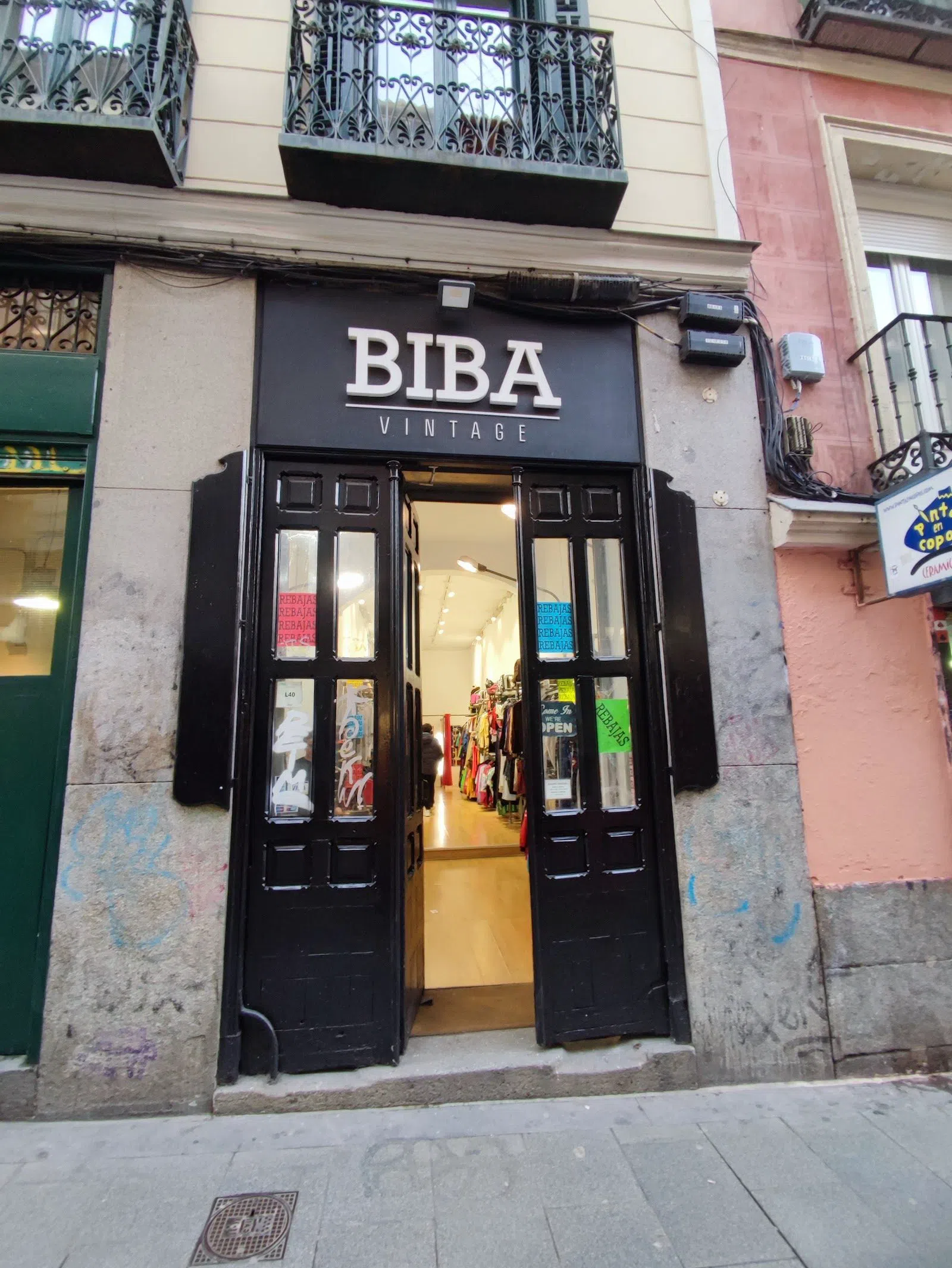
Biba Vintage (Malasaña, Calle Velarde 1) opens Monday to Saturday from 12:00 to 21:00 and gives one small room over almost entirely to 80s and 90s sportswear: Adidas, Nike, Fila, Ellesse, The North Face. It is the address that brings sportswear collectors to the street. Pieces run €20 to €90, with jackets reaching €120. Three or four browsers fill the floor. If you have arrived in a group, send half across the road and swap in ten minutes.
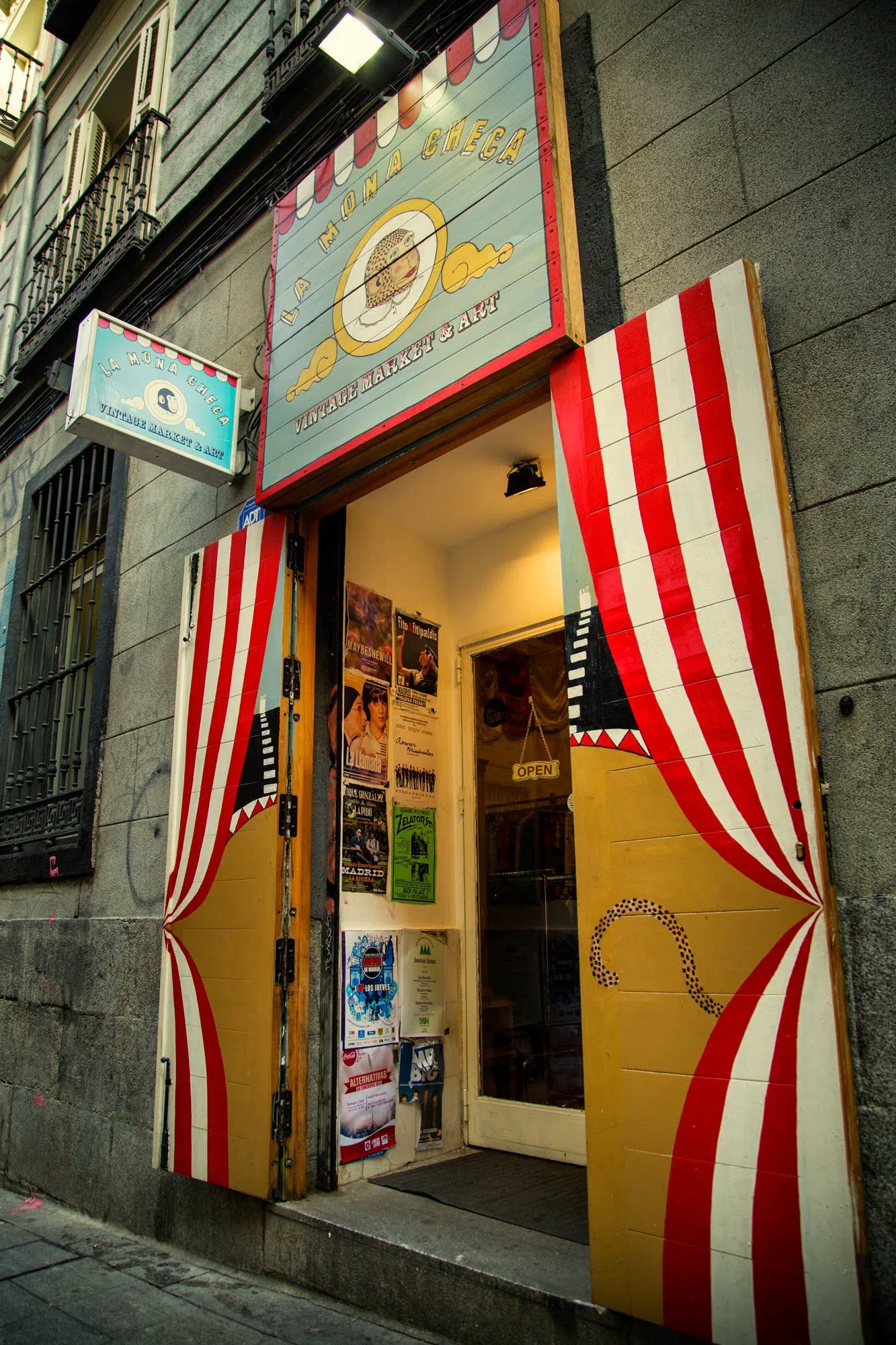
La Mona Checa (Malasaña, Calle Velarde 2) is the shop across the road. The striped big-top ceiling gets photographed more than anything else on the street, but the rail worth your time is the menswear: 70s and 80s printed shirts, sorted with an eye rather than tipped into a bin, €20 to €70. Four people at once is workable here, which by Velarde standards is generous.
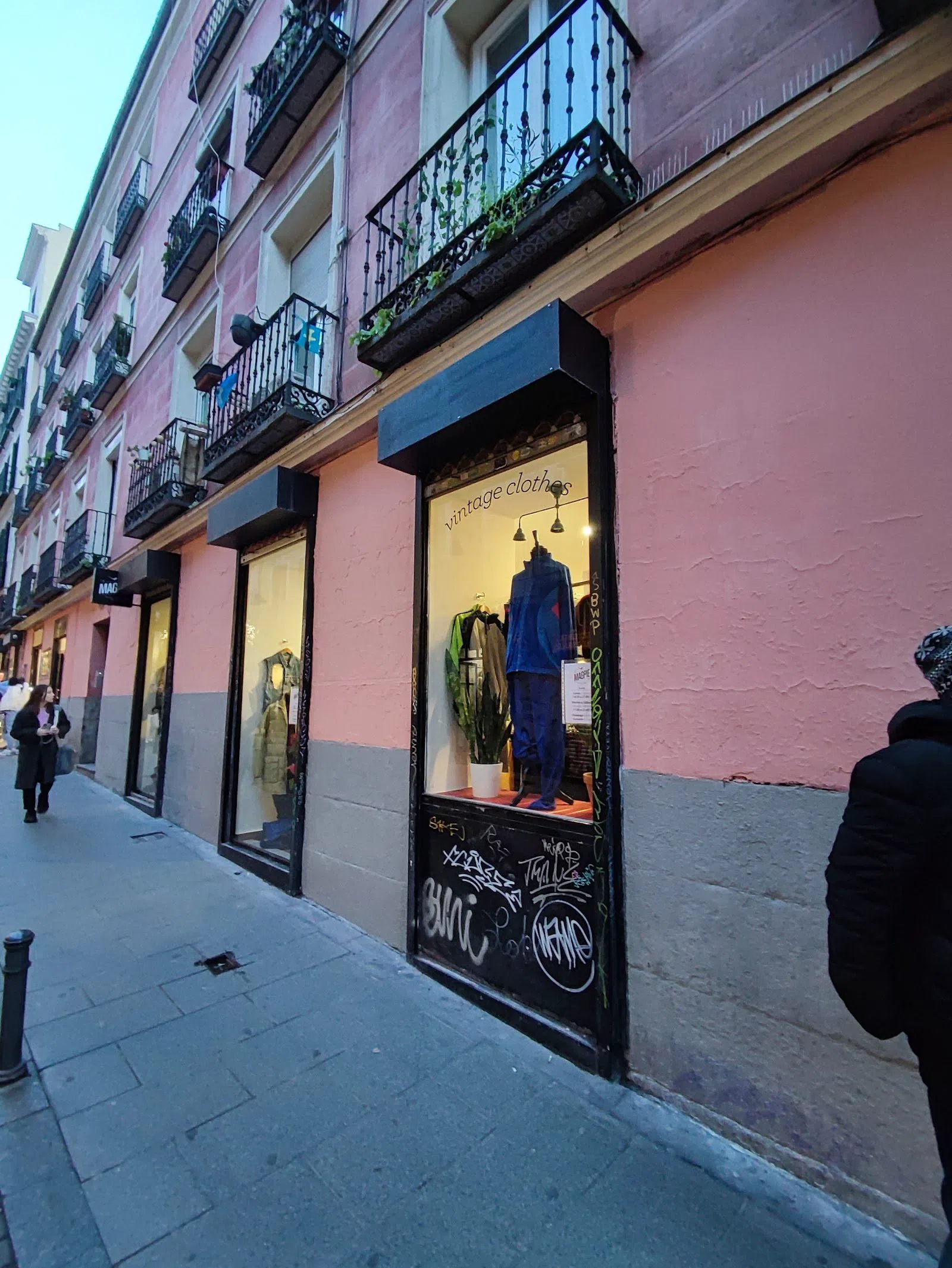
Magpie Vintage (Malasaña, Calle Velarde 3) opens Monday to Saturday, 11:00 to 21:00, and closes on Sunday. The date range inside is unusually wide for one room: genuine 1940s dresses at one end and early-2000s denim at the other, €15 to €80 a piece. The floor is tiny. Two or three at a time is comfortable and six is not, so go in waves and accept the wait.
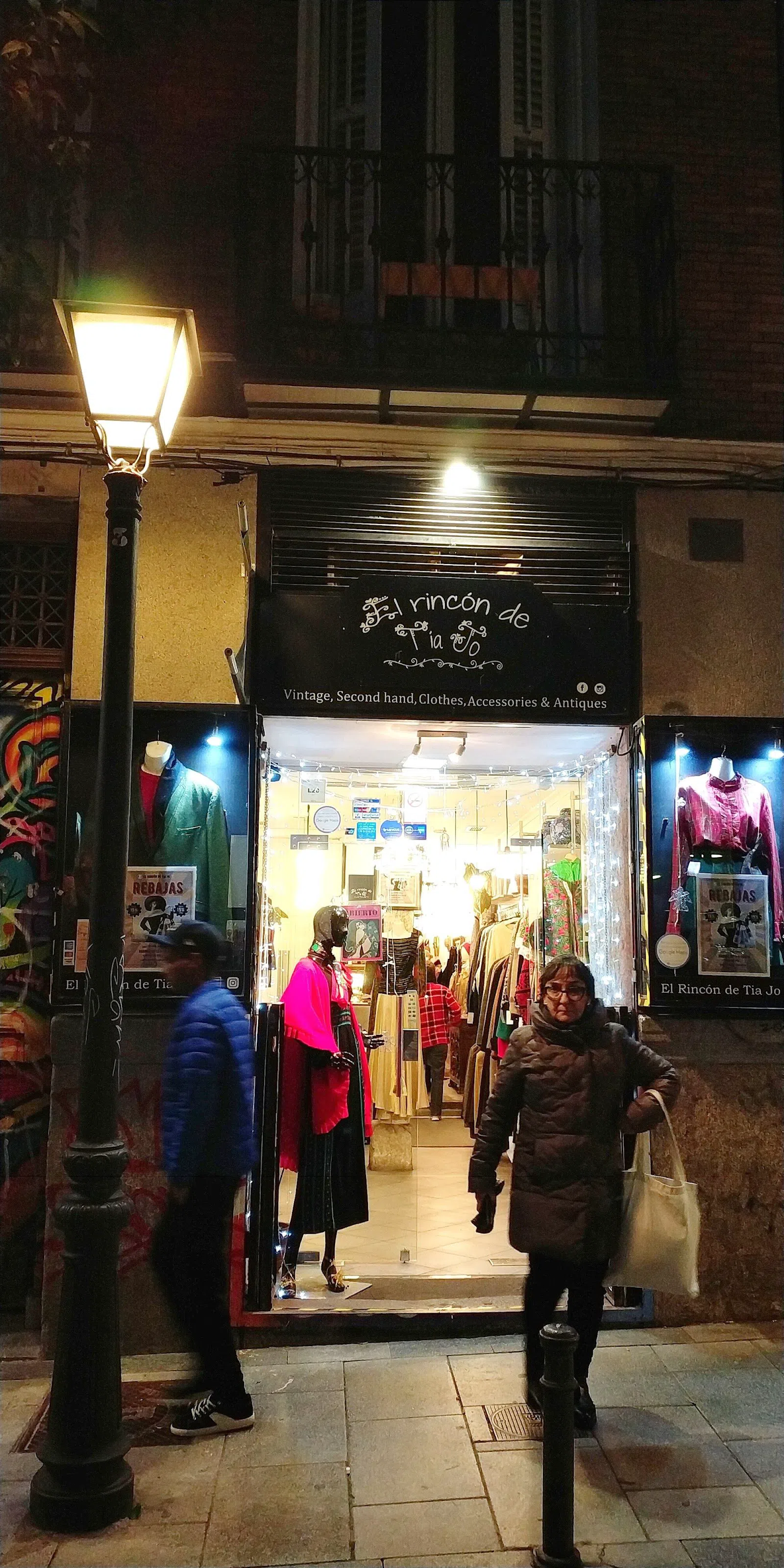
Williamsburg Vintage Clothes (Malasaña, Calle Velarde 4) buys its stock in the United States and the rails read that way: oversized flannels, 90s band shirts, leather, €20 to €90. Very small, so two or three people, no more. The turnover here is fast enough that a second look later in the weekend is not a wasted trip, though if that second look falls on Sunday, check the door on the day rather than assuming.
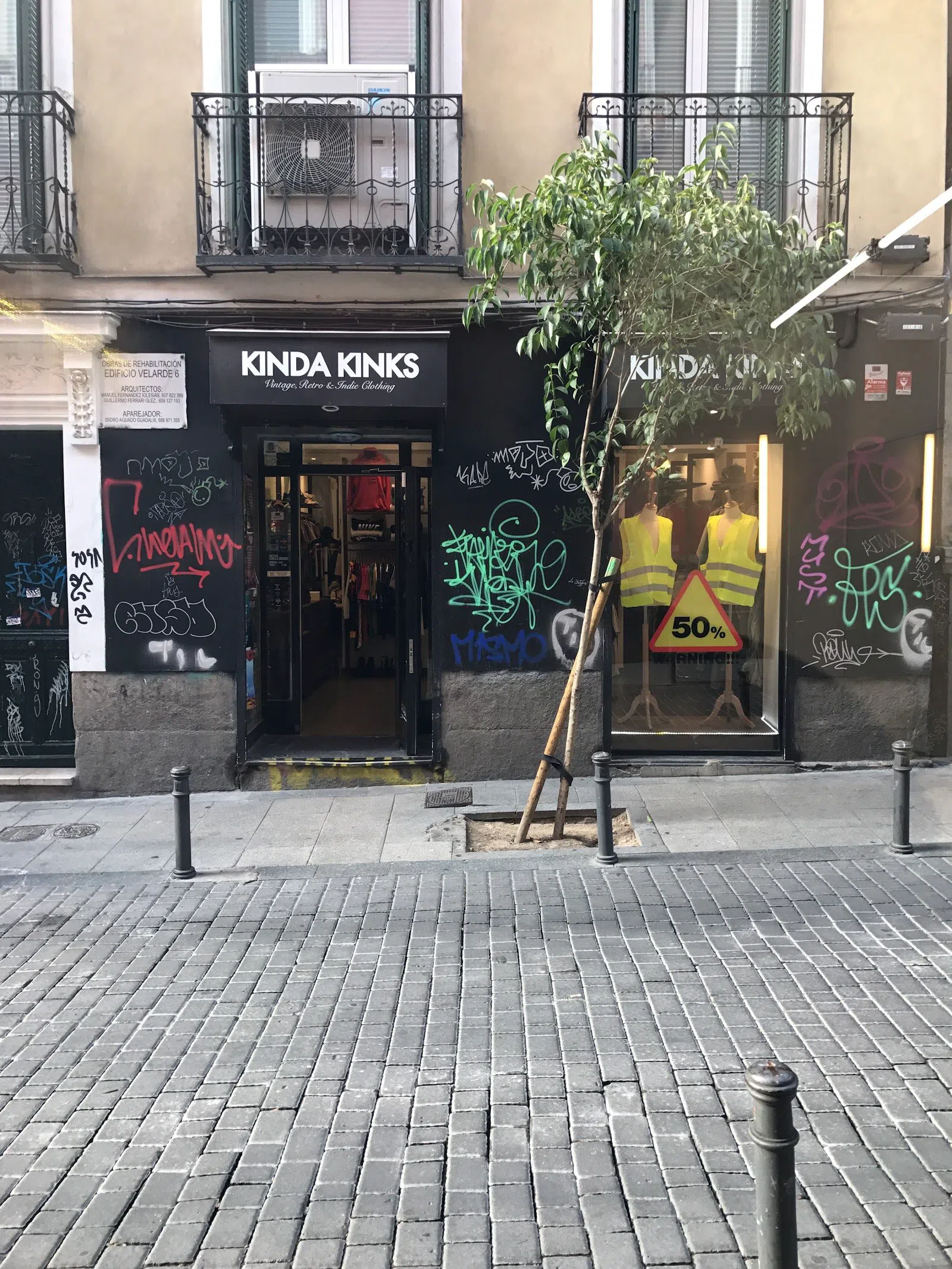
Kinda Kinks (Malasaña, Calle Velarde 6 and Calle del Pez 16) has traded since 2012 and is one of the few names on this route that reliably opens on a Sunday, 12:00 to 20:00, alongside Monday to Saturday 12:00 to 21:00. Retro indie stock, €25 to €120. Two branches a few streets apart mean a group can split rather than queue, and each room takes four or five.
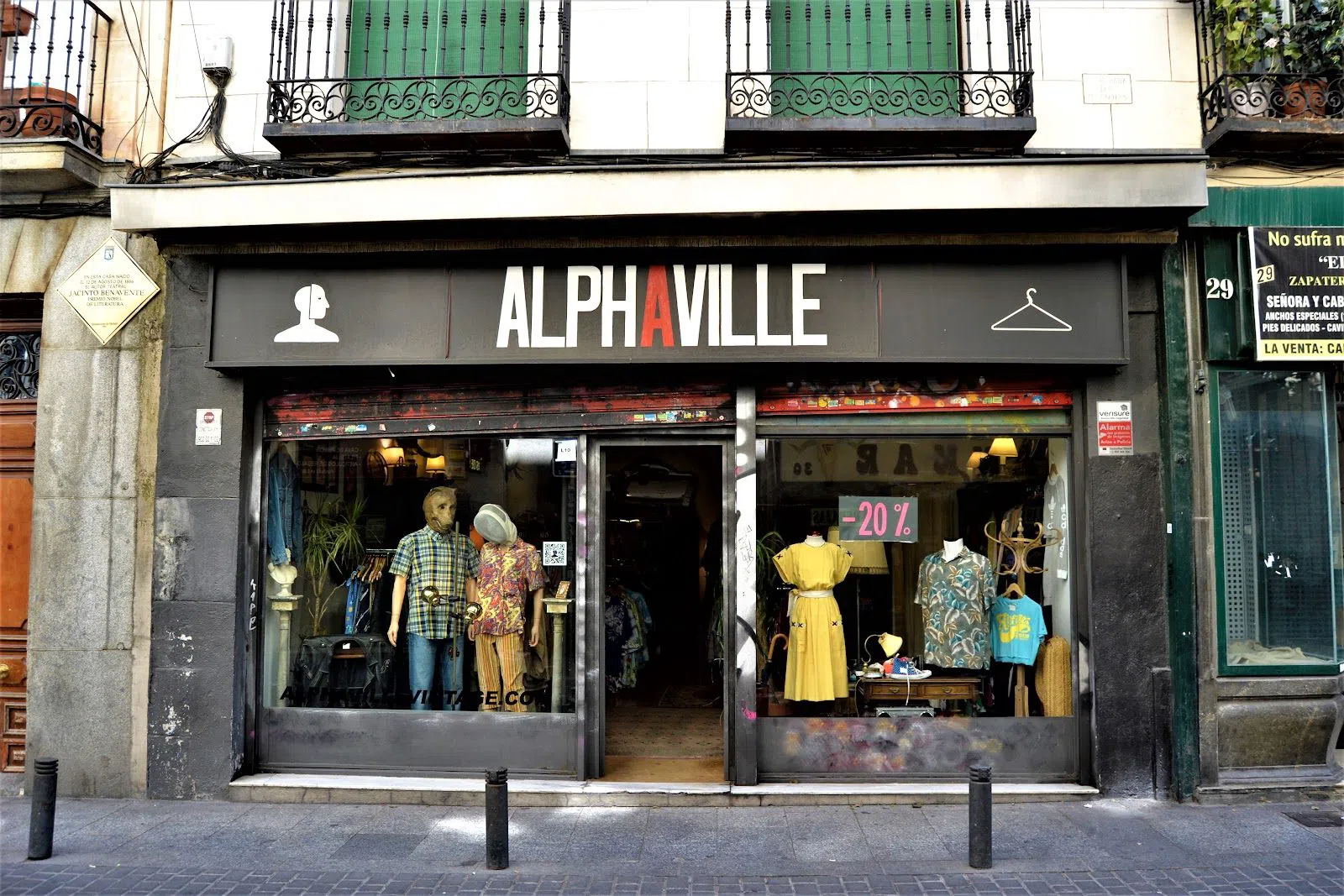
Alphaville Vintage (Malasaña, with branches on Plaza de Cascorro and Calle León) trades seven days a week on a split schedule of 11:00 to 15:00 and then 17:00 to 21:00. It has the most floor space of the Malasaña shops, with pieces from €25 to €150. Treat the branches as one stop rather than three; it is a single operation with its stock spread out. The Cascorro branch is the one that earns its place on Sunday, because it sits at the top of El Rastro and links the market to everything else in this article.
The rest of Malasaña on Saturday afternoon
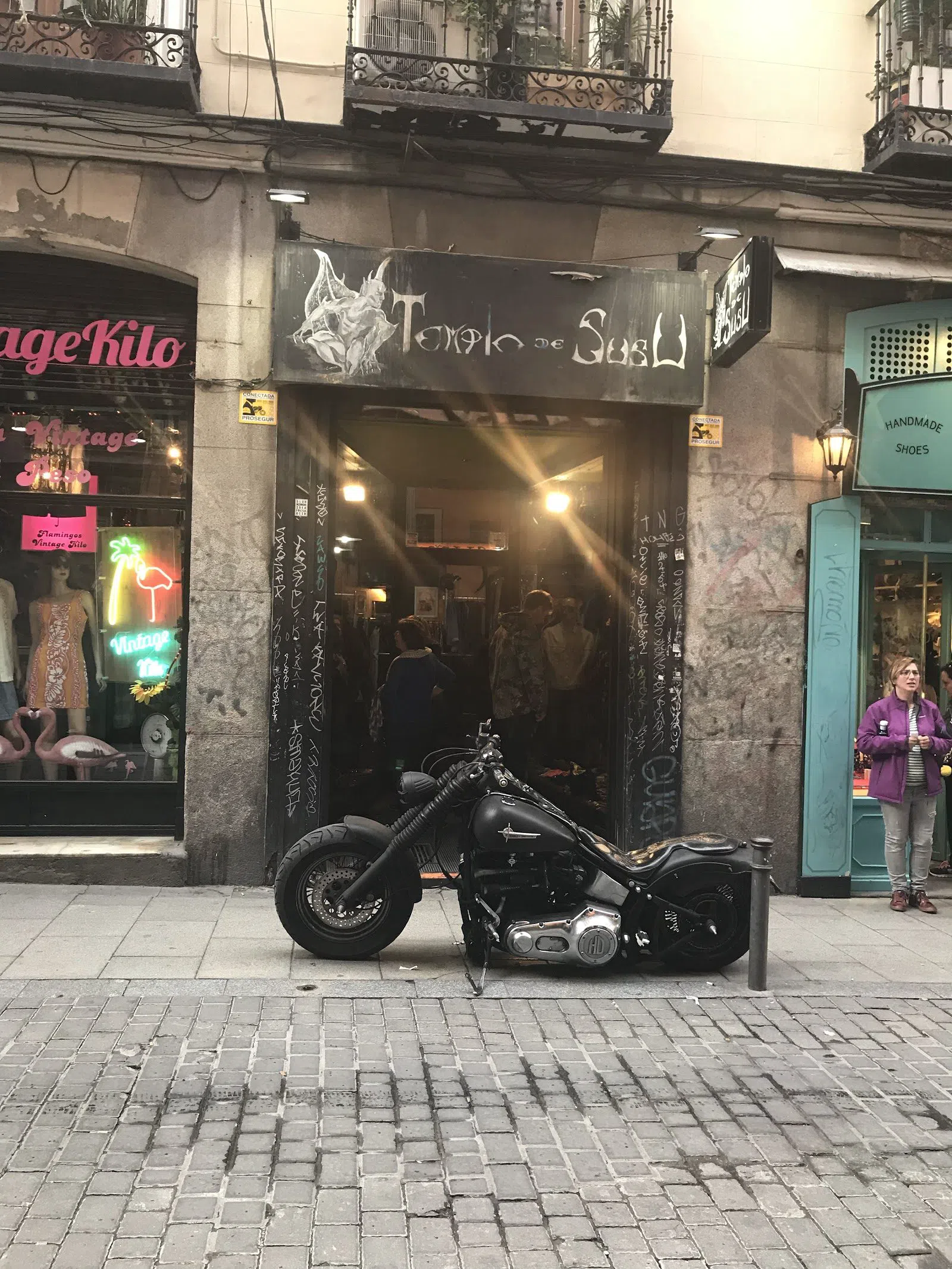
El Templo de Susu (Malasaña, Calle del Espíritu Santo 1) has been trading since 1998, which makes it the oldest surviving vintage shop in the district. It was here before the street had a reputation. Monday to Saturday 11:00 to 21:00, Sunday 12:30 to 20:30, €15 to €70. There is usually a bicycle parked in the entrance, and once it is there the room comfortably holds three.
Aramayo Vintage (Malasaña, Chueca and Ópera: Corredera Alta de San Pablo 2, Plaza de Herradores 8, Hernán Cortés 14) hand-sources from flea markets and textile-recycling plants across the United States, Asia, Europe, Canada and Australia. That sourcing is why the military jackets and the kimonos are the real article rather than reproductions, and it is worth knowing before you judge the prices, which sit between €15 and €90. Three mid-sized branches let a group fan out; count all three as one operator when you are budgeting time.

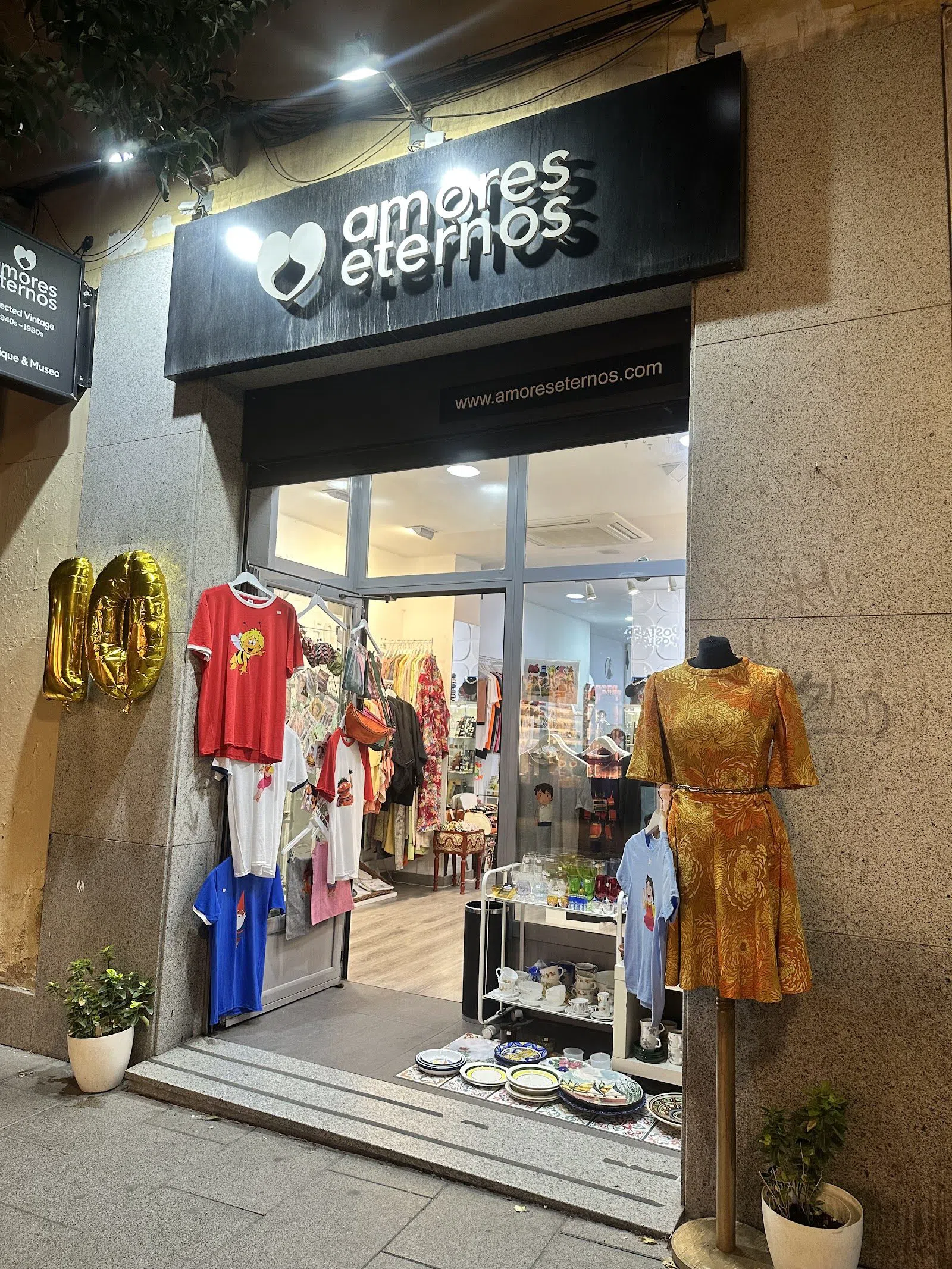
Amores Eternos Vintage (Malasaña, Corredera Baja de San Pablo 8) opened in 2015 and works as a display rather than a rummage. The stock spans 1940 to 1990, bought piece by piece on sourcing trips through the United States and Europe, and prices start around €60 and pass €300. It also rents costume to film productions, which is the most reliable tell you will get about the condition of what is hanging up. Small room, two or three at a time, and browse with your hands rather than your elbows.
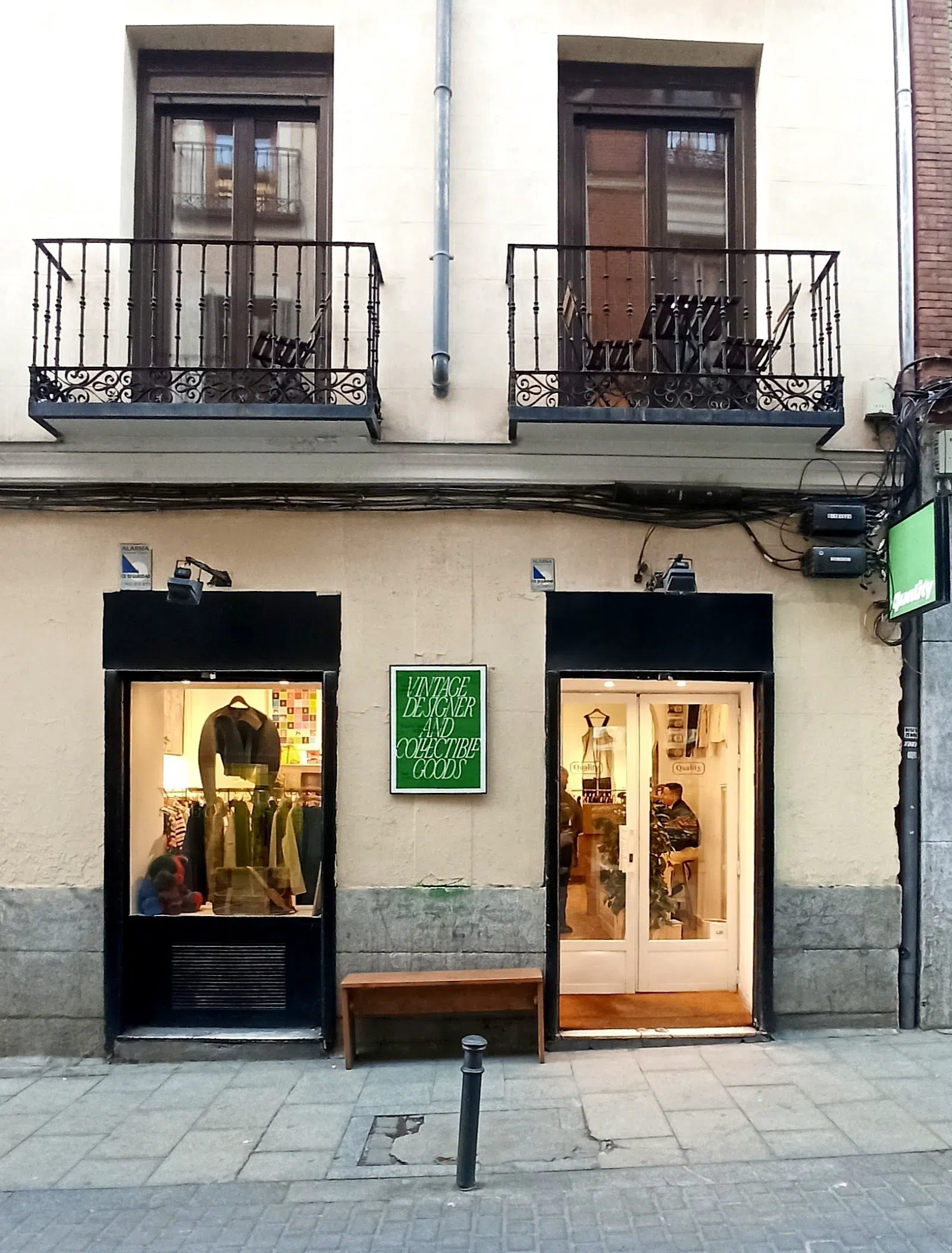
Quality Sportswear (central Madrid) is the step up into designer archive without Salamanca-district pricing. Monday to Saturday, 12:00 to 20:00, with the range running €80 to €500 and most of the Prada, Gucci and Dolce pieces landing under that ceiling. The floor is deliberately spare, the stock displayed rather than stacked, and it is not a room to browse in a crowd. Two or three.
The cheap end in Chueca and the top end near Sol
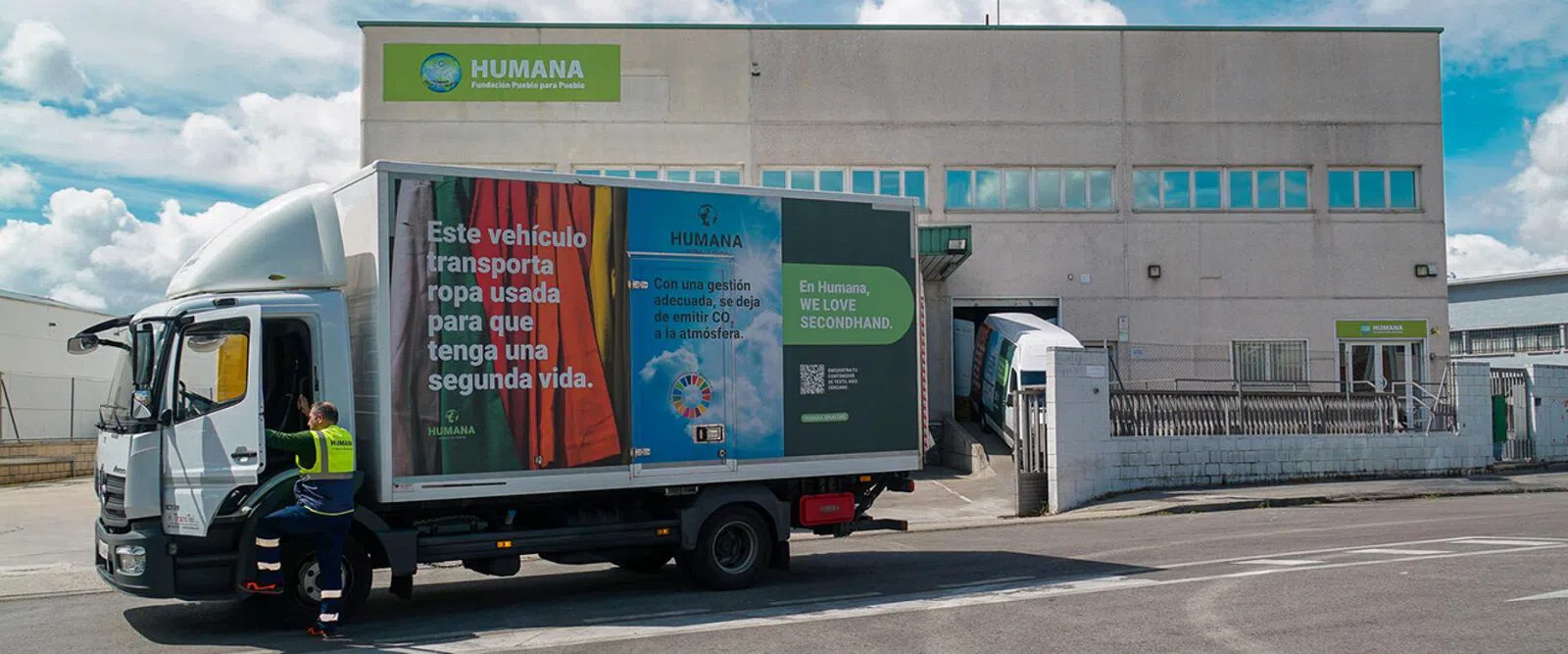
Humana Vintage (Chueca, Calle de Hortaleza 19) is the charity end of the loop and the most forgiving floor space on it. Saturdays 10:00 to 21:00, Sundays 12:00 to 20:00, most of it €5 to €35. Proceeds fund Humana Fundación Pueblo para Pueblo. Six people fit without friction, and because the Sunday hours are long it is the honest fallback for the hours after El Rastro packs up. All branches count as one operator; the Hortaleza room is the one to plan around.
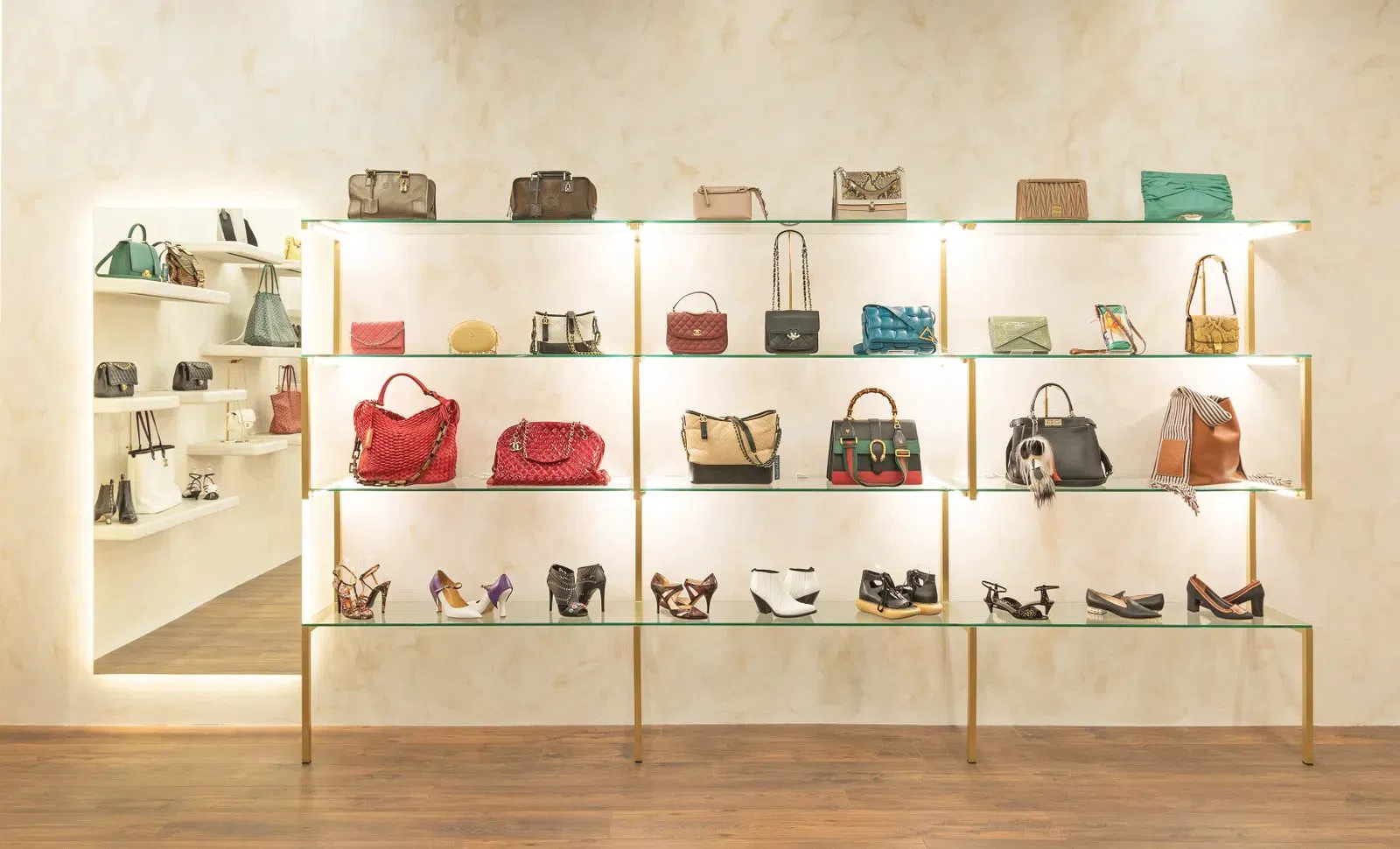
LOUÉ (Sol, Calle Virgen de los Peligros 12) occupies two spaces and sells pre-owned luxury (Hermès, Dior, Chanel, Vuitton, Loewe), every piece authenticated, from €500 to €15,000 and beyond. It buys, sells and rents. The renting is why it is on this list even for people who are not spending: the counter is used to conversations that do not end in a sale, so it is the one stop on the route worth walking into with no intention of buying. The room is appointment-style calm. A browsing group of six does not suit it. Go in twos.
The second weekend under a train shed
Mercado de Motores (Delicias, at the railway museum) runs on the second weekend of every month except August. In 2026 that lands on Saturday 10 and Sunday 11 October, 11:00 to 21:00 on the Saturday and 11:00 to 20:00 on the Sunday, so an October weekend can catch it if you time the trip deliberately. More than 150 sellers of vintage fashion, antiques and second-hand oddities set up under the shed of a nineteenth-century terminus that has housed the railway museum since the 1980s.
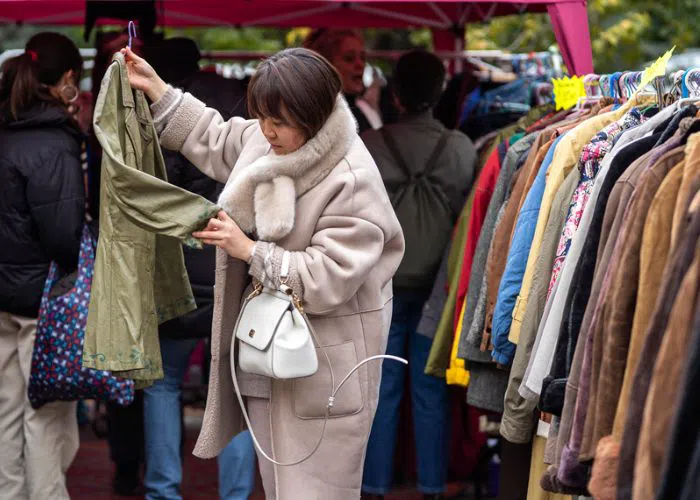
Admission is free, but you reserve online in advance; do that before you fly rather than in the queue. Vintage clothing sits around €10 to €60, antiques and collectables €20 to €200. The hall absorbs a group of six without anyone waiting on the pavement, which makes it the only indoor stop on this route where that is comfortably true. Metro Delicias, line 3, and then a short walk.
If your weekend does not coincide, nothing else here changes. Treat Motores as an extra rather than the spine of the trip.
Sunday belongs to El Rastro
El Rastro (La Latina and Embajadores) is the fixture that forces a Sunday-morning start, and the name is older than the market: the slope once ran down to the tanneries and the slaughterhouse, and rastro means the trail they left behind them. Entry is free. Stall finds run €1 to €40 and dealer antiques start around €50.
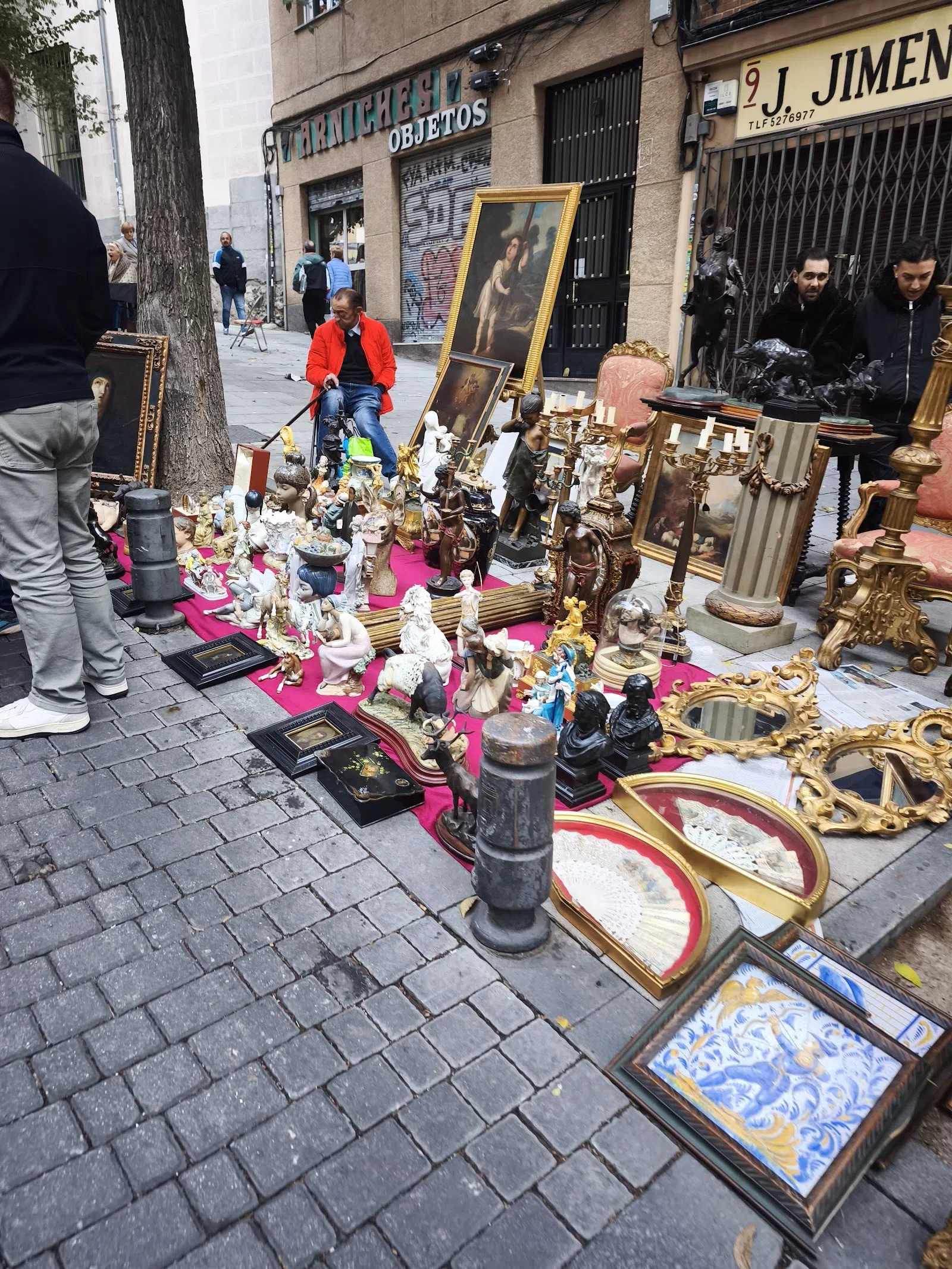
Arrive before 10:00. Between 11:00 and 13:00 the lanes bottleneck badly and a group of six becomes a liability to itself and to everyone trying to get past, so split into pairs and agree a corner to meet at. There is no door policy because there is no door, but the crowd enforces its own etiquette and it is not a place to stand three abreast comparing photographs. The market winds down and closes around 15:00.
Most of the brick-and-mortar shops around the market do not trade on a Sunday, and the same is true up in Malasaña, where Magpie, Biba and La Mona Checa all keep Monday-to-Saturday hours. What stays open is Alphaville (its Cascorro branch at the top of the market, then any other branch after the 17:00 reopening), along with Kinda Kinks, El Templo de Susu and Humana. That is a full afternoon if you pace it, and it is the reason to save Velarde for Saturday rather than hoping to catch it on the way home.
Who fits where
If you are travelling as a couple or a pair, this route has no obstacles at all; every room on it takes two people without strain. If you are six, the weekend needs managing. The markets (Dos de Mayo, Motores, El Rastro) and the Humana floor take the whole group. Velarde does not: Magpie, Biba and Williamsburg hold two to four, so stagger entry and use La Mona Checa and Kinda Kinks, which take a few more, as the places you regroup. Quality Sportswear, Amores Eternos and LOUÉ are quiet, display-led rooms where a group of six is a genuine imposition. Go in twos and take turns. Nobody will stop you at the door; the constraint is the floor space.
Practical notes before you go
The Malasaña leg is entirely walkable and the metro is not worth the stairs, though Tribunal on lines 1 and 10 puts you two minutes from Velarde. For El Rastro use La Latina on line 5 or Tirso de Molina on line 1; for Mercado de Motores, Delicias on line 3. Buy a rechargeable Multi card at any station machine rather than paying single fares each time.
The fixed shops take cards without fuss. The markets are another matter: bring €50 to €100 in small notes for El Rastro and Dos de Mayo, because the stalls with the €2 to €30 stock are the ones least likely to have a card reader, and haggling in cash is simply easier.
Nothing here opens early. Most doors lift at 11:00 or 12:00, so a 09:00 start buys you coffee rather than shopping. Remember the split hours: Alphaville shuts between 15:00 and 17:00 and it is the shop you are most likely to walk to at exactly the wrong moment. The order that works is Saturday morning in the square, Saturday midday and afternoon on Velarde and around Corredera, then Sunday early at El Rastro with the survivors afterwards.
A realistic weekend with one or two considered pieces sits between €80 and €250. A sportswear jacket will take €120 of that on its own, an archive designer piece under €500 is the next tier up, and LOUÉ is a different conversation entirely. Assume no returns anywhere on this route, try things on before you pay, and check seams and zips in daylight at the market stalls.
Malasaña, Chueca or the streets around Sol put the whole loop within twenty minutes on foot, so start with a Madrid hotel search filtered to those areas rather than to the wider centre. For what to do with the hours between the shops, the Madrid guide covers the rest of the city.
Before you go
What time should I get to El Rastro on a Sunday?
Before 10:00. The lanes bottleneck between 11:00 and 13:00, and the market closes around 15:00. Going early gets you the quiet hour and leaves the afternoon for the handful of shops that open on Sundays.
Which Madrid vintage shops are actually open on a Sunday?
Alphaville Vintage opens seven days on split hours, 11:00 to 15:00 and 17:00 to 21:00; Kinda Kinks 12:00 to 20:00, El Templo de Susu 12:30 to 20:30, Humana Vintage 12:00 to 20:00. Magpie, Biba, La Mona Checa and Quality Sportswear open Monday to Saturday, so Calle Velarde belongs to Saturday.
Will Mercado de Motores be on during my October weekend?
It runs the second weekend of every month except August. In 2026 that is Saturday 10 and Sunday 11 October, 11:00 to 21:00 then 11:00 to 20:00. Admission is free, but you have to reserve online, so book before you travel.
Does this route work for a group of six?
Partly. The markets and the Humana floor take six comfortably. The Calle Velarde shops hold two to four people each, so stagger entry and regroup at La Mona Checa or Kinda Kinks. Quality Sportswear, Amores Eternos and LOUÉ are small display-led rooms, best visited in twos.
Do I need cash, and how much should I budget?
The fixed shops take cards. Bring €50 to €100 in small notes for El Rastro and the Plaza del Dos de Mayo market, where much of the stock sits between €2 and €30. A weekend with one or two considered pieces usually lands between €80 and €250.