
Madrid spent the better part of a decade burying an eight-lane ring road under the Manzanares and planting a park on top of it, and the payoff is a walk most visitors never find on a first pass through the city: five kilometres of near-continuous green running from the base of the Royal Palace to a converted 19th-century slaughterhouse now given over to contemporary art. It's flat, shaded for much of its length, and strings together a cathedral, two royal gardens, three historic bridges, a free glasshouse, a seasonal urban beach and a restored meat market without a single metro change. Start at the palace gates in the morning and you can be at a table by Matadero's facade for dinner, with room in between for cider, a swim-adjacent sit-down, or just standing on a bridge longer than planned.
The walk falls into five natural stretches, each with its own pace, and it works equally well broken across a lazy day or covered briskly on a bike. What follows takes them in order, palace to Matadero, in 2026.
From the Palace Gates Down to the River
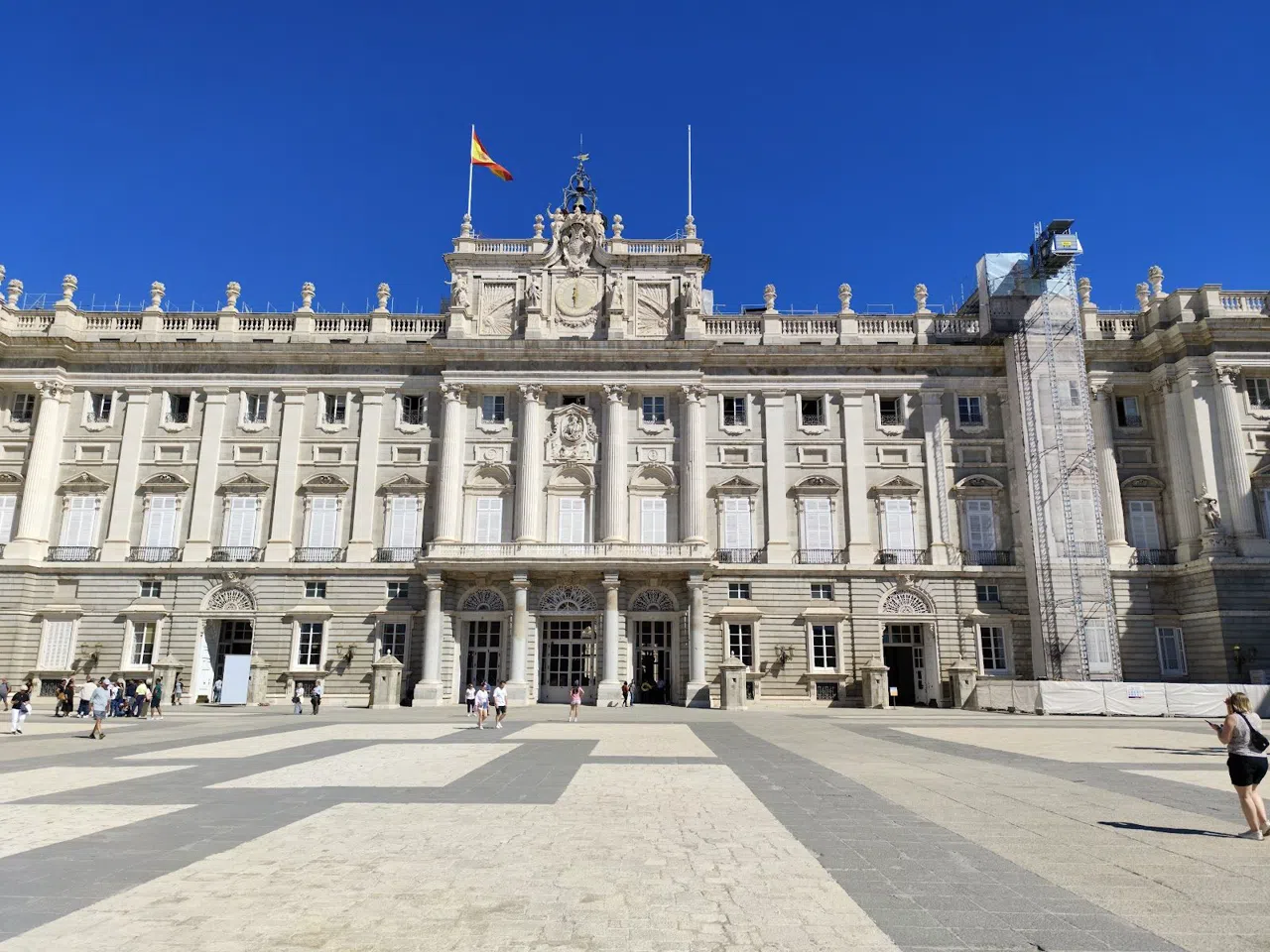
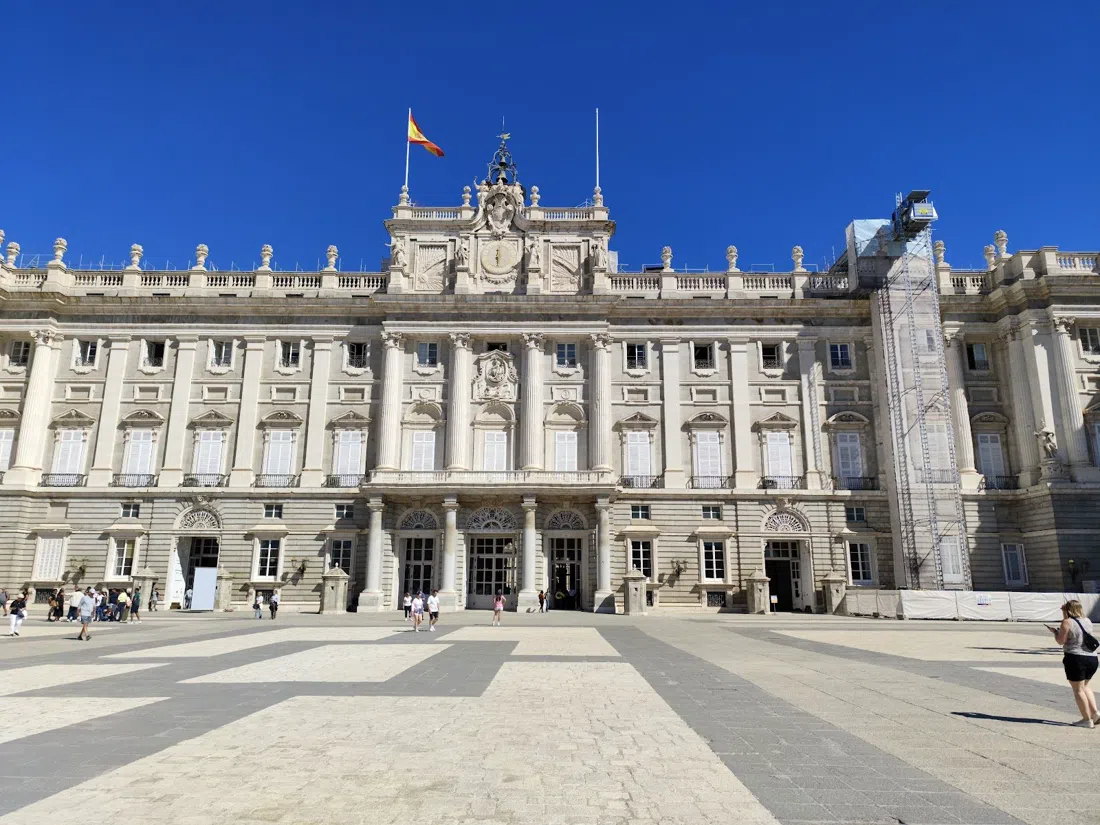
Palacio Real de Madrid (Palacio) is the natural starting point, if only because the whole western axis of Madrid Río was designed to be seen from its facade — the river park exists, in part, to give the palace a proper foreground. The current building dates from 1738 to 1755, put up after fire destroyed the old Habsburg Alcázar on the same site, and it remains Europe's largest royal residence by floor area, still used for state ceremonies though the royal family lives elsewhere. It takes large groups without much friction: the exterior and gardens are free to walk, and entry to the state rooms runs €10-15, with timed-entry tickets worth booking ahead for groups of ten or more so you're not queuing in the plaza in the heat.
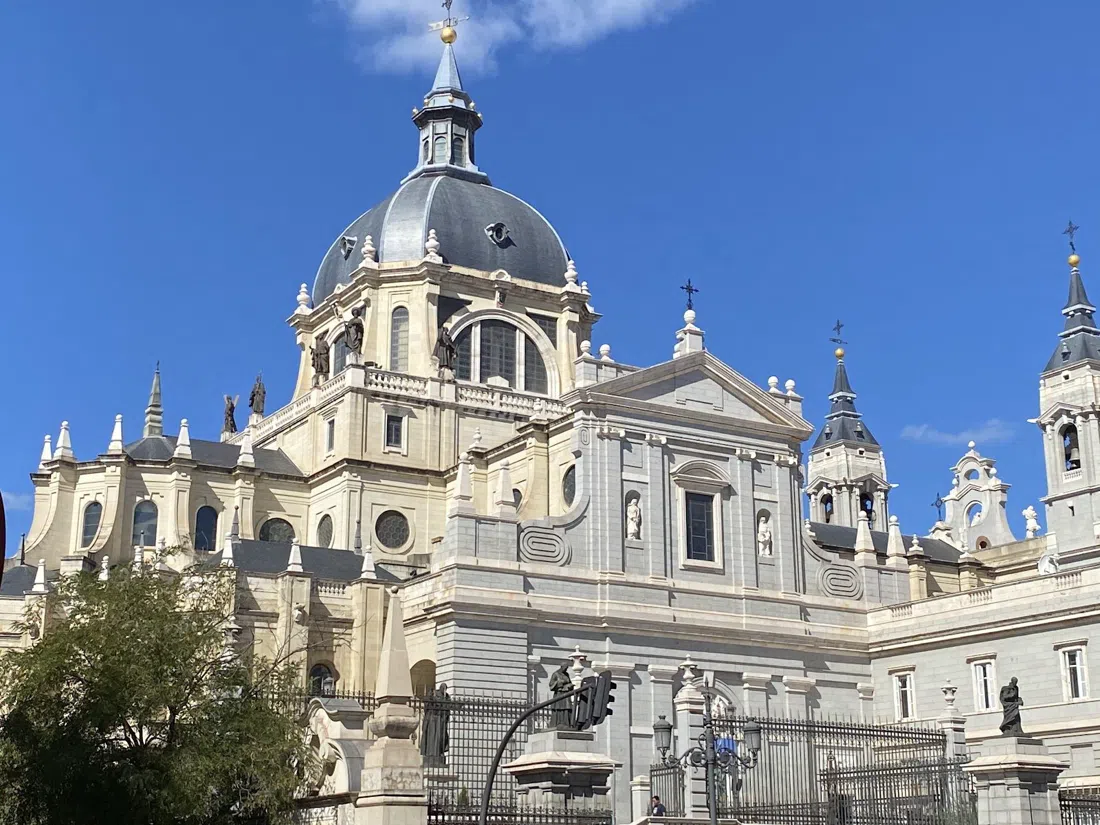
Two minutes from the palace gates is the Catedral de la Almudena (Palacio), Madrid's cathedral and a comparatively young one — consecrated in 1993 after a construction history that dragged on for over a century, which is why its neo-Gothic exterior and brighter, more contemporary interior don't quite match. Entry to the nave is free with no group cap, and guided group visits can be arranged by email in advance; the museum and dome cost €7 if you want the climb. It's an easy detour before you turn toward the river, not a destination that needs an hour of its own.
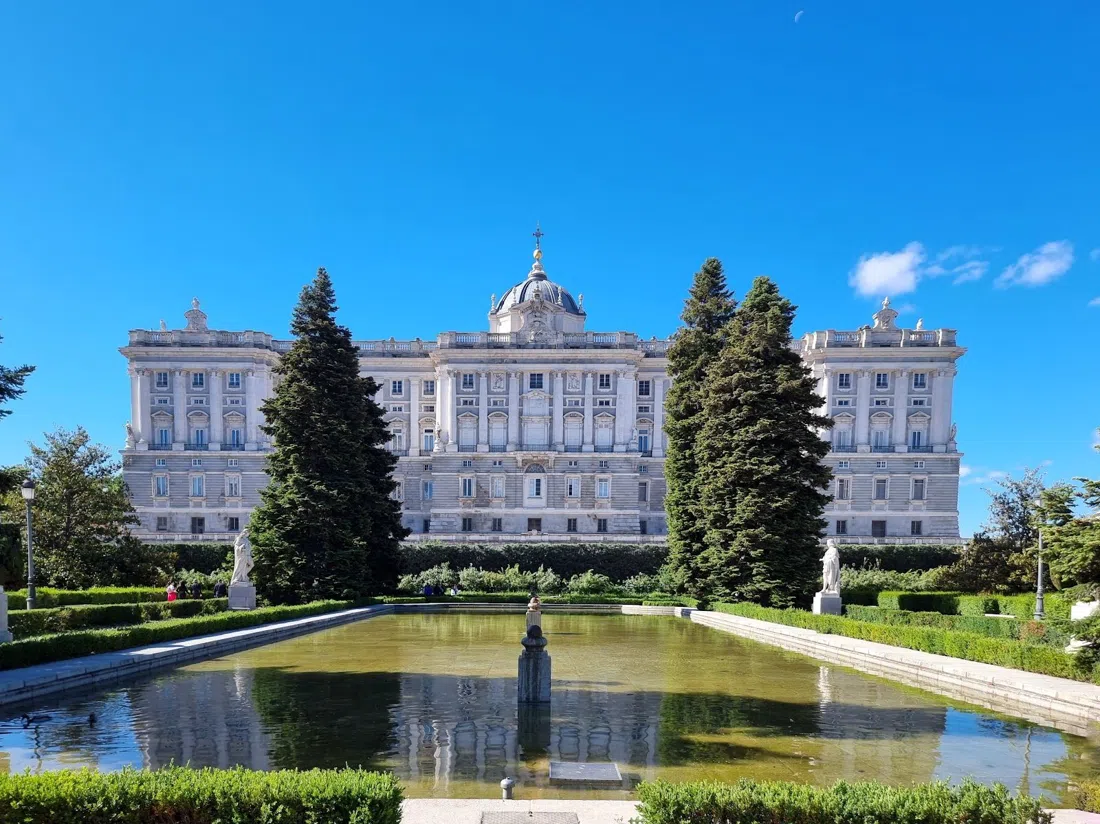
Back at the palace, drop into Jardines de Sabatini (Palacio), the formal, hedge-lined garden laid out on the site of the old royal stables and finished in 1978 — geometric, symmetrical, built for looking rather than lounging, in the French style the palace itself borrows from. It's free, unrestricted, and gives you the clean, reflecting-pool view of the palace that most people photograph without ever learning the garden's name.
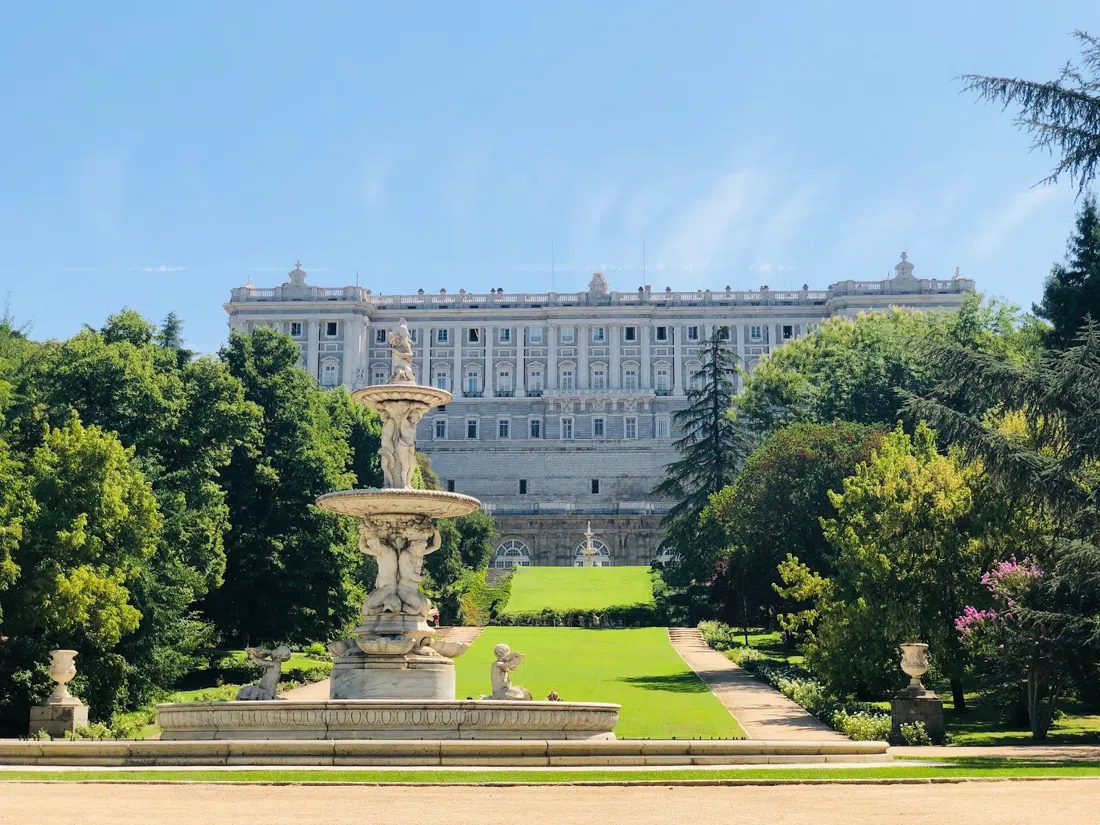
The actual descent to the river runs through Jardines del Campo del Moro (Palacio), the wilder, English-landscape garden below the palace's western facade, said to take its name from a 12th-century Moorish encampment on the site during the reconquest of the city. It's free, open daily except Christmas Day, New Year's Day and 1 May, and handles a walk-through group without complaint. As of January 2026 there's a new route through it too: the Bonaparte Tunnel, a passage commissioned under Joseph Bonaparte in the early 1800s and only recently opened to the public, now forms the first physical link between the palace grounds and Madrid Río proper — worth taking rather than the perimeter path if it's open when you pass through.
Crossing the River: A Bridge and a Cider House
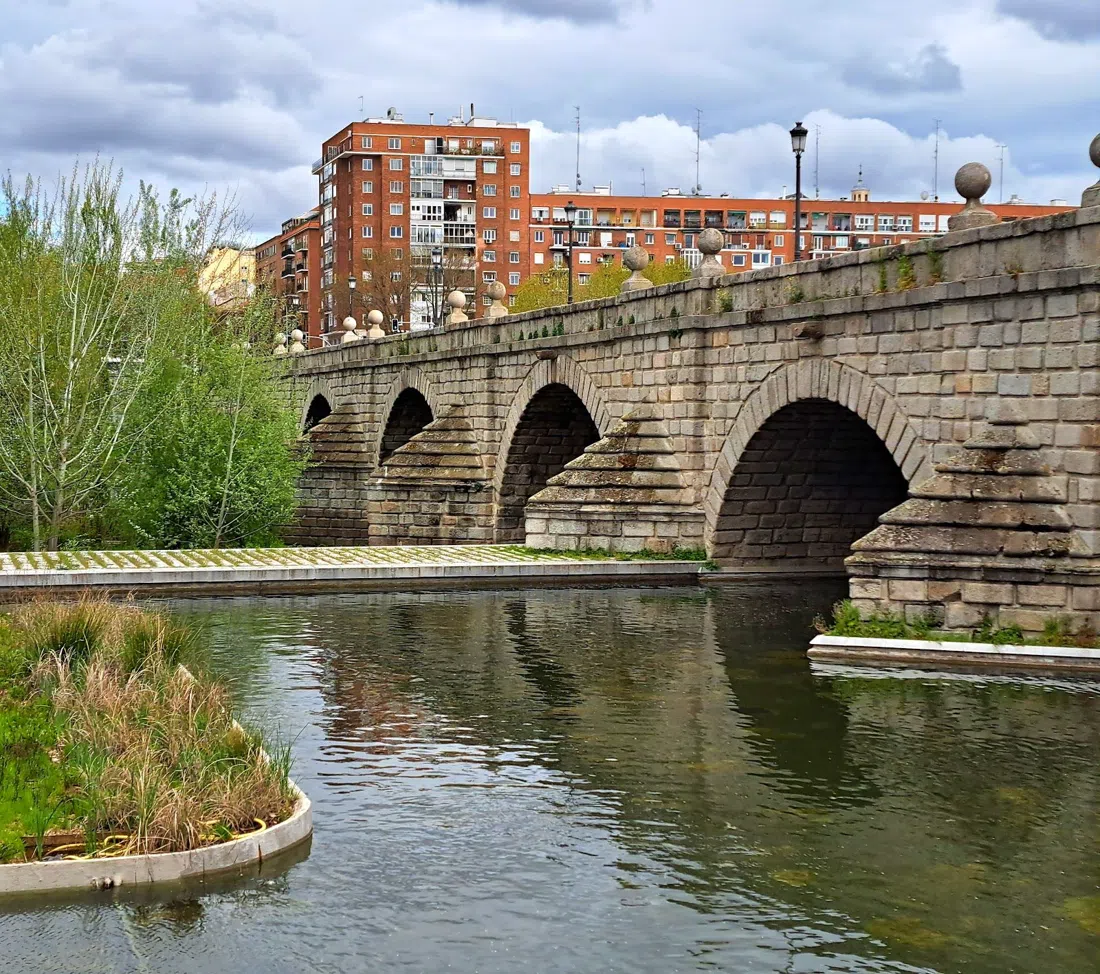
Puente de Segovia (Segovia/Río) is where the walk actually enters the park. It's Madrid's oldest bridge, built in the 1580s under Philip II and rebuilt more than once since, and it's the pivot point of the day: lean on the parapet here and you get the classic skyline shot, palace and cathedral stacked above the river, that most Madrid Río photographs are actually taken from. It's a fully open public bridge with no restrictions, and worth a few minutes of standing still rather than a quick crossing.
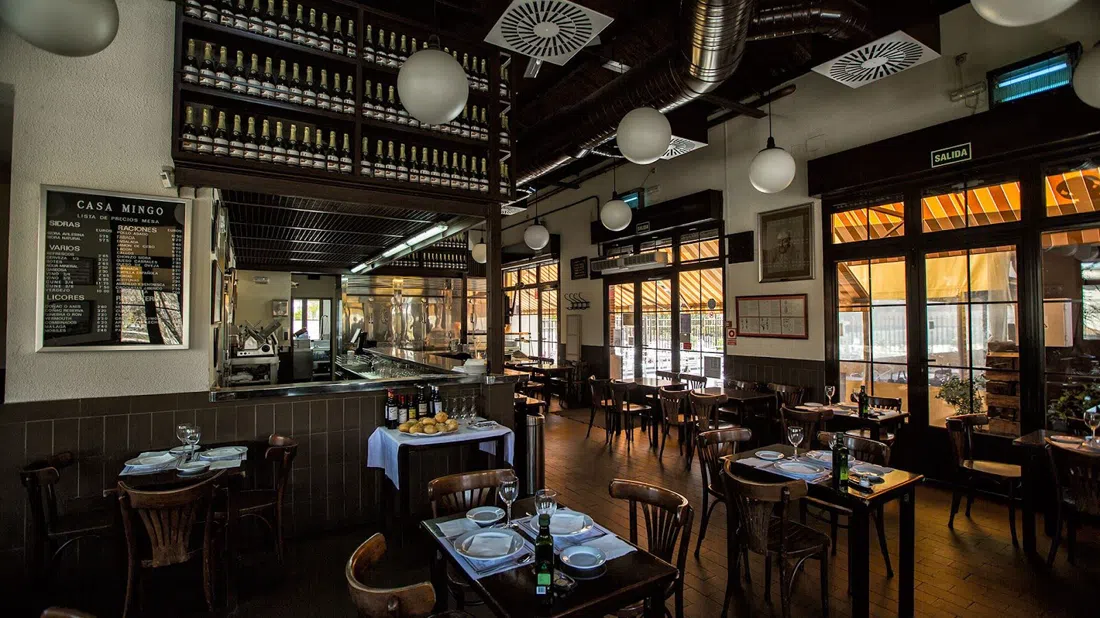
On the river's northern stretch, a short walk from the bridge, is Casa Mingo (Príncipe Pío), a cider house that's been serving roast chicken and Asturian cider from the same address since 1958. It doesn't take reservations — you queue, then share one of the long communal tables — which sounds like a liability for a group but is actually the opposite: it's built for exactly that, and a table of ten gets seated as readily as a table of two. Expect €15-25 a head for chicken, cider and bread, and treat it as a genuine Madrid institution that happens to sit by the river, rather than a tourist stop with a river view.
The Green Spine: A Glasshouse, a Beach and Bikes
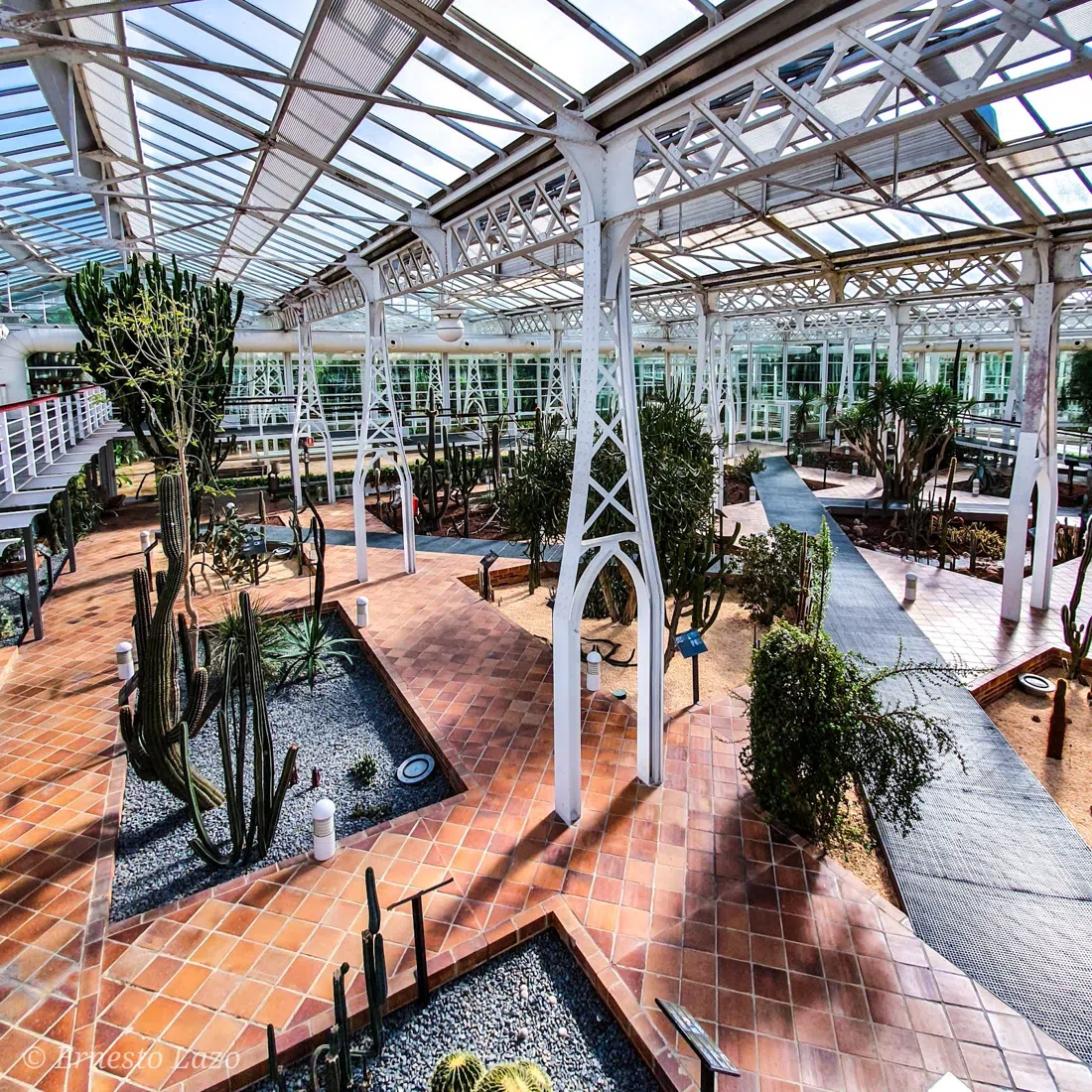
Roughly the midpoint of the walk is the Invernadero de Arganzuela (Arganzuela), a free public greenhouse built inside a former gasworks building — the kind of repurposed-industrial structure that tells you as much about Madrid's recent history as any plaque would. It's self-guided, handles groups easily, and works well as a shade break in the heat of the day, which on a five-kilometre summer walk you'll want by early afternoon.
A little further on is the Playa Urbana de Madrid Río (Arganzuela), the park's urban beach: sand, shallow water jets and a genuinely popular family scene, all free and open access. It is seasonal — it runs from 22 May to September, 11:00 to 21:00, with shorter hours from 8 September — so this is not a year-round stop, and outside that window you'll pass a dry plaza rather than a beach. Plan around the dates if a swim is part of the appeal, and bring a towel if you're walking through in season, since it draws families rather than sunbathers.
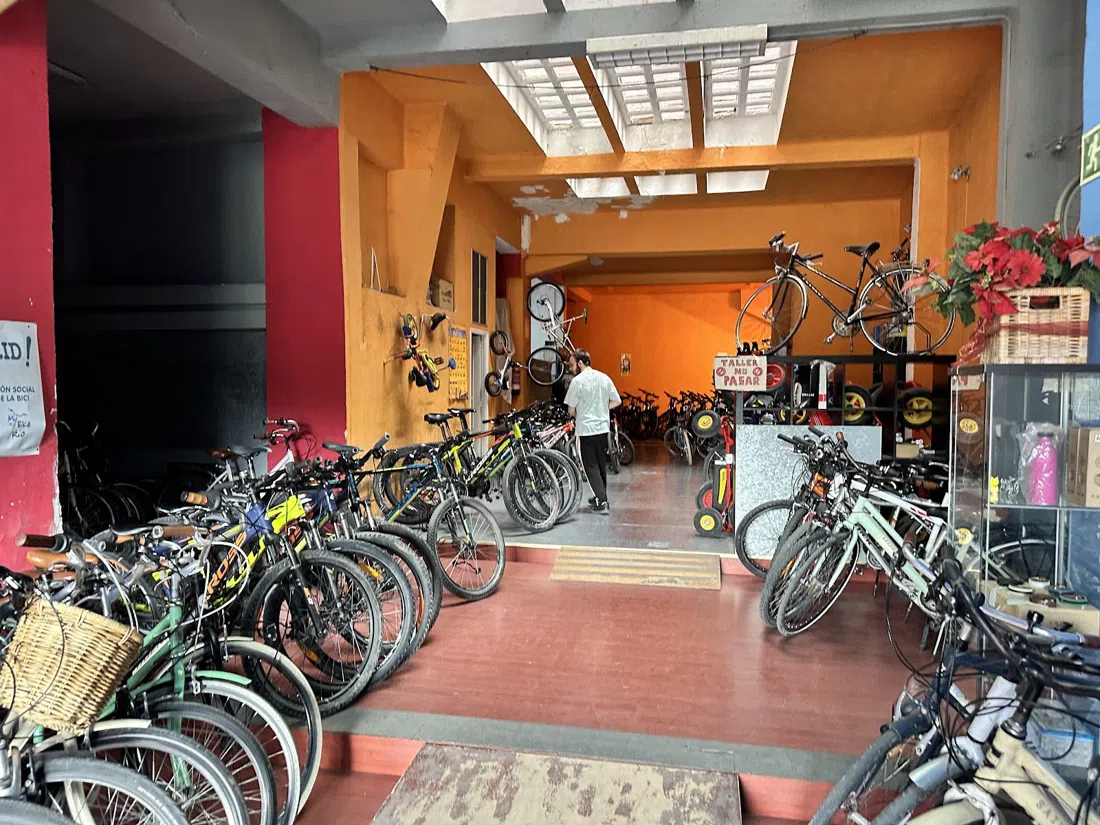
For anyone who'd rather cover the palace-to-Matadero distance on wheels, Mi Bike Río (Arganzuela) has been renting bikes along this stretch since 2011, including tandems and family setups, at a typical city-bike rate of €3-5 an hour, worth confirming on booking. It turns the walk into an hour's ride if a full afternoon on foot isn't the plan, without losing any of the stops along the way — the whole park is built with a separated cycle path for exactly this.
Toledo Bridge and the Arganzuela Stretch
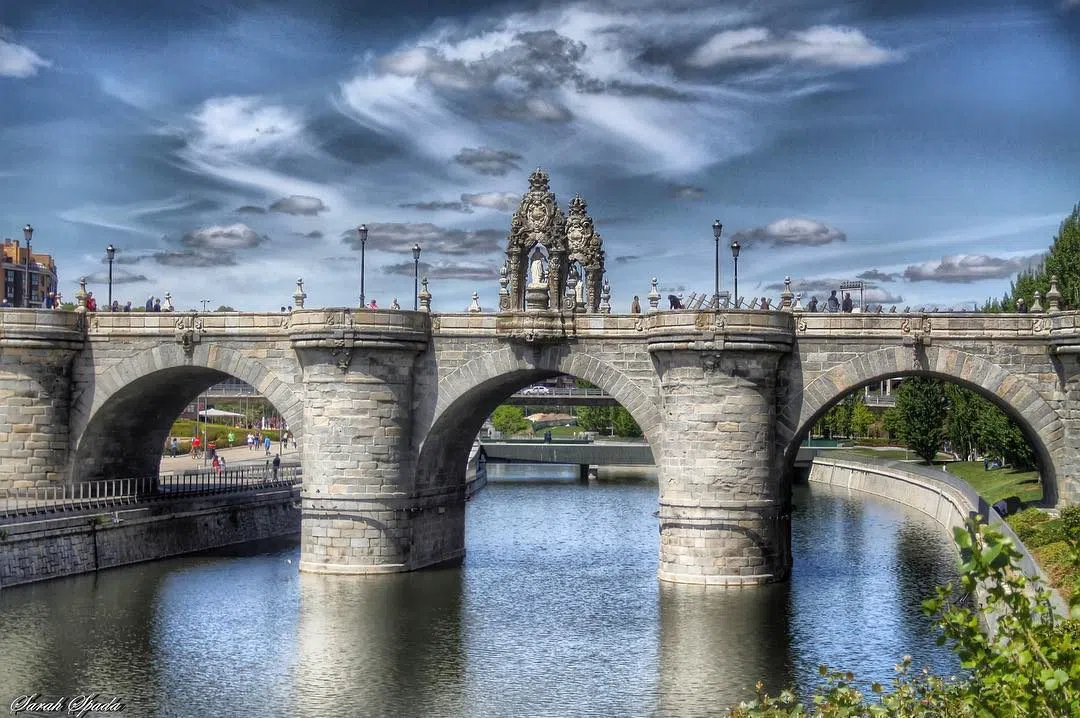
A short distance downstream, Puente de Toledo (Toledo/Arganzuela) is the most ornate of the river crossings — a Baroque bridge from the 1720s with niche statues and restored granite decking, redone as part of the Madrid Río project. It's open and unrestricted, and if you want a second bridge moment beyond Segovia, or a swap-in if you're short on time, this is it; the statuary is worth a slow crossing rather than a glance.
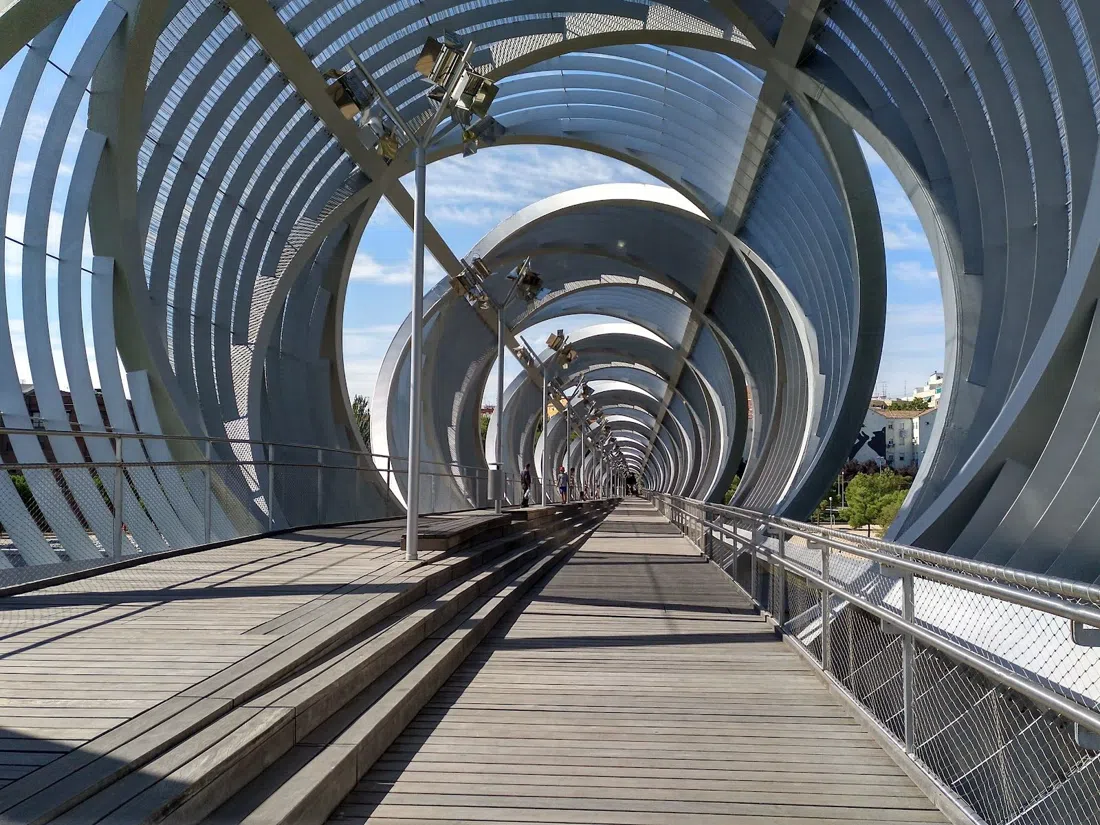
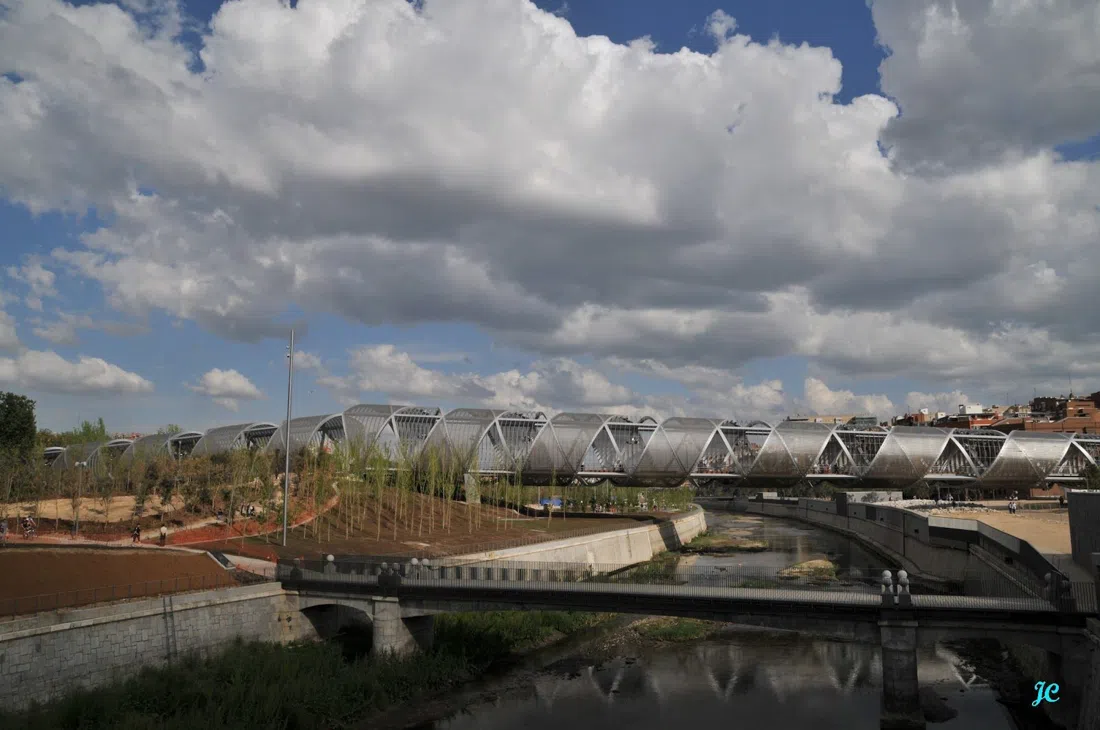
Just past it is Puente Monumental de Arganzuela (Arganzuela), a steel footbridge with two intersecting helical ramps that's become the single most photographed structure on the whole route — it sits right by the urban beach and is worth the few extra minutes to walk across rather than just past. Like the other river crossings it's free and open with no restrictions.
The last green stretch before Matadero is Parque de Arganzuela (Arganzuela), a genuinely well-used family park with playgrounds for younger kids and a skatepark that draws a regular teenage crowd rather than sitting empty. It's free and open access, and it's the part of the walk that makes the family case for the whole route — this isn't a monument crawl, it's a park that Madrid actually uses on an ordinary weekday afternoon.
Matadero: Journey's End
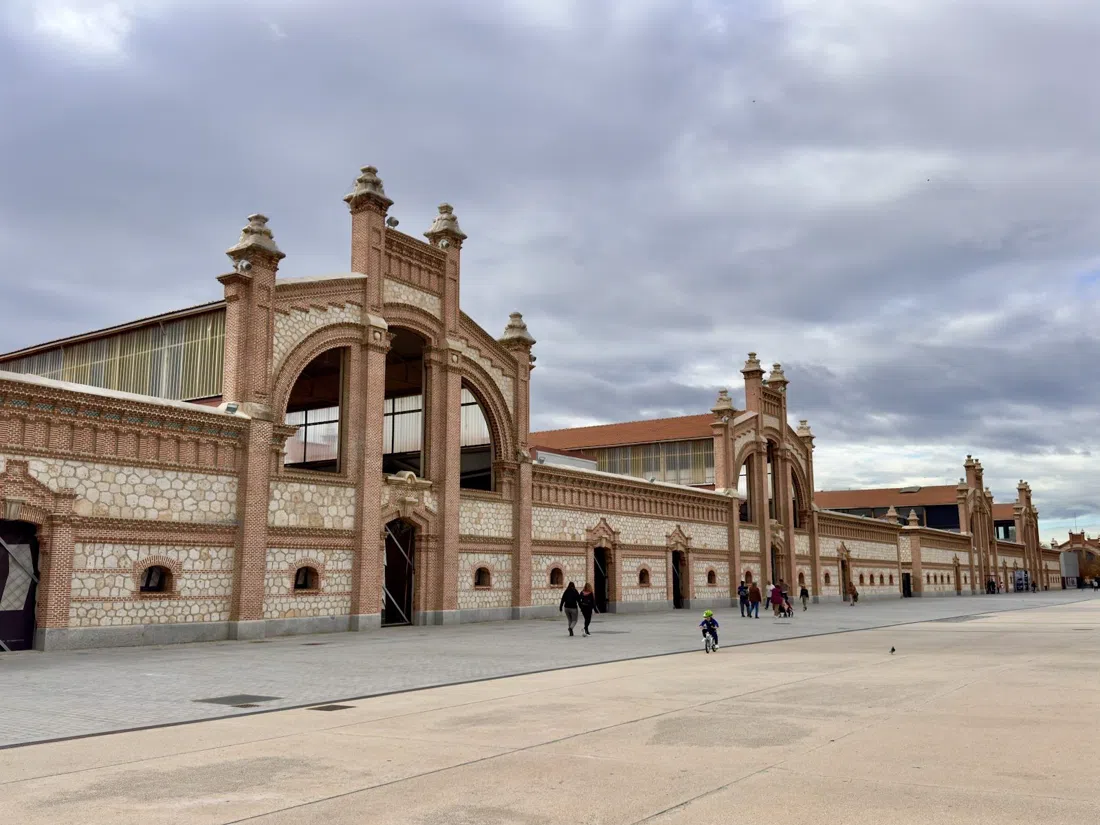
The walk ends at Matadero Madrid (Legazpi/Arganzuela), the city's former municipal slaughterhouse — a sprawling complex of brick pavilions designed by municipal architect Luis Bellido, built between 1908 and 1928, decommissioned in the 1990s and reopened from 2007 as a contemporary arts centre. The grounds and most of the individual naves are free to enter, daily from 9:00 to 21:30, and group visits are welcomed without special arrangement. Its exhibition programme runs through 2026: a site-specific show by Greta Alfaro closed on 26 July, and the next major one, MIAD, runs 20-31 October — worth checking the calendar for what's actually on the walls when you arrive, since the programme turns over through the year and some shows are ticketed while most of the grounds stay free.
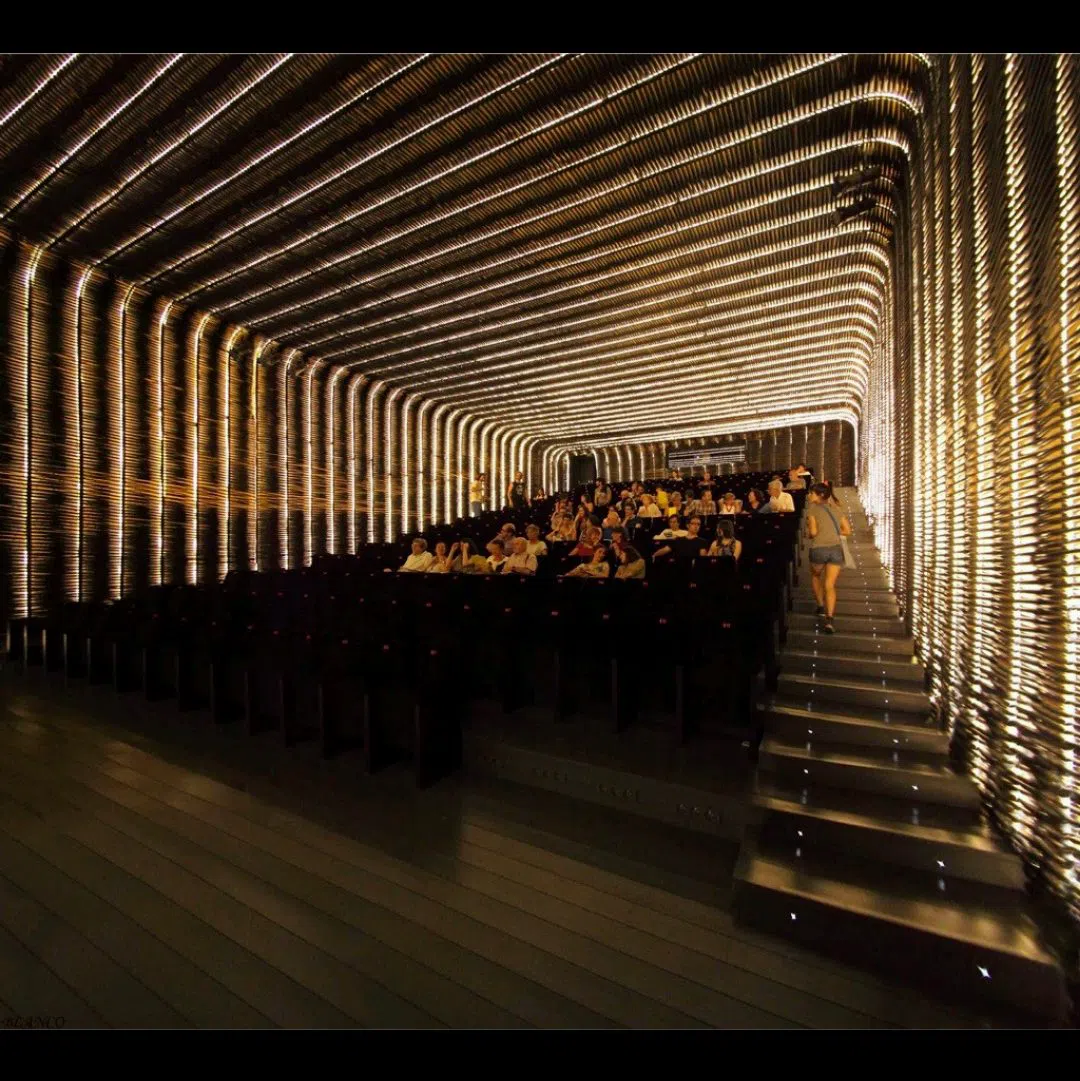
Inside the same complex is Cineteca Madrid (Legazpi/Arganzuela), the city's public cinema dedicated to documentary and archival film, distinct enough from the rest of Matadero to name on its own. Tickets run €3-5 a screening and groups are fine with advance booking. Its open-air summer season, CinePlaza, runs through late July — a good evening cap if your walk happens to land in that window, though it's worth checking what's showing indoors the rest of the year, since the programme is a genuine draw for Madrid residents, not just visitors.
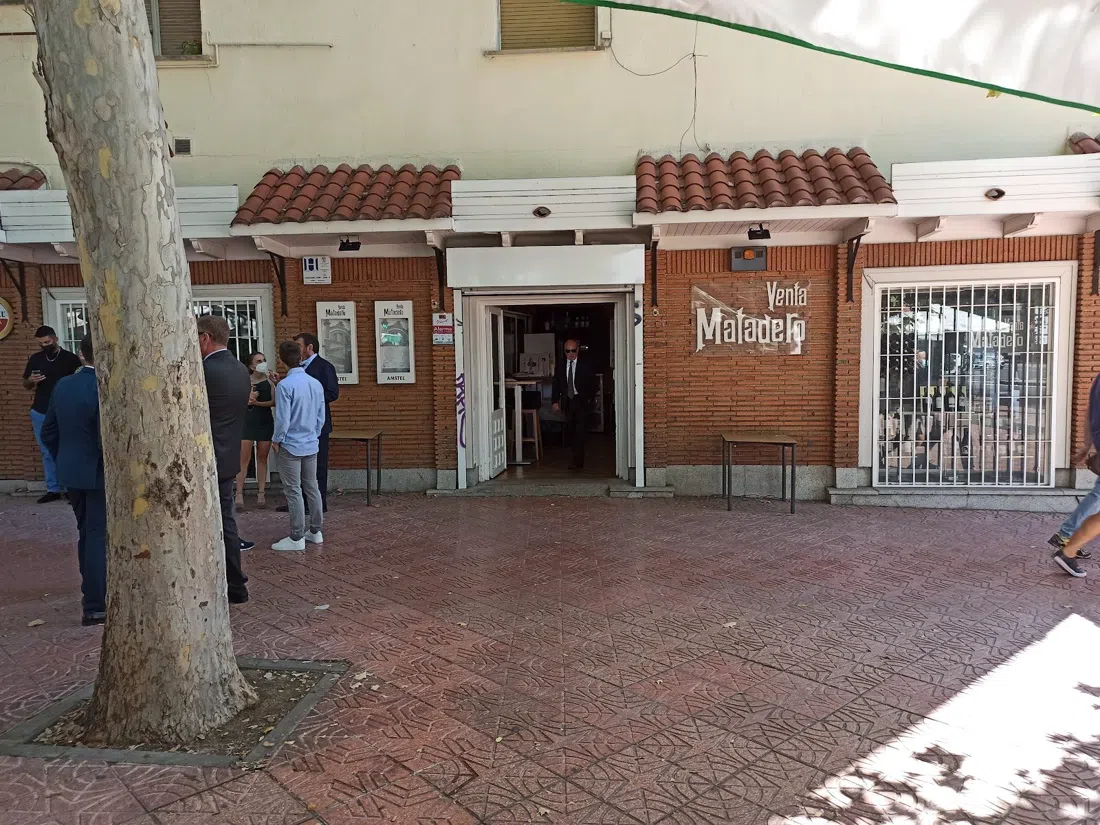
For dinner at the finish line, Venta Matadero (Legazpi/Arganzuela) sits right at the site's edge with a terrace looking straight at the old slaughterhouse facade — a deliberate view, not an accident of geography. It's open Tuesday to Sunday, 09:00 to 23:00, offers group menus and a private dining room, and runs €20-35 a head. It's the one stop on this route built explicitly for groups rather than merely tolerating them, which makes it the sensible place to end a day that started at the palace gates.
Planning the Day: Transport, Cash, Timing and Budget
The walk runs point to point rather than in a loop, so it helps to know your exits. Príncipe Pío (metro and Cercanías) sits near the palace end and Casa Mingo; Pirámides and Marqués de Vadillo cover the Arganzuela midpoint; Legazpi drops you almost directly at Matadero. All are on Madrid's metro network, so there's no need for a car or a taxi at any stage, and you can bail out early at any of them if the heat or the group's energy runs out before Matadero.
Budget for the day is modest and mostly optional: the palace's interior (€10-15) and the cathedral's dome (€7) are the only real ticket costs on the route, everything from both gardens to all three bridges to both parks is free, and food is where the spend actually happens — figure €15-25 for lunch at Casa Mingo and €20-35 for dinner at Venta Matadero. Card payment is standard across Madrid, including at Casa Mingo, though it's worth carrying some cash for the odd kiosk or vending stall along the park itself.
Timing matters more than distance. The full walk is around five kilometres, flat and shaded for long stretches, so it's manageable in two to three hours of actual walking — but the point of the day is the stops, not the distance, and a full day from palace to Matadero with lunch, the glasshouse, the beach if it's in season, and dinner is realistic rather than rushed. Start mid-morning to give the palace and cathedral some breathing room before their own crowds build, and aim to hit the Playa Urbana in the afternoon if you're there between late May and September, since it's genuinely closed outside that window. In peak summer, the shade along the river and inside the Invernadero is worth timing around rather than pushing straight through midday heat; good walking shoes matter more than anything else you pack, since the paths are hard-surfaced the whole way.
For where to stay before or after the walk, this route works from almost anywhere central — see the Madrid guide for an overview of the city's districts, and the Madrid hotel search to find something within easy reach of either end of the route.