
Two stadiums anchor Madrid's footballing life without ever needing a fixture between them to prove the point. One rebuilt itself over the past five years into something closer to a spaceship than a stadium, all curved steel and a retractable roof; the other stayed spare and exposed to the sky, the kind of ground where you can still hear a manager's voice carry in the eightieth minute. A short walk apart on the same avenue sit the two fountains where each club's trophies get lifted, which tells you almost everything about how close, and how different, this city's two footballing tribes really are.
The Two Cathedrals
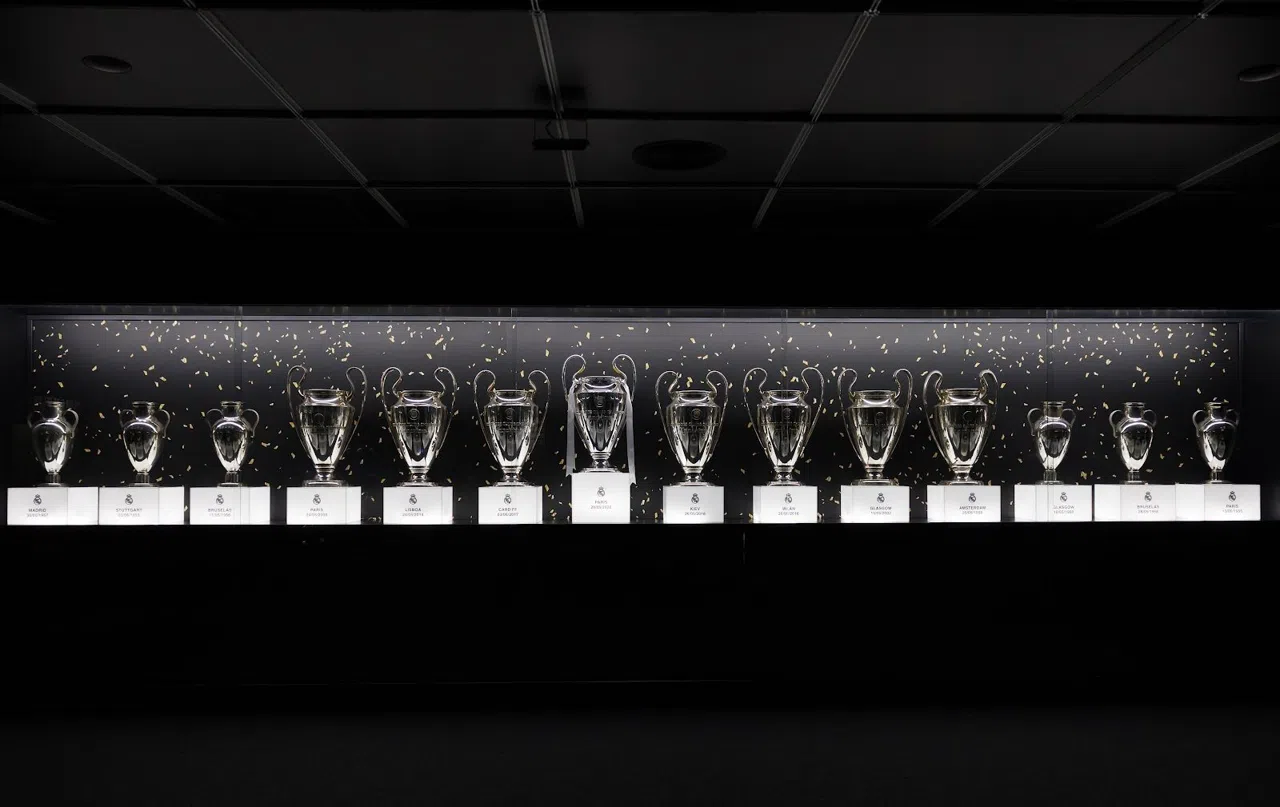
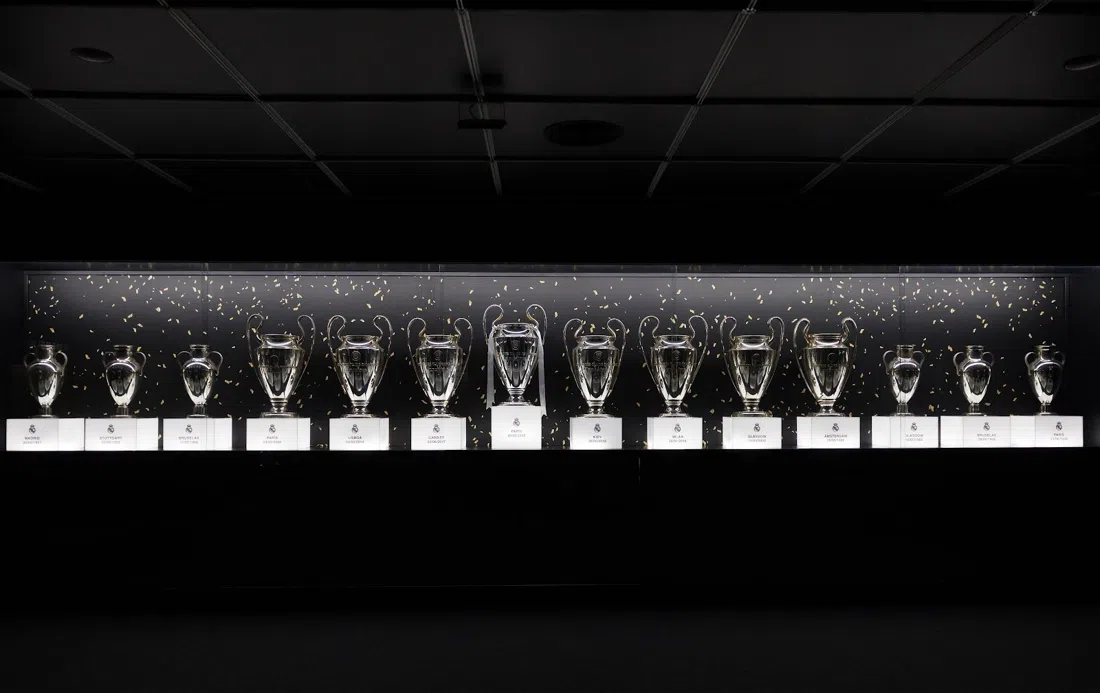
The nickname 'cathedral' gets attached loosely to big stadiums everywhere, but in Madrid it has a specific, contested meaning: whichever ground you support is the real one. The Santiago Bernabéu Stadium Tour & Museum (Chamartín) is the newly rebuilt version of the ground Real Madrid have played in since 1947. A multi-year renovation added a wraparound steel facade, a retractable roof and a 360-degree video ring, and the self-guided tour now runs through dressing rooms, the pitch-side tunnel and a trophy hall that has to display more silverware than most museums have room for. Tickets run €25-45pp for tour-plus-museum, with school and corporate group rates sold separately online. The one date to double-check before you book: the tour closes entirely on match days, so cross-reference the fixture list before you fix a date, not after.
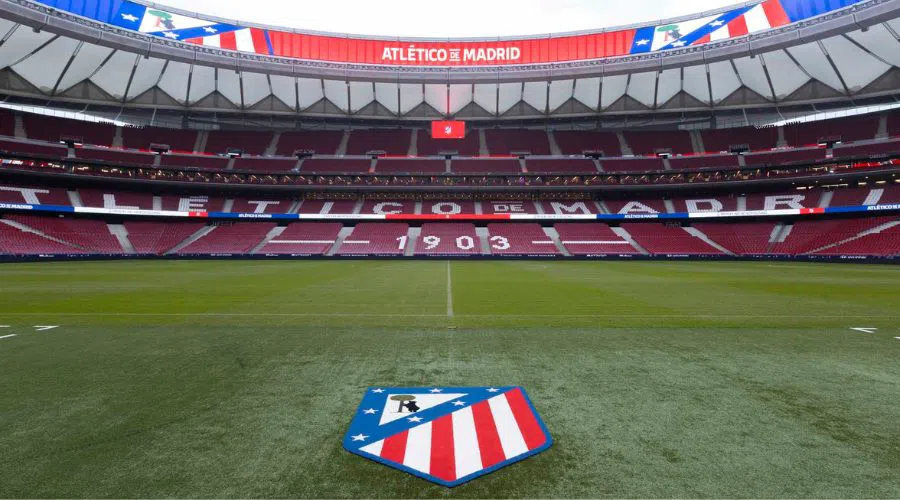
The Riyadh Air Metropolitano Stadium Tour & Museum (San Blas-Canillejas) is Atlético Madrid's home, renamed for the 2025/26 season under its current sponsor after stints as the Wanda Metropolitano and the Cívitas Metropolitano. It opened in 2017 on the site of a former athletics stadium and reads, deliberately, as the honest architectural foil to the Bernabéu's glossy rebuild: a bowl of exposed concrete and steel lattice with none of the video-wall theatre, built to hold noise rather than reflect light. The tour is self-guided daily from 11:00 to 18:00, with guided slots and family or group packages also sold online, and tickets are noticeably cheaper at €15-30pp. If you only have time for one tour and want the version of Madrid football that isn't dressed for a launch event, this is it; if you want to see what €1 billion of stadium renovation buys, that's the Bernabéu.
Where Real Madrid's Support Gathers
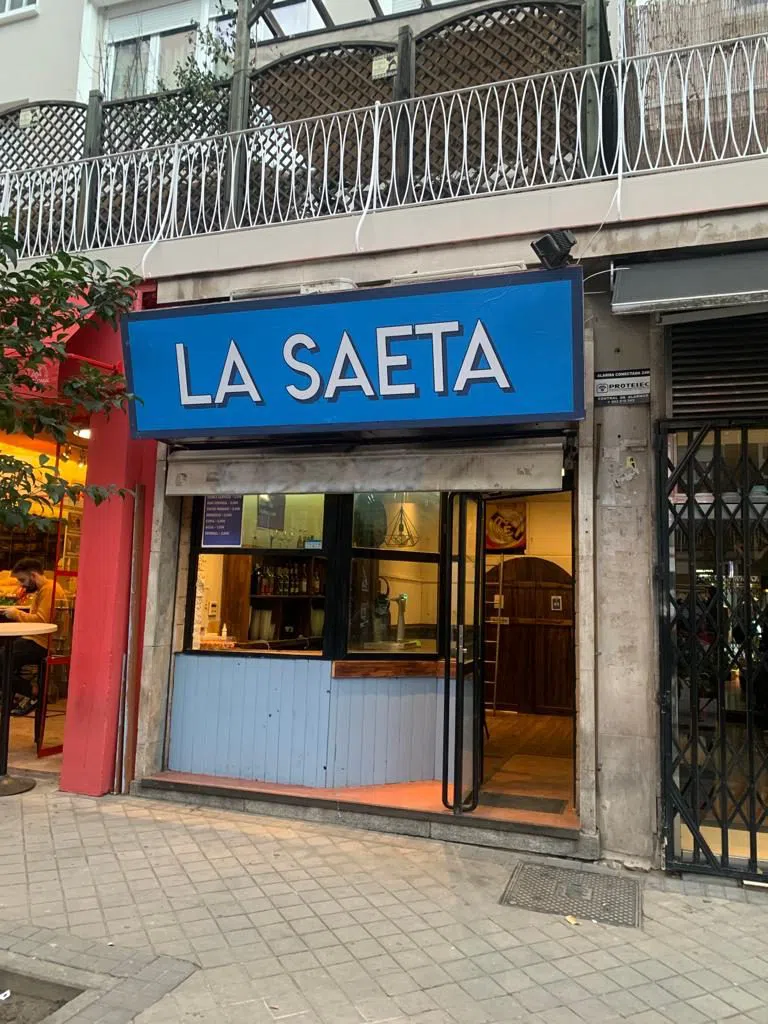
The streets immediately north of the Bernabéu fill fast on matchdays, and the options split cleanly by group size and how far in advance you're willing to plan. Bar La Saeta (Chamartín) is the closest possible perch to the stadium gates: a small footprint, standing-room only, no reservations taken, first-come first-served. It is not a place to bring a party of eight expecting a table; it's where you grab a beer on the walk in and accept you might be drinking it on the pavement. Arrive early on fixture days or you won't get in at all.
Birra Bernabéu (Chamartín) is built for the opposite scenario: it takes private-event packages, group menus and birthday or celebration bookings as a matter of course, and it's the better pick on the strip if you want a proper group meal ahead of kickoff rather than a quick pint on the way past. A few streets further out, Tasca La Farmacia (Chamartín) is the neighbourhood's actual tapas restaurant: flexible reservations, group menus, a terrace, and a clientele that includes locals eating there on nights with no match at all. It's the option for a sit-down meal that doesn't feel like it exists purely to process fans in and out.
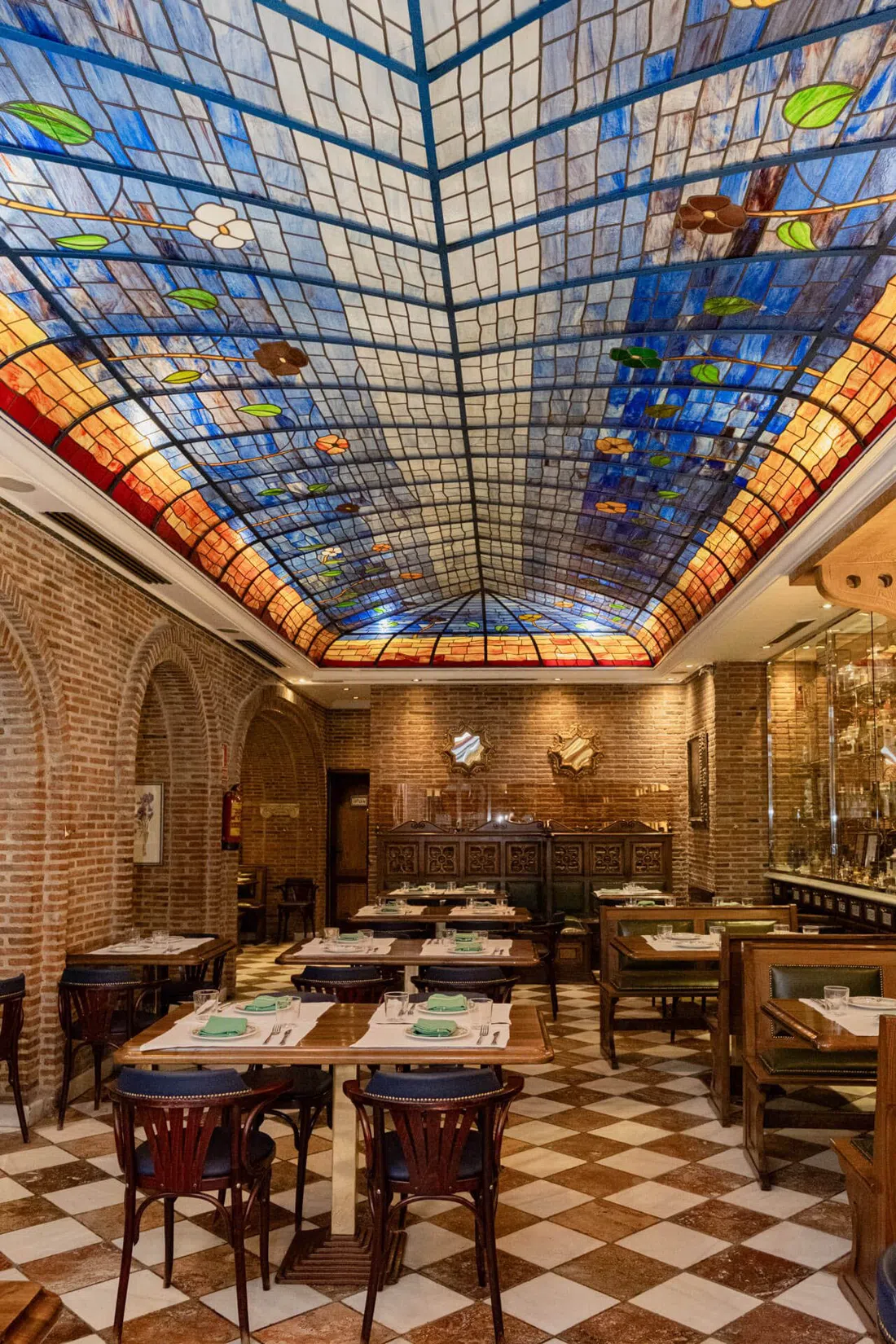
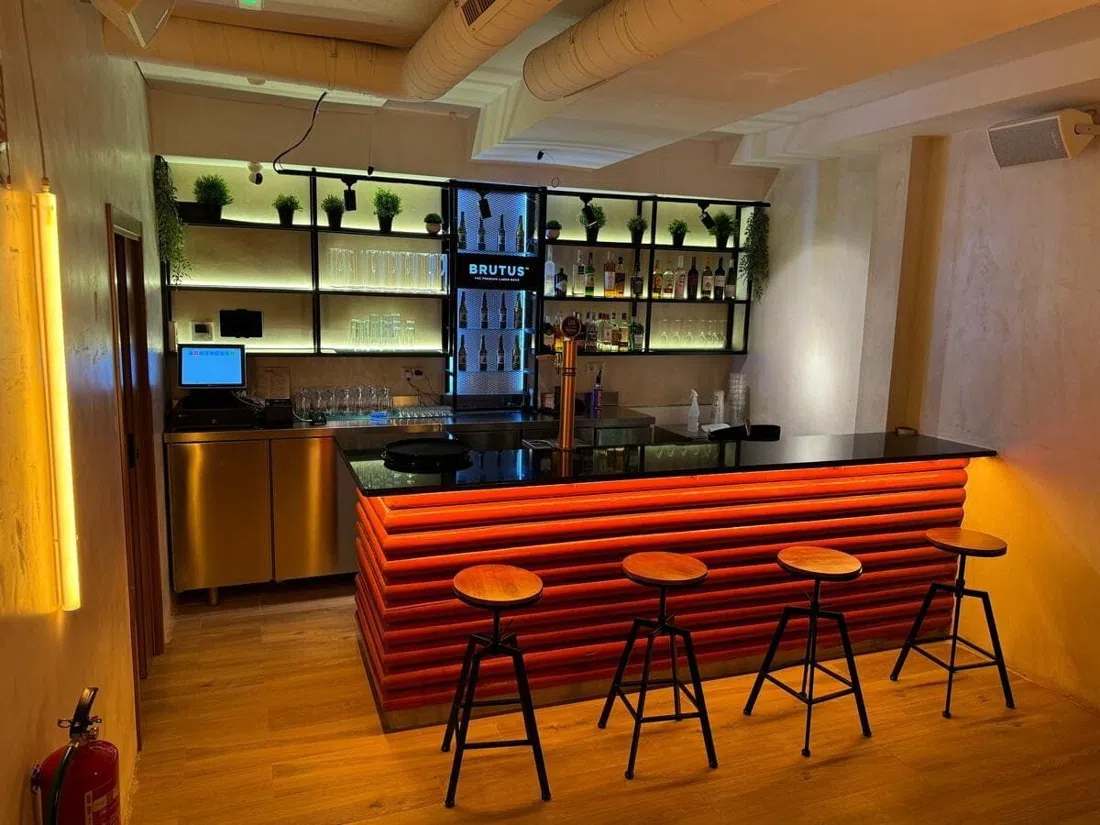
For a mixed-nationality group who want every match on screen rather than just Real Madrid's, The Irish Rover (Chamartín) is the internationally legible fallback: terrace and indoor seating that handles groups comfortably, pub food, and a late licence running to 3-4am Thursday to Saturday. It's less about matchday ritual than about having somewhere that works when your group can't agree on kickoff time or team.

Where Atlético's Support Gathers
The area around the Metropolitano sits in San Blas-Canillejas, a residential district with a genuinely thinner spread of options than Chamartín's stadium strip: there's no dense cluster of purpose-built matchday bars here, and that scarcity is itself informative about how the two clubs' surrounding areas developed differently. What exists tends to be either club-official or straightforwardly local.
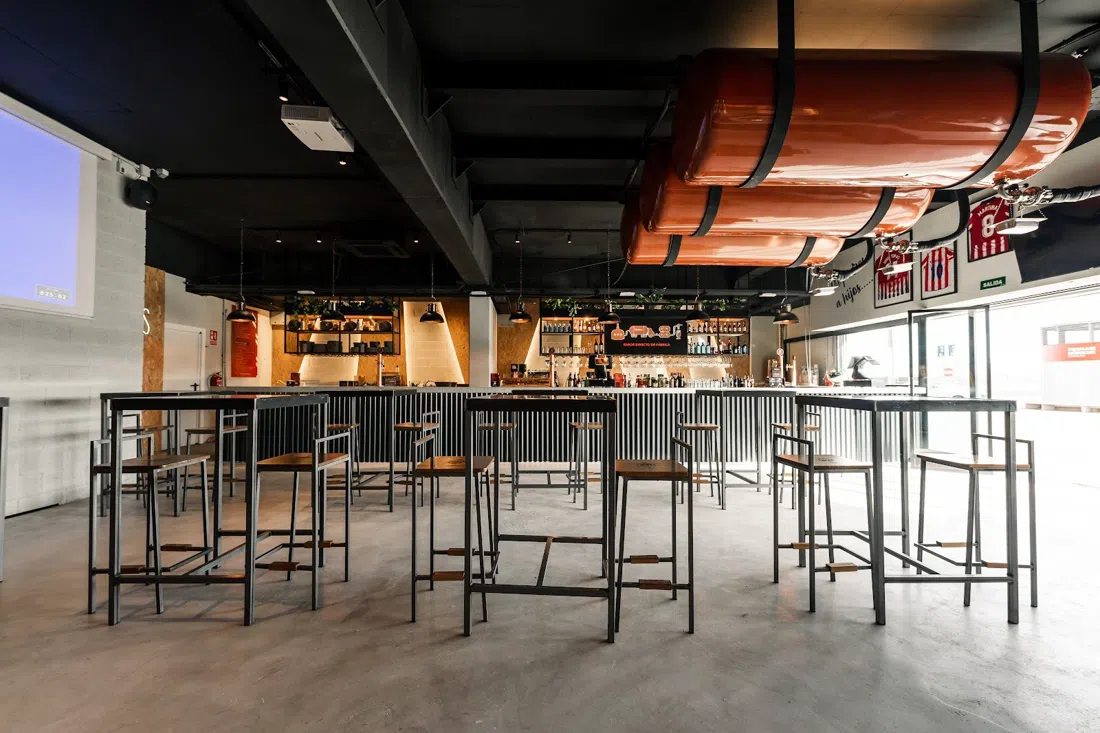
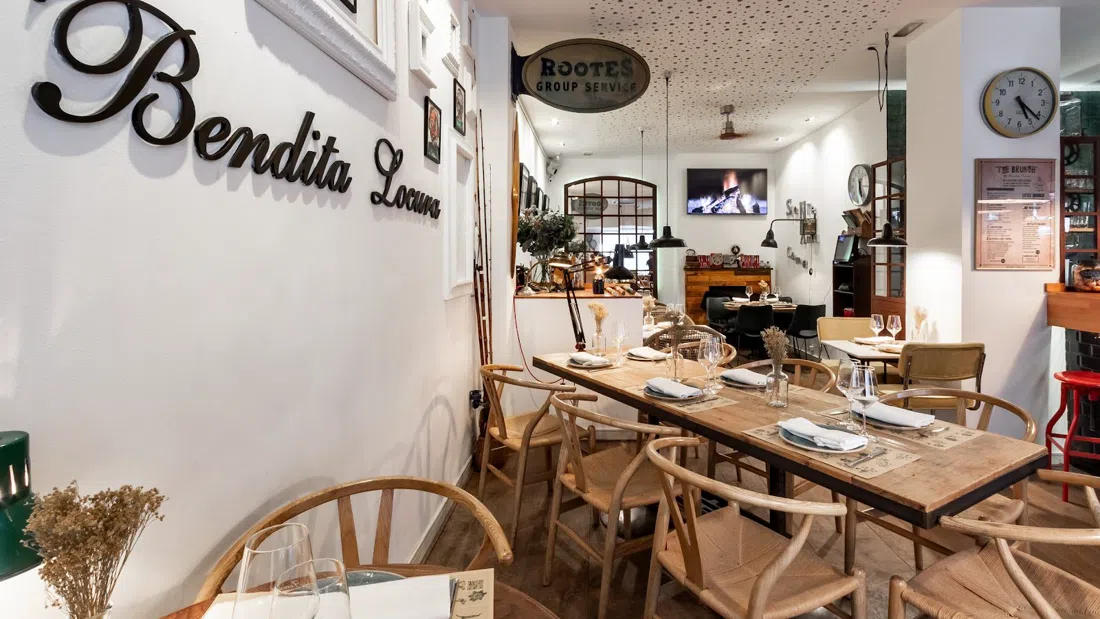
Bendita Locura (San Blas-Canillejas) is the club-run equivalent of Birra Bernabéu: large capacity, built specifically to hold the pre- and post-match crowd. The name translates as 'blessed madness', the phrase Atleti's own supporters use to describe their fandom, and the bar leans into that identity rather than trying to be neutral ground. Brindis VAR (San Blas-Canillejas) is the more unusual proposition on this list: a ground-floor restaurant seating 110 that is genuinely group-friendly, and the only venue here with an actual sightline onto the Metropolitano pitch without holding a match ticket. Book ahead for a party; on a big fixture the sightline tables go first.
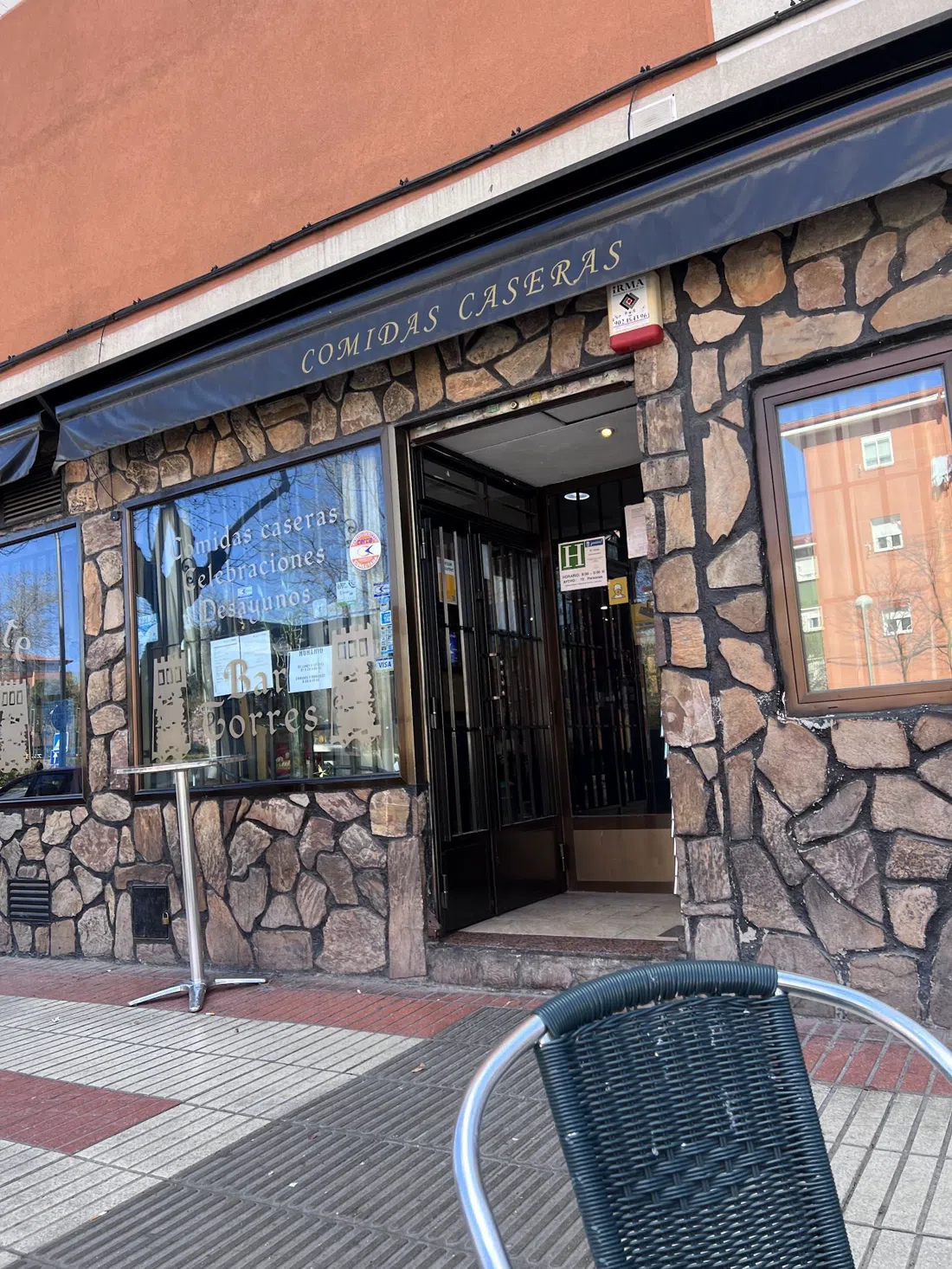
For something with no club branding at all, Bar Torres (San Blas-Canillejas) is the honest local pick rather than a tourist trap: casual, unpretentious, and happy to seat weekend groups without a fuss. It won't try to sell you the Atleti mythology; it's just where the street actually drinks.
The Fountains Where Titles Get Crowned
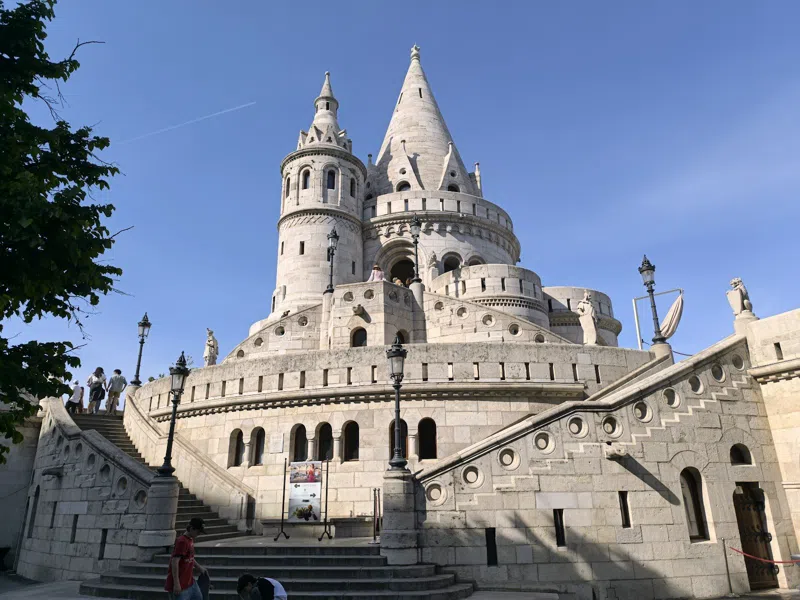
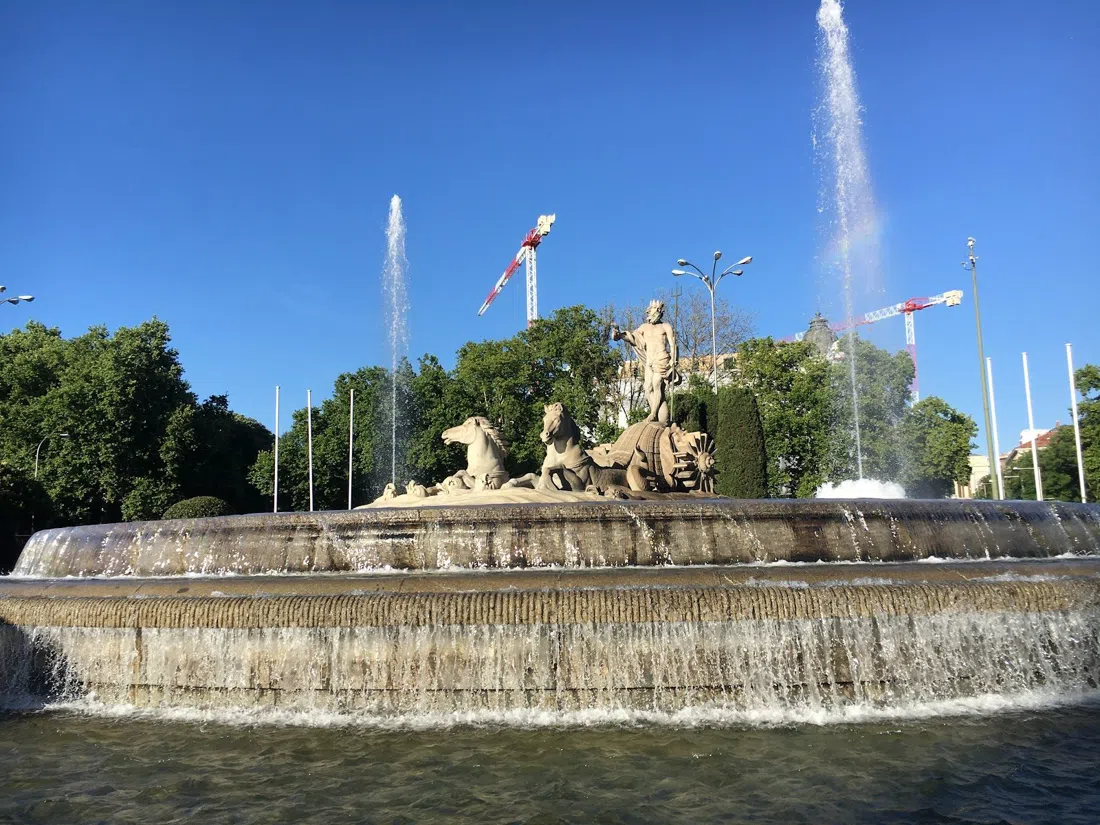
The clearest, cheapest way to understand this rivalry has nothing to do with either stadium. Fuente de Cibeles (Plaza de Cibeles, on the border of Retiro and Centro) is an open public plaza with unlimited access and no booking required, and it has been where Real Madrid supporters crown every major title since the 1980s: the goddess Cybele's fountain, usually genteel, gets climbed on by players and fans alike after a trophy. A few hundred metres down the same avenue sits Fuente de Neptuno (Paseo del Prado), Atlético's celebration fountain since the club switched allegiance to it from Cibeles in 1991, drawing a deliberate line between the two identities. Standing at one and walking to the other in under ten minutes is the single best way to grasp how compressed this rivalry actually is geographically, even when the two fanbases experience it as a total divide. Both are free, always open, and worth the short detour on any Madrid itinerary. See the Madrid guide for how they fit alongside the city's other landmarks.

A Guided Way to See Both Sides
If DIY planning between two stadiums and two fanbases feels like more coordination than your trip has room for, the Madrid Football Walking Tour with Metropolitano Tour [guided activity] does the framing for you. Run by operator Bstadium as a small-group guided tour, bookable privately, it costs €29-39pp and is built specifically around the rivalry as its narrative rather than treating either club in isolation: a useful option for readers who want the historical and social context delivered rather than assembled from separate visits. It won't replace doing the Bernabéu tour properly on its own terms, but as an introduction to why these two clubs sit the way they do in the city's identity, it's the one packaged product on this list actually built for that question.
Getting There, Timing and Budget
Both stadiums sit on Madrid's metro network and neither requires a car. The Bernabéu is served directly by Santiago Bernabéu station on Line 10; the Metropolitano has its own station, Estadio Metropolitano, on Line 7, roughly twenty minutes from the centre. Buy a rechargeable Multi card at any metro station rather than single tickets if you're doing more than two or three rides: it works across metro, bus and the urban rail lines and pays for itself fast.
Most bars and restaurants on this list take card, but the standing-room places near the Bernabéu, Bar La Saeta especially, move faster with cash in hand on a packed matchday. Kickoffs are scattered across La Liga's broadcast windows rather than fixed to one time, so check the exact hour before you plan a pre-match bar stop: arriving 90 minutes ahead is safe for the group-friendly venues, but the standing bars fill closer to two hours out on the bigger fixtures. Stadium tours (as opposed to matches) run to their own daily hours regardless of fixtures, except on match days themselves, when both close to visitors entirely.
For budget, a self-guided stadium tour plus a casual bar visit runs comfortably under €50pp at the Metropolitano and closer to €60-70pp at the Bernabéu once museum entry and a proper meal are added. A weekend built around both stadiums, the two fountains and a sit-down meal in each district is realistic on a mid-range budget without needing match tickets at all, which is worth knowing given how far in advance and how expensive those can be. For where to stay while you plan around it, see Madrid hotel search. Chamartín puts you closest to the Bernabéu strip, while the centre keeps both fountains and the metro lines to San Blas-Canillejas within easy reach.