The Madrid issue
The Best Tapas Restaurants in Madrid
A local's honest map of where to eat tapas in Madrid in 2026 — from €3 fried cod to the tortilla worth crossing the city for — with the door and group realities nobody tells you.
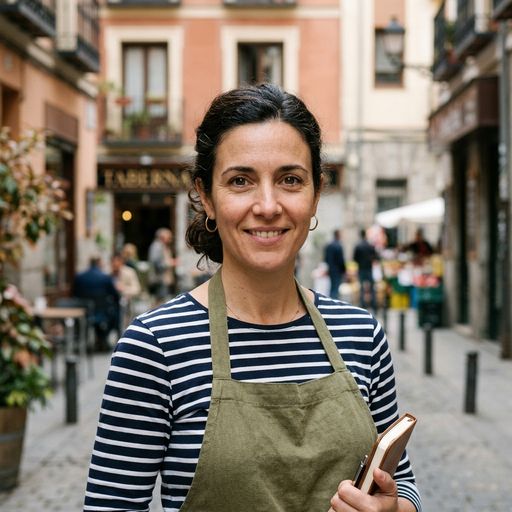
By Marta BelmonteThe dish, the price, and whether locals actually eat there
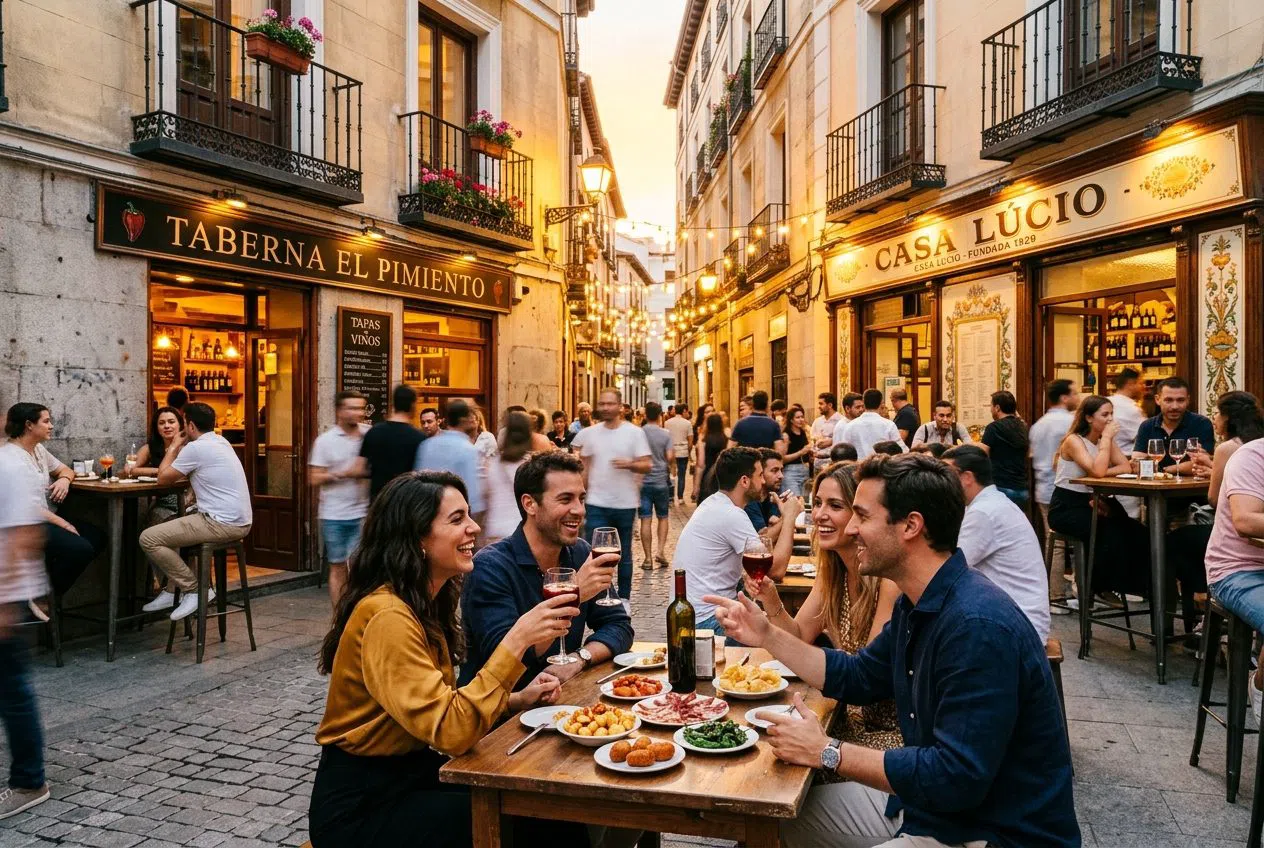
Madrid doesn't do tapas the way the guidebooks promise. Outside a couple of stubborn holdouts, there's no free spread with every caña, and there's no single "tapas street" that isn't at least half a trap. What the city actually gives you is bacalao fried to order for the price of a coffee, a tortilla worth crossing town for, and taverns that have been feeding the same barrio since before your grandparents were born. Here is where I genuinely send people — and, just as importantly, where I tell them to book, where to stand, and where to keep walking.
For everything beyond the eating — neighbourhoods, timings, getting around — pair this with the wider Madrid guide.
Start with the untouchable classics
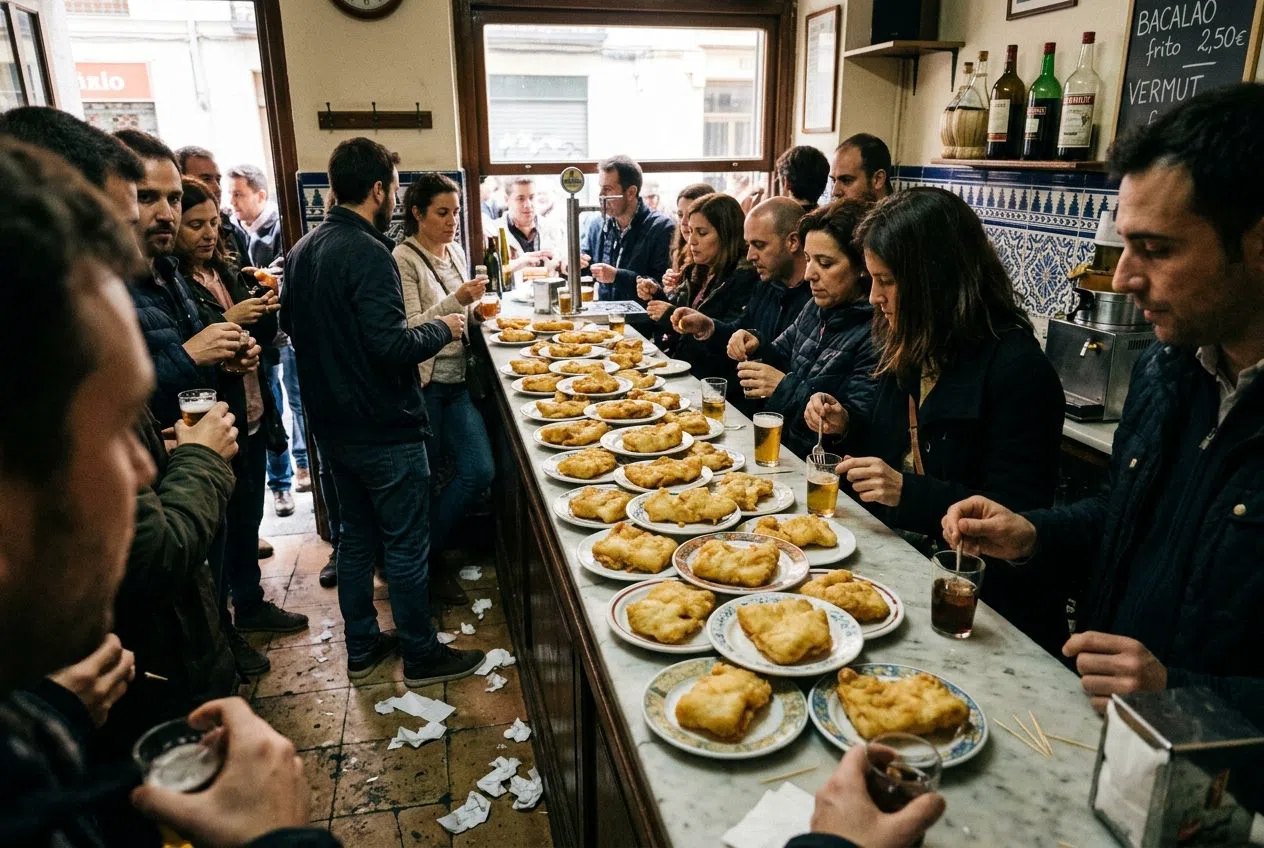
Casa Revuelta (Centro, a lane just south of Plaza Mayor) is the one I'd protect with my life. The bacalao tapa — a knuckle of cod in a light, almost weightless, bone-picked batter — runs about €3–4 and has been the best fried cod in Madrid since 1966. There are no bookings, barely room for three or four to stand at the bar, and a proper queue at peak. Go the very moment it opens (roughly 1pm and again around 7pm), order two, hold your ground, and move on. This is a crawl stop, not a destination dinner, and trying to make it more than that will only frustrate you.
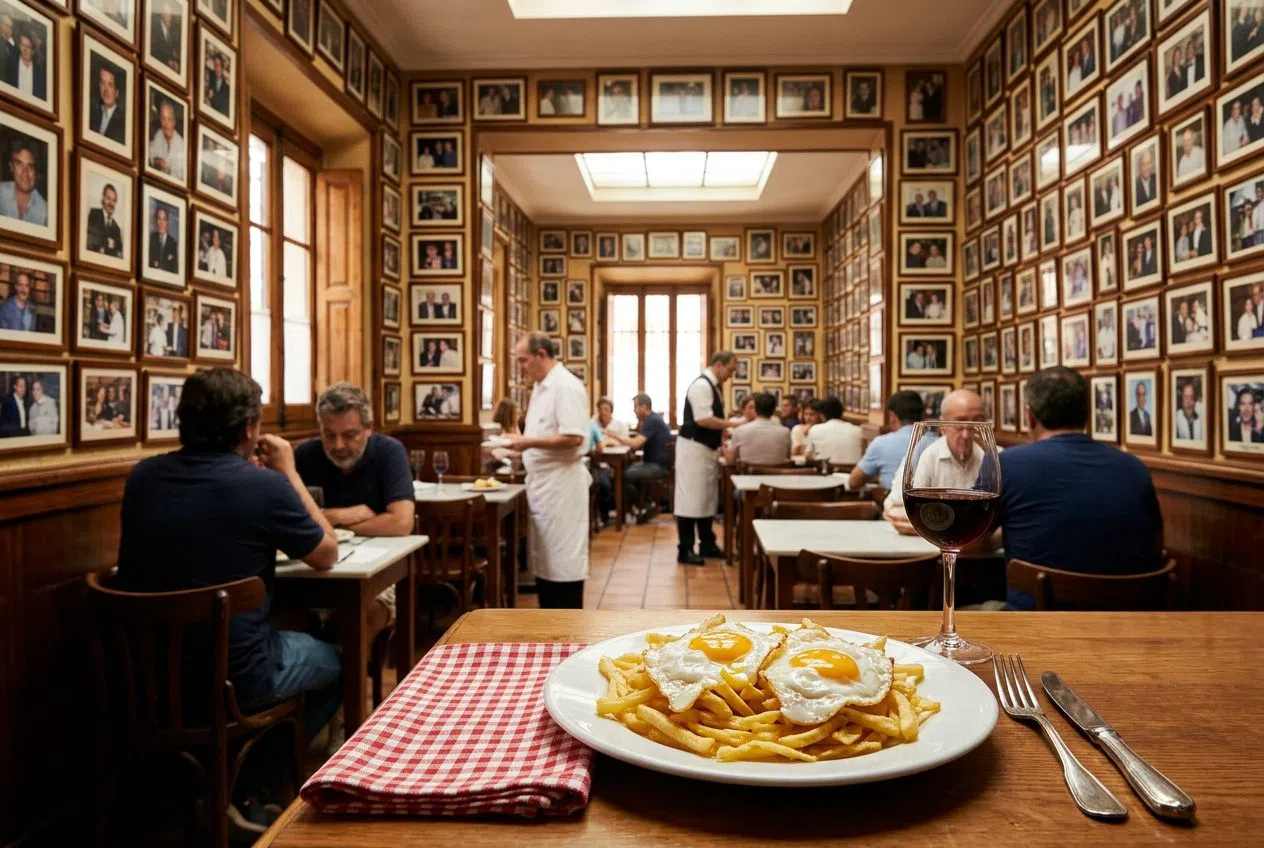
Casa Lucio (La Latina, on Cava Baja) is the opposite proposition: a proper Castilian sit-down institution rather than a standing scrum. It's the home of Madrid's most famous huevos rotos — eggs broken over crisp potatoes — and it charges proper restaurant prices (£££) for the privilege. Founder Lucio Blázquez was honoured with a Cava Baja plaque in July 2026, and reassuringly the kitchen runs on unchanged. It takes groups by reservation across its several rooms, which makes it one of the few genuine institutions you can actually get a table of eight into. Book it as a meal, not a pit stop.
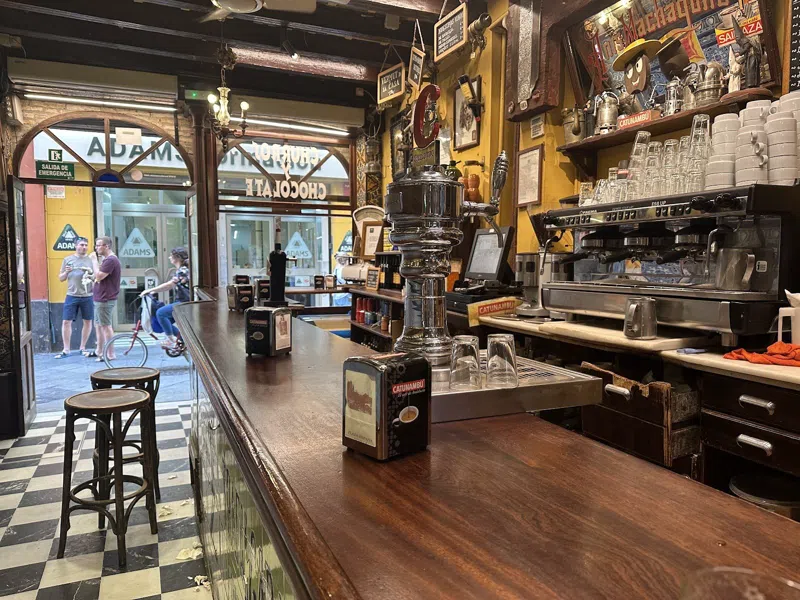
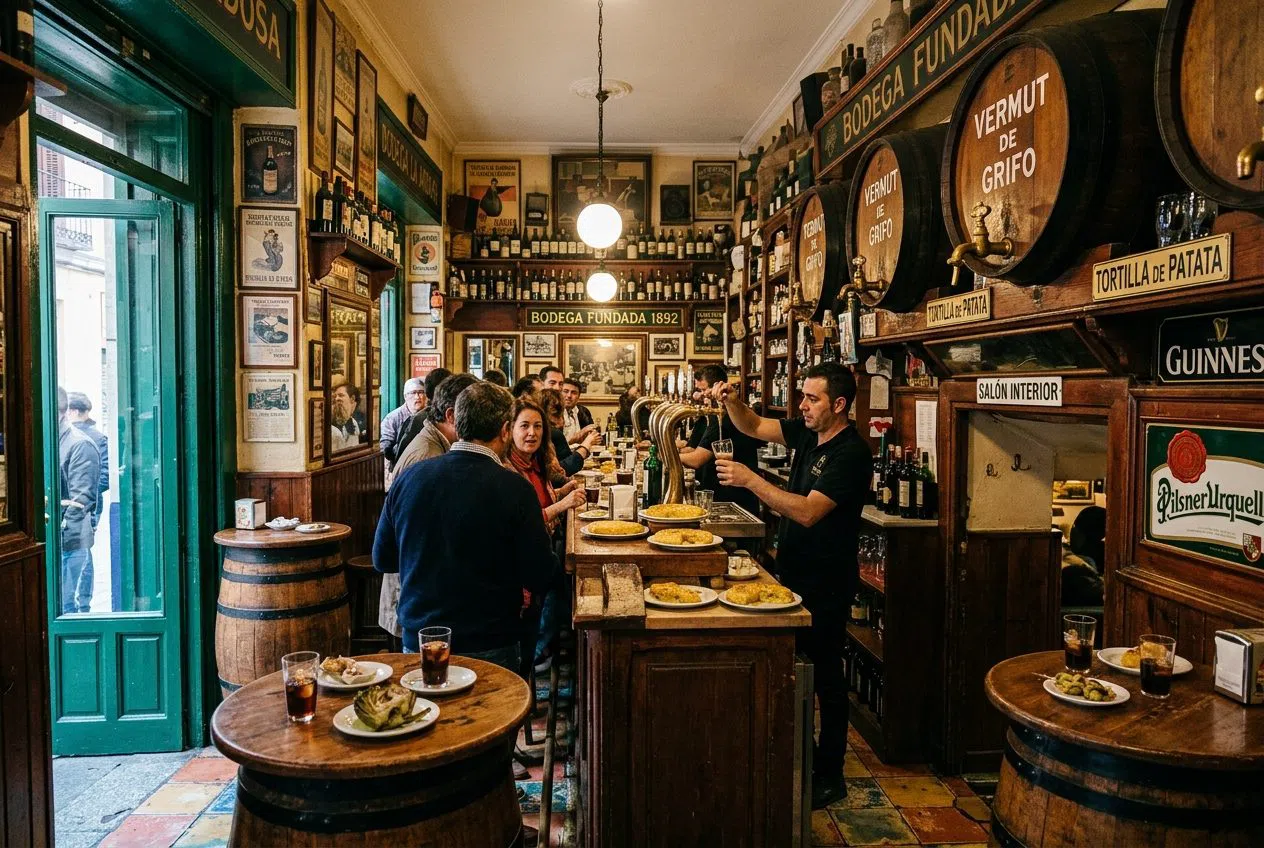
Bodega de la Ardosa (Malasaña) is one of the oldest bars in the city, going since 1892, and it looks the part — all tiled front and vermouth on tap. Come for the salmorejo, the brandada de bacalao and an award-winning tortilla, and expect to pay bodega-fair ££ for the pleasure. It's tiny with no reservations, so it's really a spot for a pair or a few friends squeezed around a barrel. Arrive early to claim space; it's also one of the most photogenic rooms in Madrid, if that matters to you.
Plan your Madrid trip
Live prices from our booking partners.
Free cancellation on many rooms. We may earn a commission when you book.
Tortilla: the two you'll argue about
Ask ten Madrileños where the best tortilla lives and you'll start a fight. Two names come up more than any other.
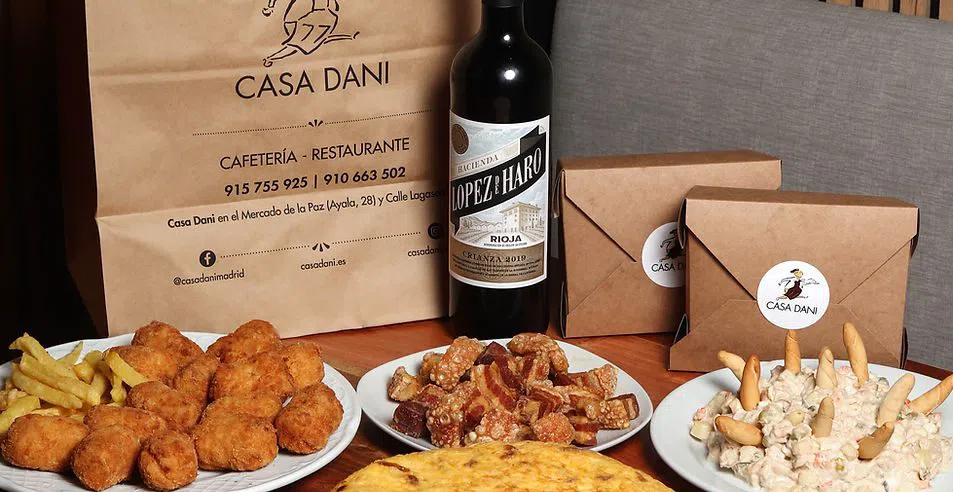
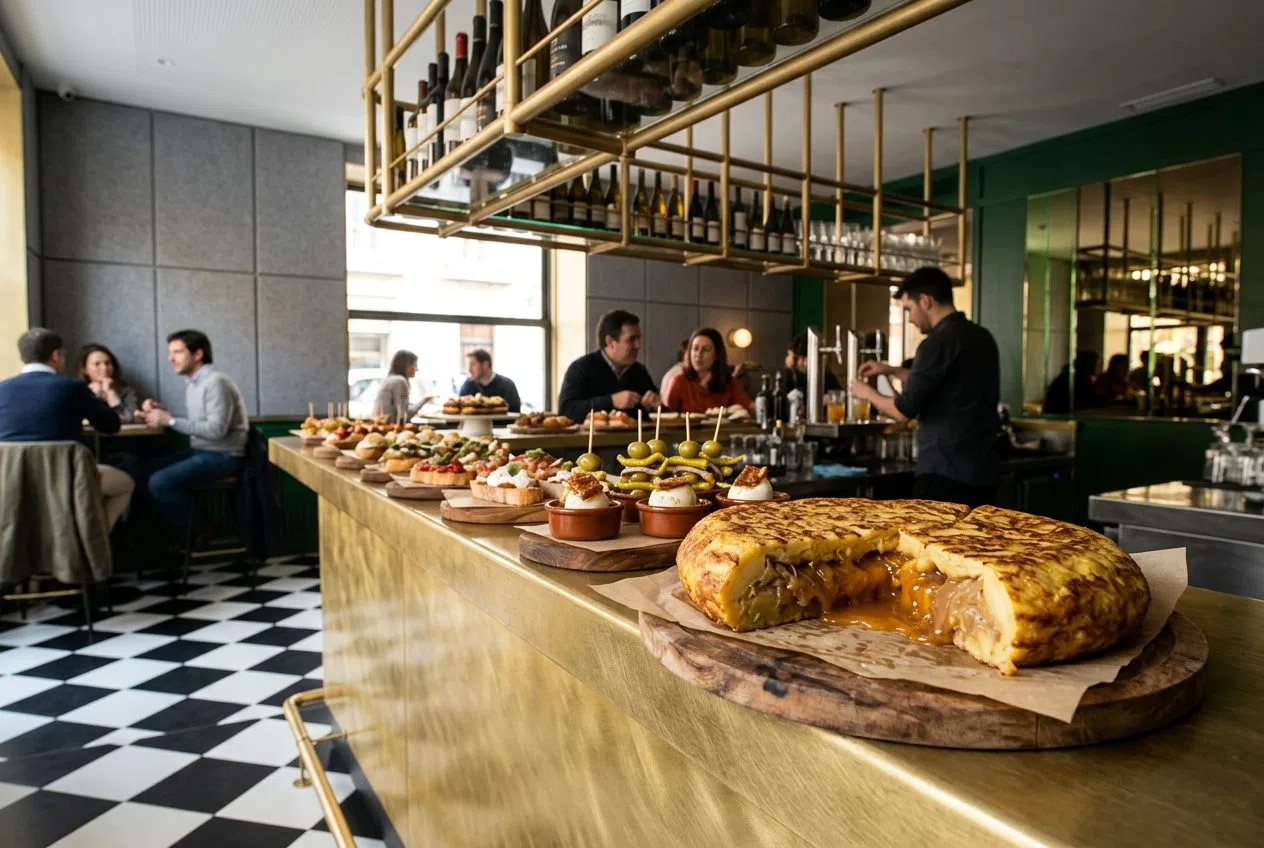
Casa Dani (Salamanca, tucked inside the Mercado de la Paz) is widely rated the best tortilla in Madrid, and repeatedly the best in all of Spain — a soft, barely-set wedge that people order by the slice. A pincho is a few euros; a whole tortilla is there to share. The catch is that this is a market counter with casual seating and takeaway, it closes early evening, and it shuts on Sundays. Slot it into an afternoon rather than a night crawl, and it rewards you handsomely.
Juana La Loca (La Latina) is the other contender, home to a cult caramelised-onion tortilla that plenty of people will tell you is the best anywhere. This is the gourmet end — premium pintxos at ££ — in a small, buzzy room with no reservations for the bar, so go early or late to get a perch. One honest caveat: it recently relocated from its original La Latina corner, so confirm the current address before you set off. Between this and Casa Dani, do both if you can; they're different beasts, and the debate is half the fun.
Where to take a group
Groups are where Madrid tapas plans quietly fall apart — most of the best bars simply can't seat six. These can.
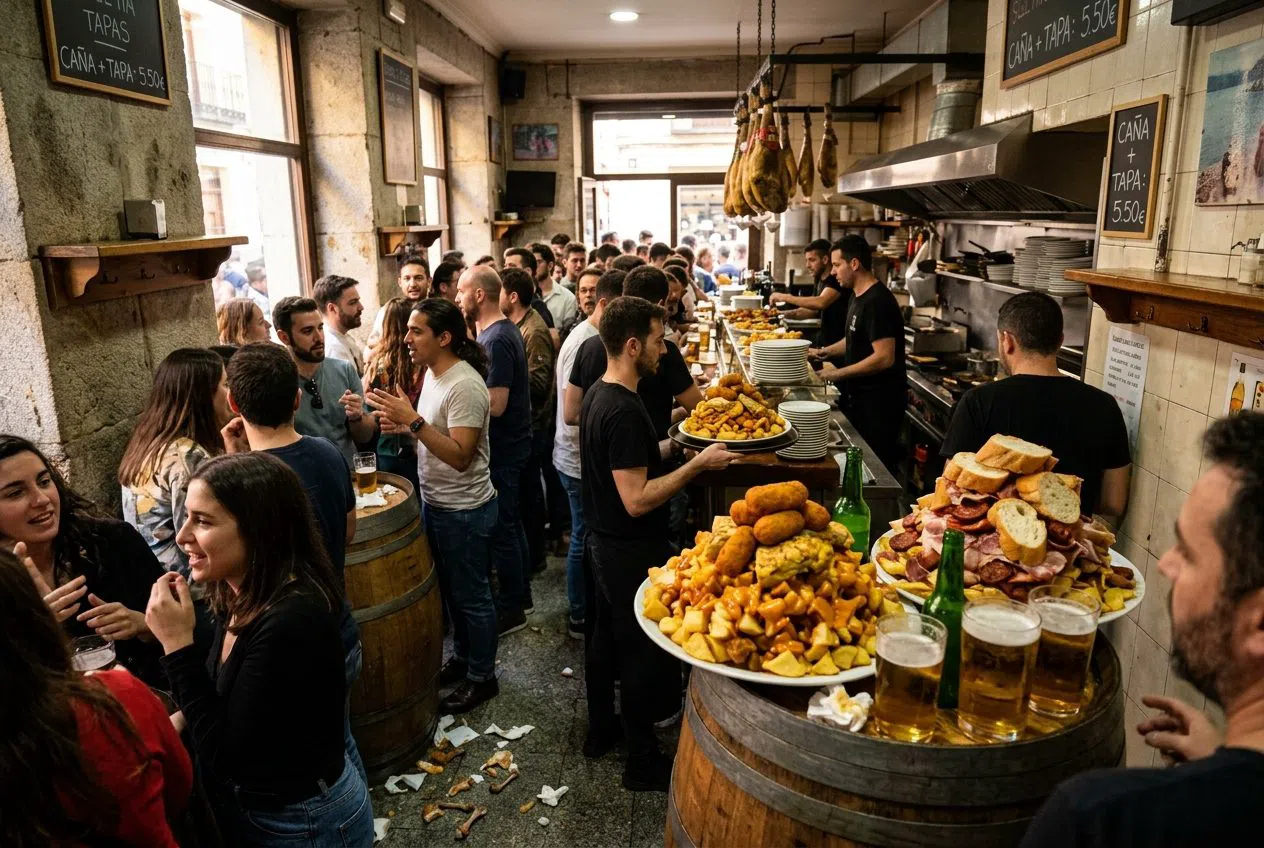
El Tigre (Chueca) is built for exactly this: shared high tables, standing room, and a deal where you buy a drink — beers around €4 — and vast plates of free tapas keep coming. It's the go-to for a UK crowd wanting maximum food for minimum spend, and it delivers heaps of it. Just know what it is: rowdy, generous and unpretentious, packed and loud at weekends, and about volume rather than refinement. Come hungry, not fussy.
Celso y Manolo (between Chueca and Centro) is the civilised alternative for a group that would rather sit than stand. It's a 1970s tavern relaunched with careful modern cooking — mid-range tapas and raciones at ££ — that won a 2025 hospitality award, stays open all day until 1am, and, crucially, takes bookings by WhatsApp. If you've got a larger table and want it settled in advance, this is one of the easiest yeses in the city.
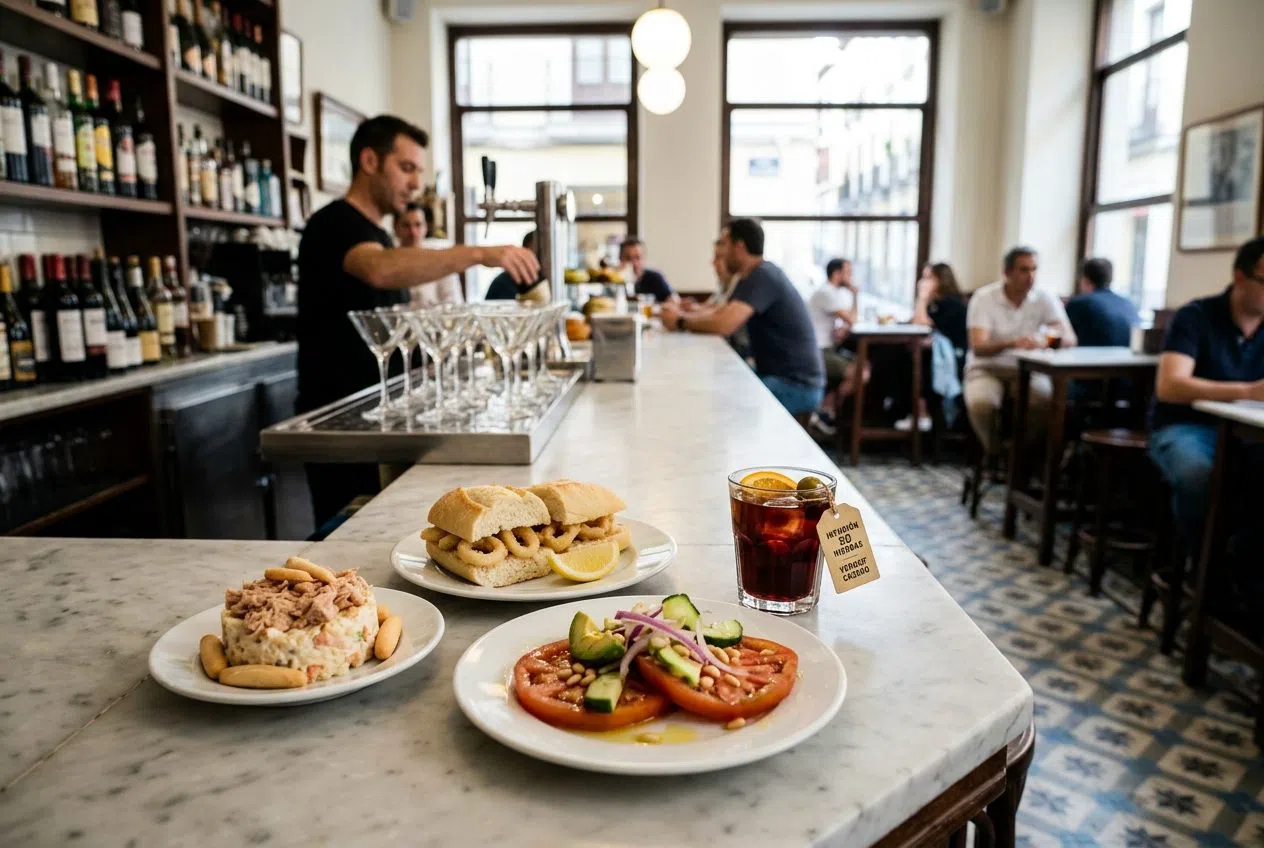
Bodegas Rosell (near Atocha) is my pick when the group wants the real old-Madrid canon rather than trend. This 1920 taberna is roomier than the Cava Baja crush, takes tables, and does the classics properly — callos, croquetas, rabo-de-toro meatballs — as hearty raciones at ££. It's a little off the tourist track, which is precisely the point. Note it's closed Mondays.
Mercado de San Miguel (Centro, right beside Plaza Mayor) earns its place here only for its flexibility. The iron-and-glass hall is genuinely gorgeous, it's open daily until midnight, and when a group can't agree, everyone grazes a different stall and meets in the middle. But I won't pretend it's a bargain: it's touristy, it's pricey, and those little plates at ££–£££ add up fast. Treat it as spectacle and an easy meeting point before you decamp to La Latina for the real eating — not as the meal itself.
The Cava Baja crawl
If you only walk one street, walk Cava Baja in La Latina — a downhill run of tabernas that's made for grazing two or three plates and pushing on.
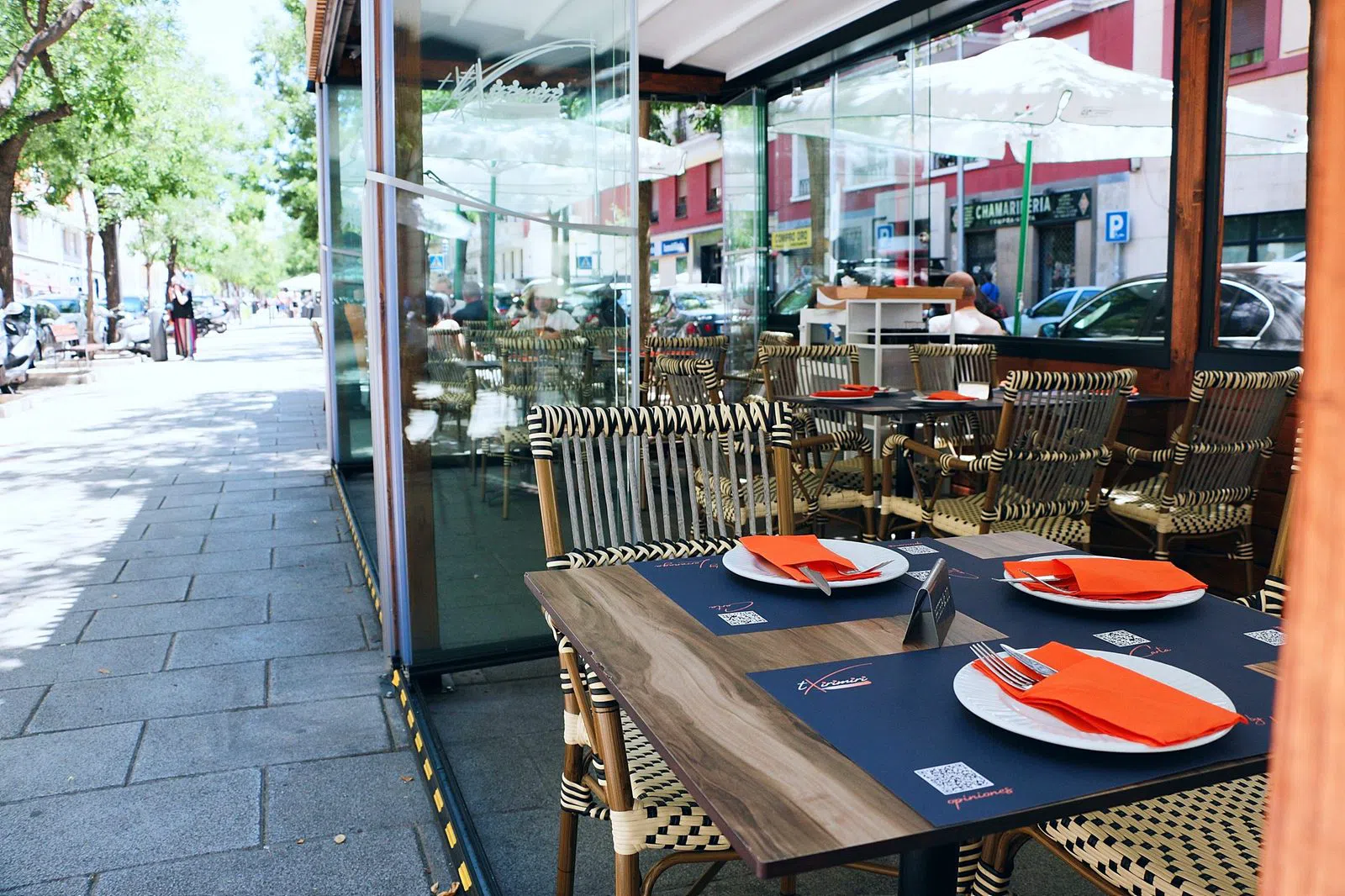
Txirimiri (La Latina, steps from Cava Baja) is the reliable Basque stop, high-quality pintxos and rations at ££ where the croquettes and the mini-burger are the draws. It's very small and always full with no bookings, but it has four Madrid branches, so a bigger group can aim for a roomier location — otherwise, go early.
Taberna Tempranillo (Cava Baja) is the wine-lover's halt: an unusually deep Spanish list by the glass, with excellent cheese and charcuterie to match, at ££. There are no reservations and it gets rammed, so it's best for a small group at the bar — arrive early on weekend evenings or you won't get near the wine.
Casa Lucas (Cava Baja) is the calmer, more inventive option, with market-driven tapas that change often and a good by-the-glass list, again at ££. The snag is that there are only six tables, so book ahead for anything more than a couple. Think of it as a considered sit-down pause partway down the hill rather than a big-group stop.
For a couple after character
Los Gatos (Barrio de las Letras / Huertas) is a wonderfully cluttered, quintessentially Madrileño tavern going since 1980, hung with bric-a-brac and pouring dozens of tostas — little toasts, a few euros each — at £–££. It's standing-room and characterful, workable for a small group but tight, and it's one of the best photo stops on a Huertas crawl. Come for the atmosphere and the tostas, order a couple, and soak up the room.
The refined, reservation-friendly pick
Estado Puro (near the museums, on the Paseo del Prado) is where I send readers who want haute tapas without the standing scrum. It's Paco Roncero's accessible take on high-end tapas — a proper restaurant with tables that takes group bookings, at chef-driven £££ prices. If your idea of a good night is refined, plated, reservation-friendly dining a short walk from the Prado and the Reina Sofía, this is the one to book.
Practical notes
Timing. Madrid eats late and in two waves. Kitchens and bars broadly open around 1pm for lunch and 7–8pm for the evening, and locals don't really fill the bars until 9pm or later. Use that: the no-reservation classics — Casa Revuelta, Bodega de la Ardosa, Taberna Tempranillo, Juana La Loca — are only pleasant if you arrive right on opening. Save the daytime-only picks (Casa Dani closes early evening and shuts Sundays; Bodegas Rosell closes Mondays) for lunch.
Booking. Most great tapas bars don't take reservations at the bar — you just show up early. The sit-down exceptions worth reserving are Casa Lucio, Celso y Manolo (WhatsApp), Casa Lucas (only six tables), Bodegas Rosell and Estado Puro. If you're a group of five or more, build your night around those and treat the standing bars as quick stops between them.
Cash. Cards are near-universal now, but the oldest, tiniest counters can be cash-first or cash-only at busy moments, and a few euros in coins makes paying at a jammed bar far quicker. Carry €30–40 in small notes.
Getting around. Almost everything here sits within walking distance across Centro, La Latina, Huertas, Malasaña and Chueca; the Metro (Sol, La Latina, Tirso de Molina, Chueca, Atocha) stitches the outliers together cheaply. A classic route is Cava Baja for the crawl, then a short walk into Centro, with Casa Dani or Estado Puro slotted in by day near the market and the museums respectively.
Budget. You can eat brilliantly for very little — a bacalao at Casa Revuelta and a beer, free plates at El Tigre — or spend properly at Casa Lucio or Estado Puro. Reckon on €15–25 a head for a standing crawl of three or four bars, and €40–60 once you sit down for a full meal with wine. Where you sleep sets the pace of all of it: start from the Madrid hotel search and base yourself around Sol or La Latina so the whole crawl is on your doorstep.
Before you go
Do you get free tapas with drinks in Madrid?
Mostly no — unlike some Spanish cities, Madrid rarely gives free tapas with every drink. The big exception is El Tigre in Chueca, where a €4-ish beer comes with heaps of free food. Everywhere else you order and pay for tapas separately.
Where is the best tortilla in Madrid?
The two names to know are Casa Dani, inside the Mercado de la Paz in Salamanca, widely rated the best in Madrid (and repeatedly in Spain), and Juana La Loca in La Latina, famous for a cult caramelised-onion tortilla. Casa Dani is daytime-only and shut Sundays; Juana La Loca recently moved, so confirm the address.
Which Madrid tapas bars take reservations for groups?
Most standing bars don't, but several sit-down spots do: Casa Lucio (several rooms), Celso y Manolo (book by WhatsApp, open till 1am), Casa Lucas (only six tables, so book ahead), Bodegas Rosell near Atocha, and Estado Puro by the museums. Build a group night around these.
What's the best area for a tapas crawl in Madrid?
Cava Baja in La Latina is the classic downhill run of tabernas — Txirimiri, Taberna Tempranillo and Casa Lucas are all here, with Casa Lucio at the top. Centro (around Plaza Mayor) and Huertas add Casa Revuelta and Los Gatos within easy walking distance.
How much should I budget for tapas in Madrid?
Roughly €15–25 a head for a standing crawl of three or four bars, rising to €40–60 once you sit down for a full meal with wine at somewhere like Casa Lucio or Estado Puro. Cheap wins like Casa Revuelta's €3–4 bacalao or El Tigre's free tapas keep the bill down.